Across the vast, crimson-dusted expanses of the Sahel, where conflict often unfolds unseen by much of the world, Mali is confronting a harsh reality: severing ties with those who once stood as a bulwark against instability carries profound repercussions. The recent surge in devastating attacks across the nation is not merely a twist of fate, but rather the anticipated outcome of a declared political shift.
This shift, championed as an assertion of sovereignty, was largely fueled by an anti-French narrative, strategically employed to bolster internal legitimacy. Yet, the ground truth proves far less amenable to political rhetoric than to tactical realities.
Bamako sought the French departure, and Bamako achieved it.
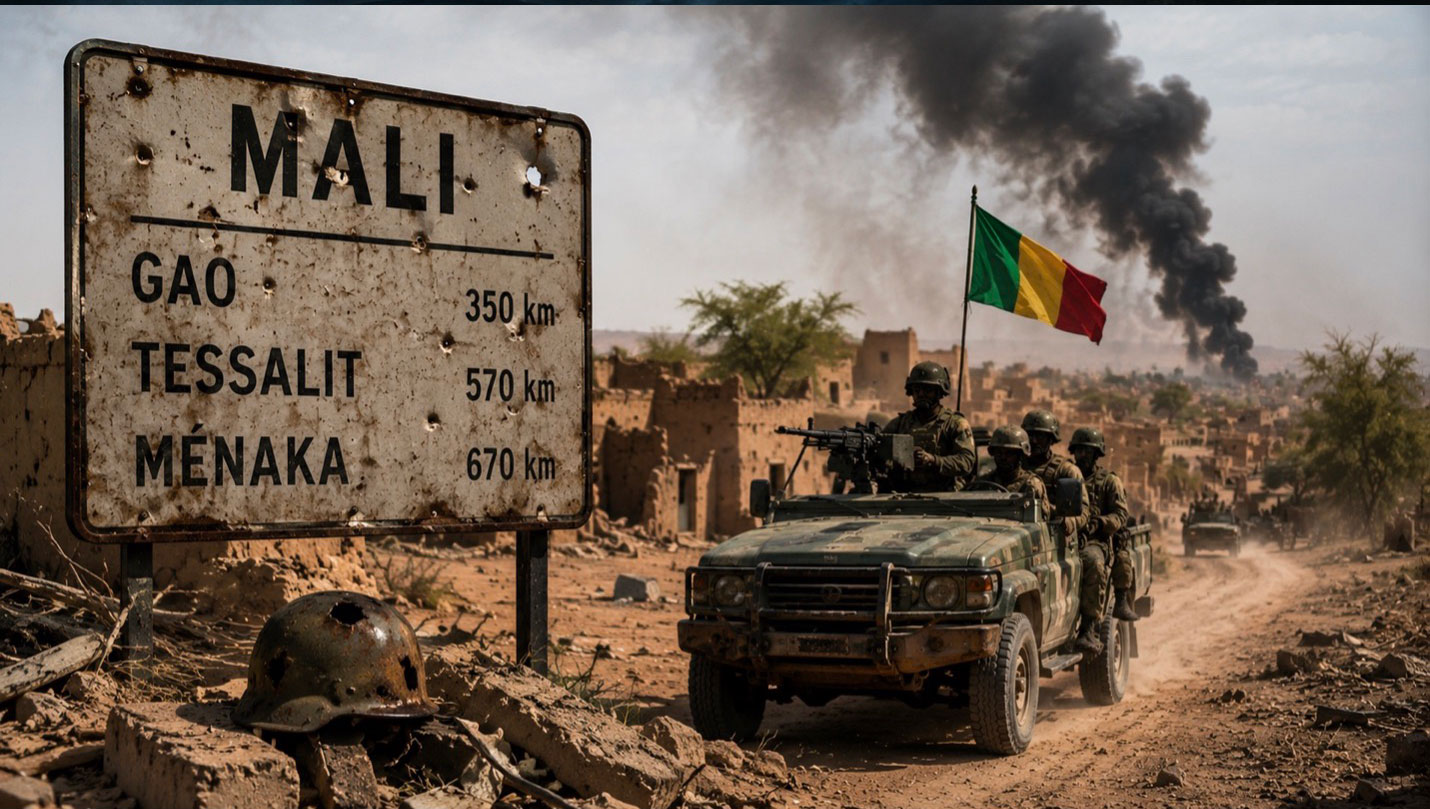
The final French military convoys exited Gao, Tessalit, and Ménaka amidst public derision, stoked by years of accusatory discourse. At the time, the intricate operational demands seemed secondary. The crucial role played by French forces in 2013, when jihadist columns threatened to overrun the Malian state, was largely overlooked in the fervor.
President Emmanuel Macron’s concise observation — « Le Mali n’a pas pris la meilleure décision en chassant l’armée française » — now echoes with stark strategic clarity. While acknowledging past French missteps, such as potentially overestimating military solutions without driving essential local political reforms, Macron has consistently maintained that without French intervention, Mali faced collapse. He previously stated unequivocally, « Sans la France, le Mali ne serait plus un État uni ».
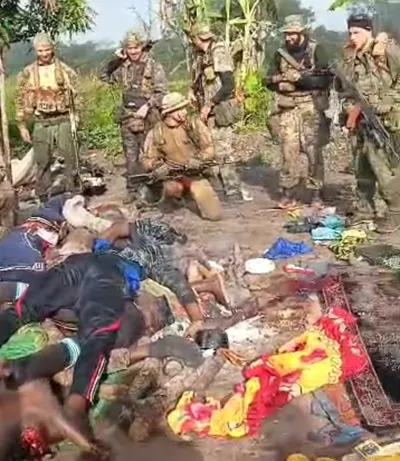
This undeniable truth is now brutally manifesting on the ground. The reality of the battlefield cares little for slogans or political posturing. With French bases vacated, a palpable security vacuum emerged. Groups affiliated with Al-Qaïda and Islamic State swiftly moved to exploit these newly created vulnerabilities. Where Operation Barkhane once contained, monitored, targeted, and gathered intelligence, Malian authorities now struggle to maintain lasting control over their territory.
In reflecting on these developments, it is imperative to recall a significant sacrifice.
Fifty-eight French soldiers gave their lives in the Sahel.
These fifty-eight individuals fell in a conflict that was neither abstract nor theoretical. Their deaths occurred in places like Kidal, the Adrar des Ifoghas, and In Delimane, on roads riddled with mines, during arduous night operations, under scorching temperatures, and against a elusive, mobile adversary.
These soldiers were not occupiers; they were not colonial predators disguised as a militant fiction. They were the instruments of a military commitment undertaken by the French Republic to prevent the establishment of a terrorist sanctuary at the very heart of the Sahel.
They paid the ultimate price.
Their sacrifice demands that their memory not be diluted by ideological simplifications. While France indeed made errors, it also bore the brunt of a colossal military effort for years, striving to preserve an already fragile regional stability.
Mali chose to dismantle this security framework in the name of proclaimed independence. It is now grappling with the full weight of those consequences. Emmanuel Macron’s statement that Bamako had not made « la meilleure décision » was not born of post-colonial resentment or sentimental regret. It was a pragmatic observation, undeniably confirmed by the harsh realities of the region: in certain parts of the world, declared sovereignty alone cannot halt advancing jihadist columns.
For France, the Sahel became a theater of diplomatic attrition. For its soldiers, however, it remains something more profound: a field of honor. And that honor is not subject to the shifting winds of public opinion.