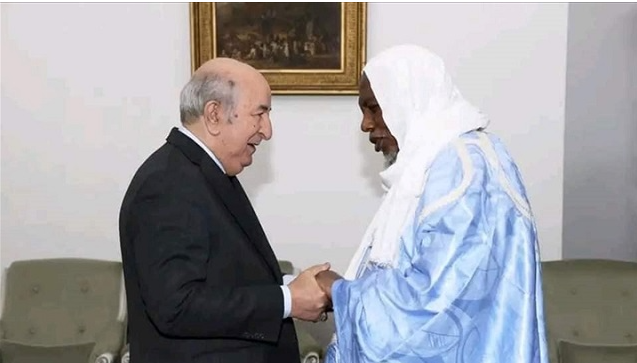
The growing influence of Imam Mahmoud Dicko in Mali’s escalating security crisis
Mali is grappling with a worsening security emergency, with reports of hundreds of civilian and military casualties in recent attacks, according to trusted security sources.
Northern Mali: a strategic battleground reshaping regional power dynamics
Western analysts highlight northern Mali as a pivotal territory that could influence political shifts across Mali, Niger, Burkina Faso, Chad, and Mauritania.
Imam Mahmoud Dicko, operating from his base in Algeria, has expanded his role beyond spiritual leadership. Once seen solely as a moral authority, he now presents himself as a figure of centralized religious influence, drawing comparisons to models like that of Iran’s Supreme Leader. His supporters describe him as a near-“caliphal” leader, merging religious and moral governance into a singular, commanding presence.
Cities like Kidal, Gao, and Timbuktu—each symbolic of Mali’s territorial integrity—have become focal points of Dicko’s strategic maneuvers, allegedly under the guidance of Algerian intelligence services. Control over these regions extends beyond urban centers; it means dominance over critical routes, alliances, and the delicate balance of power in the Sahel.
Algeria’s alleged covert operations in the Sahel
Local reports from Tamanrasset reveal alarming developments. A battalion from Algeria’s 4th Military Region reportedly relocated to the 6th Military Region, where it was divided into five smaller units to evade satellite detection—a tactic suggesting deliberate efforts to conceal military movements.
Insiders claim that Algeria, under the leadership of General Saïd Chengriha and President Abdelmadjid Tebboune, is actively supporting Imam Mahmoud Dicko’s militias as well as armed jihadist factions. The goal? To establish control over northern Mali before targeting the leadership of neighboring Sahel nations. This strategy is unfolding amid geopolitical shifts, including U.S. and Israeli actions against Iranian-backed proxies.
While Imam Mahmoud Dicko remains officially exiled in Algeria—a parallel drawn to Iran’s late leader Khomeini in France—unofficially, he is positioning himself as a de facto decision-maker. His influence is expanding in areas where the Algerian state, led by Tebboune and Chengriha, struggles to exert control, offering a lifeline in exchange for existential influence.
Mali’s leadership responds to mounting instability
Following devastating attacks on April 25 across multiple locations, including Bamako, the security landscape remains precarious. The French Foreign Ministry issued a stark warning, advising French nationals in Mali to depart temporarily via available commercial flights.
In a televised address to the nation, Mali’s interim leader, General Assimi Goïta, asserted that the country’s security was “under control.” His statement came three days after coordinated assaults by jihadist factions from the Jama’at Nusrat al-Islam wal-Muslimin (JNIM), allied with Tuareg separatists from the Azawad Liberation Front (FLA).
You may also like
A decade after the raid on Jean Ping’s headquarters, Gabonese victims are still waiting for justice
Bénin’s strategic preparations for its african union peace and security council presidency
Marafa Hamidou Yaya: the political fall of Cameroon’s former strongman
Russian mercenaries Wagner group exploiting centrafrica’s resources through violence and fear
Mali’s political crisis: arbitrary detentions and judicial challenges