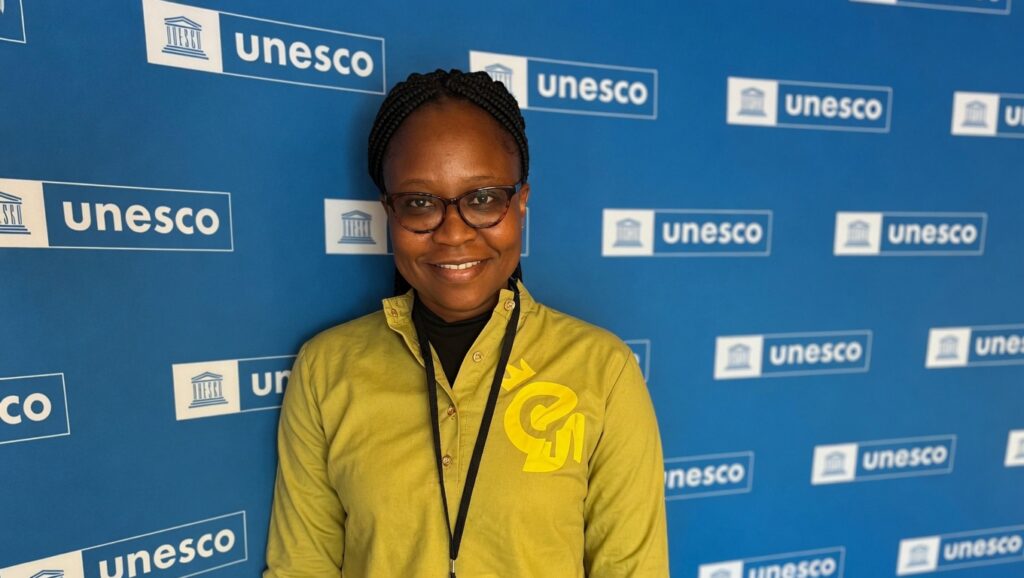
In the heart of Cotonou, a startup named SSaFE is redefining the boundaries of environmental technology. Led by chemical engineer Marielle Agbahoungbata, the company has developed an autonomous “filtering robot” that leverages artificial intelligence to convert contaminated water into a vital resource.
During a recent presentation at UNESCO in Paris, Agbahoungbata shared her vision for a practical solution to local water challenges. Her creation is not merely a monitoring tool; it is an intelligent system capable of independently determining the most effective treatment methods for various water sources.
Watt Air: an intelligent laboratory for water management
The device, known as Watt Air, functions as a compact, mobile laboratory. By analyzing specific pollutants, the integrated AI decides the optimal destination for the water—whether it should be used for agriculture, domestic chores, or human consumption.
“This technology optimizes both time and energy,” the founder noted. By calculating the exact amount of chemical reagents required, the robot ensures a level of precision that maximizes efficiency and minimizes waste in regions facing significant water stress.
Overcoming the literacy gap with local languages
One of the most distinctive features of the SSaFE innovation is its commitment to inclusivity. Watt Air is equipped with a multilingual voice interface designed to assist users regardless of their educational background. The system communicates in several regional languages, including Fon, Bambara, Swahili, and Wolof.
This approach allows individuals in rural communities to interact with the filtration system directly. As Marielle Agbahoungbata explained, the goal is to ensure that even those without formal schooling can effectively recycle water at home, making the AI adapt to human needs rather than requiring users to master complex technology.
The Sèmè City innovation ecosystem
The development of Watt Air has been nurtured within Sèmè City, the prominent innovation hub in Cotonou. Thierry d’Almeida, Director General of the center’s research institute, emphasized that the collaboration between mathematicians and chemists is essential for creating tailored solutions to local problems.
Boosted by a $30,000 grant from UNESCO, the project serves as a testament to the potential for African-led innovations to address continental issues through a deep understanding of the local environment.
A vision for 2027
While the robot currently exists as a prototype, the roadmap for SSaFE is ambitious, with a target for full deployment by 2027. The startup is currently seeking strategic partnerships and financial backing to transition from the experimental phase to widespread household use.
Ultimately, Marielle Agbahoungbata‘s work highlights a fundamental principle: technology is most valuable when it protects health, saves time, and remains accessible to everyone, regardless of their linguistic or social background.
You may also like
Senegal’s 2026 budget revision: how the deficit surge hits households, businesses and the Pastef majority
Benin’s €544,042 UNAIDS funding: the tangible consequences for patients, communities and the economy
Senegal-Azerbaijan pact in New York: what it means for jobs, trade and cooperation
What Luxembourg’s 9.8 billion FCFA port training pledge means for Benin’s workers and businesses
Burkina Faso: shrinking civil service payroll exacts a heavy toll on households and local economies