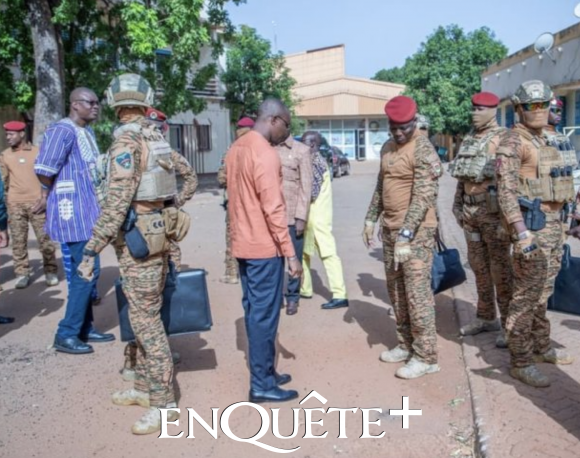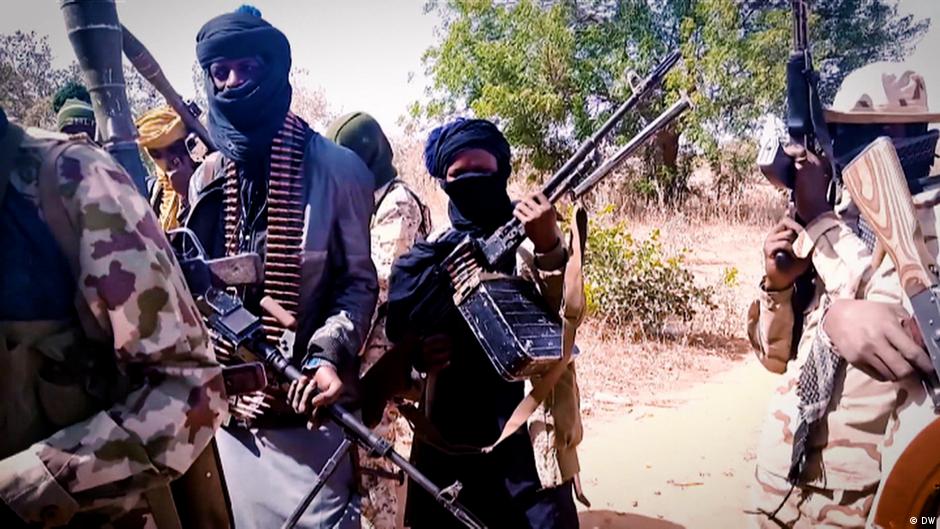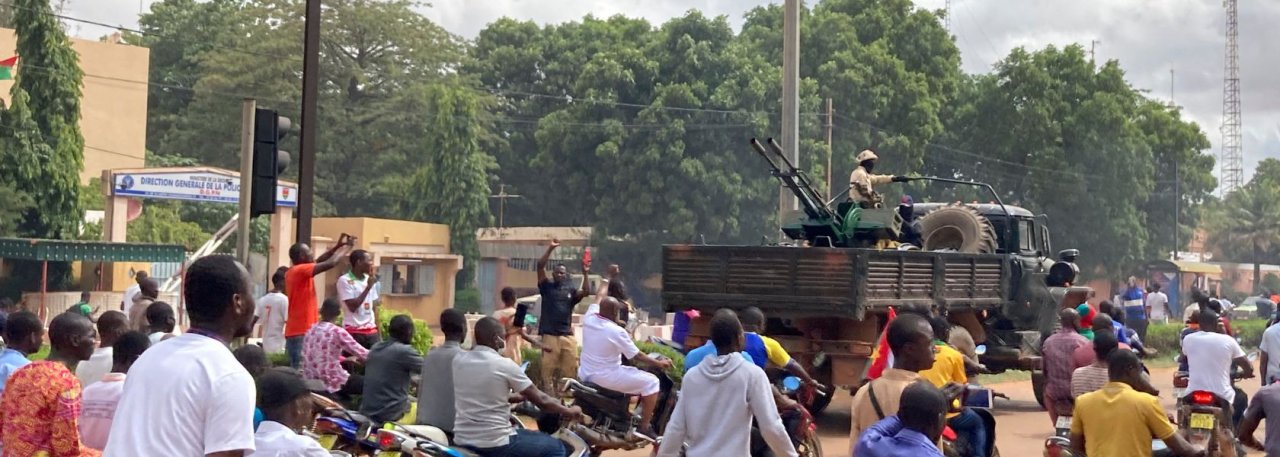

Mali currently faces a rapidly escalating and alarming security crisis. Coordinated offensives by various jihadist groups, alongside separatist movements gaining traction in the country’s northern regions, are exerting multifaceted strategic pressure on the Malian state. However, beneath this visible turmoil, a more profound transformation is underway. Less dramatic than the direct combat, this shift is proving infinitely more decisive: the conflict’s center of gravity is moving. What is unfolding in Mali today extends far beyond a mere military confrontation.
For over a decade, the Malian crisis has been approached predominantly through a security-focused lens. The deployment of national forces, successively supported by diverse international partners, aimed at stabilization through military might. While this strategy managed to contain certain dynamics in the short term, it ultimately failed to produce the anticipated structural changes.
Armed groups fill the political vacuum
Instead, this approach fostered a strategic illusion: the belief that restoring security would automatically precede the state’s return. Yet, Mali’s experience now demonstrates the opposite. A state can maintain military projection capabilities even as it progressively loses political, social, and symbolic control over its territory.
In numerous areas across central and northern Mali, the nature of power has undergone a significant evolution. The state hasn’t simply withdrawn; it has been replaced. Armed groups, both jihadist and others, have gradually established alternative forms of authority. To varying degrees, they now fulfill essential functions, including local security, conflict resolution, economic regulation, and social governance.
This reconfiguration of power isn’t solely based on coercion. It also emerges from a growing disconnect between the central state and a segment of its population. In these territories, the absence of public services, the weakness of administrative relays, and the perception of a distant authority have created a vacuum that other actors have successfully filled. In politics, a void never truly exists; it is always occupied.
The decisive struggle: earning legitimacy
The Malian crisis has now entered a phase where the military dimension, though indispensable, is no longer sufficient. The true confrontation takes place elsewhere: in the capacity to generate legitimacy.
Who genuinely protects the populace? Who delivers justice perceived as equitable? Who embodies credible and predictable authority? These questions now shape local choices. In this context, military superiority no longer guarantees victory. It can even prove to be without lasting effect if not accompanied by a political and social reconquest.
Rethinking the strategy for Mali
Escaping the current impasse necessitates a paradigm shift. The objective is no longer merely to reclaim positions or neutralize armed groups. It involves rebuilding a state presence capable of enduringly integrating into these territories. This demands an integrated approach, closely intertwining security, political, and social dimensions. The state must become visible once more, not solely through its force, but through its utility.
This requires:
- The effective restoration of sovereign functions closer to the people;
- The reinvestment in territories through credible administrative and social structures;
- The reconstruction of local chains of trust;
- The capacity to reclaim the initiative in shaping perceptions and narratives.
In essence, it is not simply about re-establishing state authority, but about making it legitimate again.
Mali is not an isolated case. In many respects, it serves as a laboratory for the contemporary evolution of conflicts across the Sahel. In this region, competition among actors is no longer confined to military confrontation. It is part of a broader struggle for the organization of societies, control over territories, and influence over populations. This fundamental shift demands a re-evaluation of traditional categories of war and stabilization. Power is no longer measured solely by the capacity for coercion, but by the ability to structure an accepted order.
An unresolved equation for Mali’s future
The Malian crisis has reached a stage where the crucial question is no longer just about territorial control, but about rebuilding the political and social authority of the state. The real battle is not fought solely on the front lines. It is waged in the capacity to regain legitimacy, usefulness, and acceptance by the populations. For in the Sahel, no territory remains empty for long. When a state recedes, other actors step in. However, the lasting stabilization of Mali also necessitates the gradual return of the political dimension to the national arena.
This prospect remains particularly complex within a context marked by the weakening of political parties, the marginalization or exile of numerous civilian figures, and the predominance of security-driven logic. The central question, therefore, is no longer merely how to regain territorial control, but under what conditions a credible political space can be recreated to support the state’s reconstruction and restore a shared legitimacy.