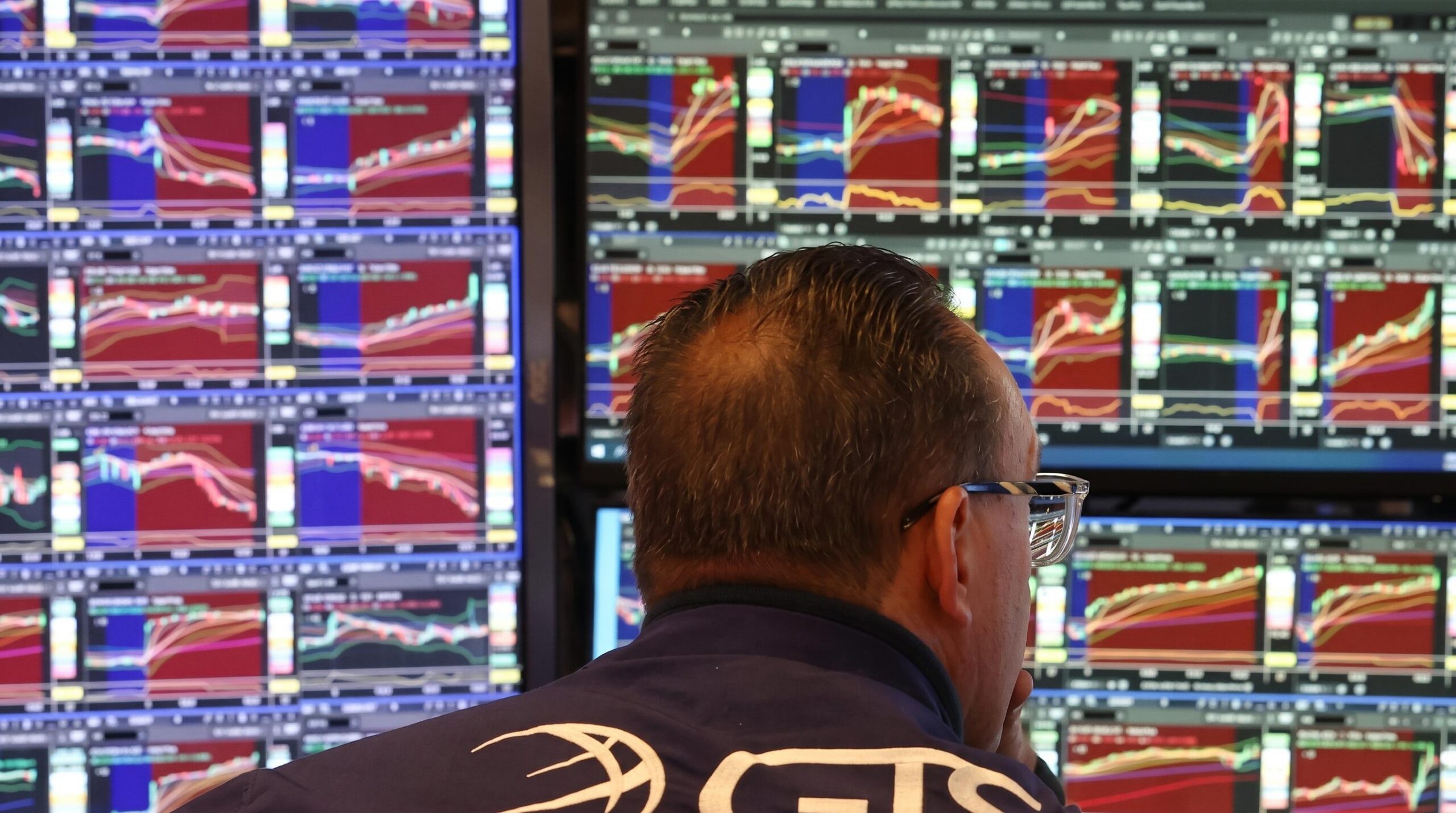
The Nasdaq’s dramatic sell-off of late—one of the most severe in 18 months—has wiped out over $2.5 trillion in tech and semiconductor stocks in a single session. With the AI-driven market now facing unprecedented volatility, investors are asking: is this a long-overdue correction for an overheated sector, or the first domino in a broader financial crisis?
This swift reversal of fortune has put a spotlight on the very companies that have driven Wall Street’s recent gains. Once untouchable leaders like Nvidia and AMD are now under intense pressure, as algorithmic trading accelerates the decline. The market’s shift from exuberance to panic raises a critical question: how far will AI valuations fall before finding stability?
AI stocks in freefall: Nvidia, AMD, and the semiconductor sell-off
The sell-off wasn’t random—it targeted the very companies at the heart of the artificial intelligence revolution. Shares of Nvidia, the dominant force in AI accelerators, tumbled between 6% and 9%, erasing tens of billions in market value in a matter of hours. The downturn spread rapidly across the semiconductor industry:
- AMD experienced a sharp drop ranging from 6% to 17%, exposing vulnerabilities in its ability to compete with Nvidia’s dominance.
- Broadcom, closely tied to AI infrastructure, also faced steep losses.
- Memory chipmakers—Micron (-10% to -17%), Western Digital (-13%), and SanDisk (-15% to -22%)—bore the brunt of the sell-off, signaling a sharp pullback in data center demand.
The Philadelphia Semiconductor Index (SOX) followed suit with a more than 12% plunge, wiping out months of gains. The message from the market was unmistakable: the AI infrastructure boom, which has absorbed hundreds of billions in investment, is facing intense scrutiny.
Market meltdown: the S&P 500, Dow, and VIX reveal deepening panic
The tech rout extended well beyond the Nasdaq, exposing cracks in the broader market:
- S&P 500: Dropped over 2.6% to 4.3%, marking its worst single-day performance of the year.
- Dow Jones Industrial Average: Fell more than 3%, dragged down by both tech and industrial giants.
- Cboe Volatility Index (VIX): Soared by 33% to above 60—the “fear gauge” is now flashing warning signals, signaling panic among institutional investors and a resurgence of extreme market volatility.
The speed and scale of the decline suggest this wasn’t just a correction—it was a liquidity event, fueled by algorithmic trading cascades and forced selling. With more than $2.5 trillion erased in a single day, the market’s adjustment is no longer hypothetical. It’s real, and it’s forcing a reevaluation of risk across every sector.
Three key drivers behind the tech crash: ROI concerns, regulatory uncertainty, and automated sell-offs
While market downturns rarely have a single cause, this collapse was the result of three converging forces that transformed a routine correction into a full-blown financial storm.
1\. Doubts over AI’s return on investment
The concern isn’t that AI itself is failing—it’s that the financial returns are not keeping pace with the massive investments. After pouring hundreds of billions into data centers, GPUs, and energy infrastructure, investors are questioning whether the promised growth will ever materialize. High valuations are now being challenged as revenue growth fails to justify the spending spree.
2\. Regulatory uncertainty overshadowing data center expansion
Political uncertainty is casting a long shadow over the AI sector. Proposals around U.S. energy policy and data center regulations—including limits on energy consumption, grid access restrictions, and delayed permit approvals—threaten to slow future semiconductor demand, particularly for memory and high-bandwidth chips. The fear: a structural slowdown in AI infrastructure investment before the sector even reaches maturity.
3\. Algorithmic trading and forced liquidations
After sustained growth, trading algorithms and hedge funds were primed to trigger sell-offs at the slightest sign of weakness. When key technical levels were breached, automated selling kicked in, turning a modest pullback into a full-blown avalanche. This reflexive behavior means sentiment can shift from optimism to despair in a matter of hours.
Global ripple effects: Asia’s markets tremble amid the tech crash
The impact of Wall Street’s sell-off wasn’t confined to the U.S.—it sent shockwaves across global markets:
- Japan (Nikkei 225): Dropped 6% as investors fled risk assets.
- South Korea (Kospi): Shed over 8%, with chip giants Samsung and SK Hynix among the hardest hit.
- Europe: Futures across major indices hinted at sharp declines, with London, Frankfurt, and Paris all set to open significantly lower.
The question now isn’t whether this will impact the global economy—it’s how long and how deep the fallout will be. Central banks, already on high alert, are monitoring the situation closely, but the window for intervention may be narrow in an era of rising inflation and divergent monetary policies.
What’s next for AI stocks? Bull trap, soft landing, or systemic reset?
Analysts are divided over the outlook. Some argue this is a long-overdue correction—a necessary reset after years of exuberance. Others warn it could be the first sign of a deeper devaluation in tech assets, particularly in AI-related stocks that have raced ahead of their fundamentals. With the VIX above 60 and the S&P 500 down over 4%, panic—not patience—is now driving market behavior.
For investors, one thing is clear: this is not just another market hiccup. The once-invincible AI sector is now facing its toughest stress test yet. Whether it survives this crash—or whether it was built on shaky foundations—will shape the next decade of technology investment.
The markets have spoken. The question now is: will Wall Street heed the warning?