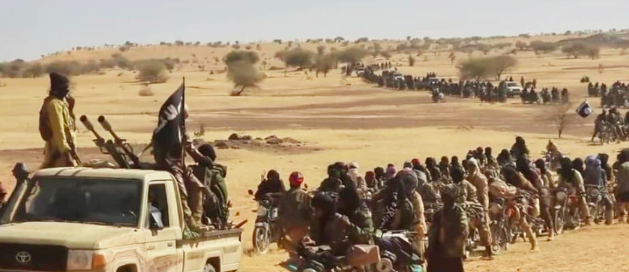
The United Nations has raised the alarm over the escalating threat posed by the Islamic State (ISIS) in Africa, particularly in the Sahel region and around the Lake Chad Basin. These areas have emerged as critical hotspots for the group’s expanding influence, despite recent setbacks to its central leadership.
This assessment comes from a newly released report by United Nations Secretary-General António Guterres, presented to the UN Security Council. The document underscores that while the core structure of ISIS has weakened, its regional affiliates are growing increasingly autonomous and leveraging local vulnerabilities to sustain and expand their operations.
According to the report, prepared by Oguljeren Niyazberdiyeva of the UN Office of Counter-Terrorism (UNOCT), the Sahel and the Lake Chad Basin remain the primary theaters of ISIS’s regional expansion. The group, originally derived from the Arabic acronym for the Islamic State in Iraq and Syria (ISIS), continues to evolve its tactics to survive military pressure.
The Islamic State’s West Africa Province (ISWAP) remains the most active ISIS affiliate globally, the report notes. ISWAP is not only sustaining its military capabilities but also integrating commercial drones into its operations, enhancing its surveillance and attack capacities.
Beyond West Africa, ISIS-linked groups in the Democratic Republic of the Congo (DRC) and Mozambique are also intensifying their activities. Despite facing counter-terrorism efforts by national and regional forces, these groups persist in recruiting new members and deepening their local networks.
‘ISIS has fundamentally restructured its operations to withstand military campaigns targeting its core leadership,’ said Oguljeren Niyazberdiyeva. ‘The group continues to pose a severe threat to international peace and security, despite coordinated global efforts to dismantle it.’
While sustained military operations have degraded ISIS’s central command and reduced its ability to orchestrate large-scale, complex attacks, the group has transformed into a decentralized network of regional branches. United Nations analysts warn that this shift allows ISIS to adapt more effectively to local contexts, exploiting institutional weaknesses, prolonged conflicts, and economic hardships to entrench itself further.
The report also highlights ISIS’s growing reliance on advanced technologies. The group is increasingly leveraging artificial intelligence, encrypted communications, digital platforms, virtual assets, and unmanned aerial vehicles (UAVs) to refine its propaganda, recruitment, financing, and operational planning.
For the UN, this technological adaptation underscores the urgent need for stronger international cooperation and closer collaboration with the private sector and tech companies. Such partnerships are essential to regulate emerging tools that ISIS exploits, while also harnessing technology’s potential to bolster counter-terrorism efforts when used responsibly and in compliance with international law.
Key Findings from the Report
- Regional Autonomy: ISIS’s shift to a decentralized model has enabled its affiliates to operate with greater independence, making the group more resilient to external pressures.
- Technological Integration: The use of drones, AI, and encrypted communications has enhanced ISIS’s operational efficiency and expanded its reach.
- Local Exploitation: The group continues to capitalize on political instability, economic disparities, and weak governance in the Sahel and Lake Chad Basin to strengthen its foothold.
- Global Threat Persistence: Despite setbacks to its central leadership, ISIS remains a significant threat due to its adaptable structure and evolving tactics.
Regional Impact and Response
The report emphasizes that the Sahel and Lake Chad Basin are not only strategic locations for ISIS’s expansion but also regions where the group’s activities are exacerbating existing security challenges. Local and international efforts to counter this threat must adapt to the group’s evolving strategies, focusing on both military and technological fronts.
Efforts to disrupt ISIS’s financing, propaganda, and recruitment networks remain critical. However, the report stresses that technology-driven solutions, such as AI-driven monitoring and blockchain analysis for financial tracking, could play a pivotal role in weakening the group’s operational capabilities.