
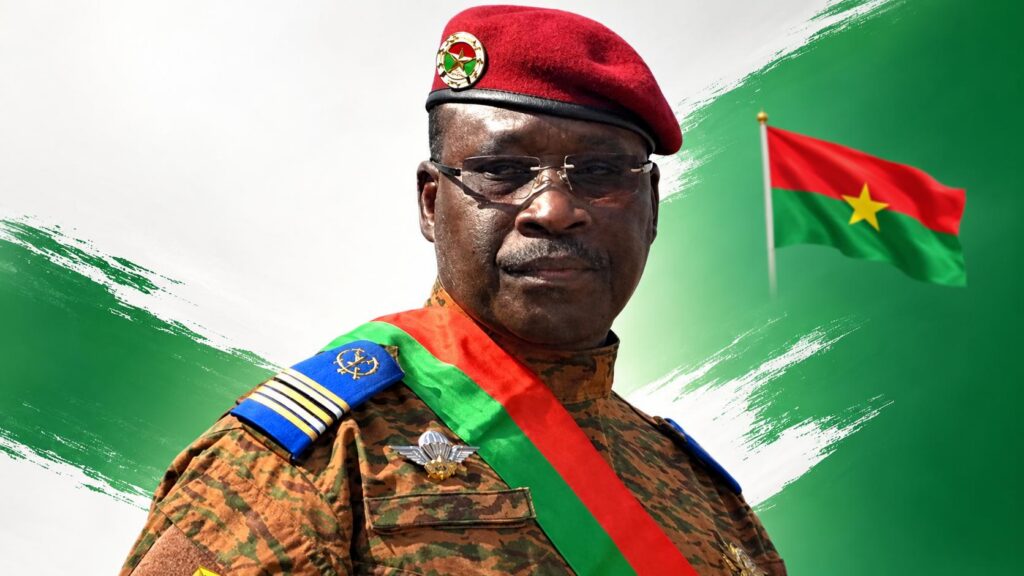
General Yacouba Isaac Zida has drawn a hard line under the debate. Genuine sovereignty, in his words, is not about choosing which foreign power you answer to — it is about acquiring the means to answer to none. Aimed squarely at Captain Ibrahim Traoré and the Alliance of Sahel States (AES), the remark lays bare what he describes as a political performance rather than a liberation project.
The messenger is anything but neutral. A former head of Burkina Faso’s transitional government, struck off the army roll for desertion and now living in exile, Zida himself mirrors the contradictions of a military class that keeps circling the very instability it once promised to end.
An AES built on staging rather than statecraft
Ouagadougou’s haste to erect a confederal army and supranational bodies inside the AES looks less like strategy than a propaganda sprint.
- Domestic emergencies pushed to the back. Announcing the merger of regional sovereignties while large stretches of national territory remain outside the state’s reach is strategic blindness. Protecting civilians and consolidating basic institutions should come first — not the stacking of hollow shells.
- Legitimacy performed, not earned. A calendar crowded with summits and fiery declarations serves above all as a political shield for unelected exceptional regimes, crowding out rigorous and realistic planning.
Four levers of dependence that no slogan has removed
The regime’s eagerness to throw itself into Moscow’s arms under the banner of an “anti-imperialist rupture” amounts to renegotiating the terms of submission rather than ending them. Behind the populist rhetoric, the transitional government struggles to hide a chronic inability to build real autonomy. Four channels keep the country tethered to outside actors.
- Military and doctrinal reliance: The promise of a home-grown defence instrument collapses against the systematic use of foreign instructors and paramilitaries. Aircraft, munitions and light armour — frequently mislabelled as “locally manufactured” when they are merely assembled on site — confirm total subordination to external supply chains.
- Food dependence: Self-reliance talk crashes into hard facts. The media choreography around incoming shipments of Russian wheat, and the repeated appeals for international humanitarian aid to feed displaced communities, show that the authorities cannot even guarantee basic subsistence.
- Financial and budgetary fragility: Unable to fund its crisis budget from sound domestic resources, the military leadership resorts to financial expedients and emergency loans from new geopolitical backers, mortgaging the economic prospects of future generations.
- Technological and strategic deadlock: Whether the subject is agricultural inputs or energy equipment, the lack of an independent industrial base forces the country to beg beyond its borders for what it cannot produce itself.
A new tutor, the same leash
Authentic sovereignty is not paraded in military marches, nor measured by queues for foreign grain. By swapping Paris’s patronage for Moscow’s, Captain Traoré has not set Burkina Faso free — he has merely changed who holds the leash.
You may also like
Burkina Faso: sovereignty on credit and the bill that comes later
Inside Mali’s worst military setback: the fall of the Dioura camp to JNIM
Niger’s 334 billion CFA franc tax backlog: a state that folds before its economic giants
Benin’s AME teachers: pay, protection and integration in 2026-2027
Niger : à Niamey, un convoi d’eau destiné aux mercenaires russes saccagé par la foule