In any functioning democracy, questions about national defense are handled with a degree of confidentiality. Military operations, intelligence gathering, and strategic partnerships cannot be fully disclosed to the public. However, when secrecy becomes the norm rather than the exception, especially on matters of national significance, it inevitably fuels skepticism rather than fostering trust.
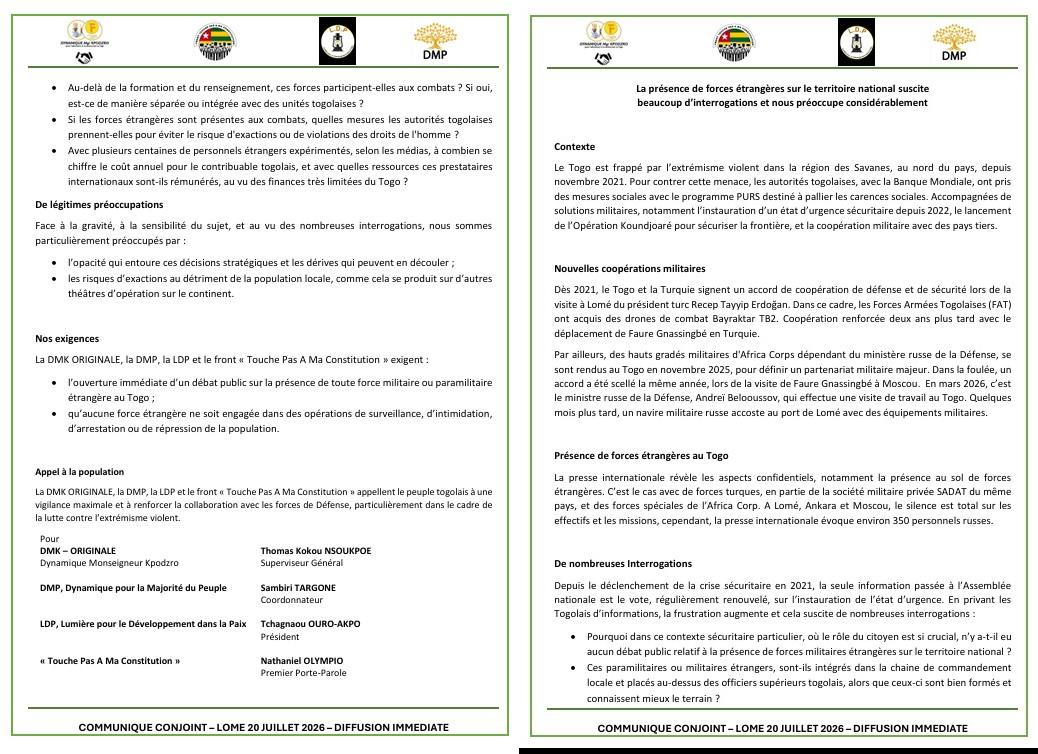
Recent reports from multiple observers and media outlets suggest that foreign military personnel—specifically from Russia and Turkey—are present on Togolese soil. While the existence of this presence is confirmed, it raises critical questions that demand clear answers from the government.
Is foreign military presence a shield against political dissent?
The lack of transparency surrounding these foreign forces has given rise to deeper suspicions about the motives behind their deployment. Analysts argue that the arrival of these military partners may reflect a growing unease within the administration of President Faure Gnassingbé. With persistent criticism of poor governance, economic hardships, and institutional restrictions, fears of both popular uprisings and internal coups loom large over the regime.
Critics contend that these foreign military partnerships are not primarily about safeguarding national borders but rather serve as a lifeline for a leadership determined to cling to power at all costs.
Unanswered questions on operational and legal frameworks
The exact nature of these foreign personnel’s mission remains unclear. Are they involved in training Togolese troops, intelligence gathering, strategic advisory roles, or technical maintenance of military equipment? Alternatively, are they providing close protection for state officials? Without official clarification, speculation fills the void.
Another pressing issue is their operational role. Are these foreign soldiers merely advisors, or do they participate in domestic security operations alongside local forces? Understanding the precise terms of their engagement is crucial to assessing the nature of the agreements in place.
The question of accountability also looms large. In countries hosting foreign military personnel, legal frameworks typically outline their rights, obligations, and oversight mechanisms. What provisions has Togo established to regulate their activities? What safeguards are in place to prevent abuses and ensure compliance with national laws and international commitments?
The financial burden of secrecy
Financial transparency is another major concern. How many foreign personnel are actually deployed? What is the duration of their mission? What is the cost of this cooperation to public finances? Are these expenses covered by the Togolese state budget, by partner countries, or through specific cooperation agreements? Taxpayers, who fund public policies, have every right to demand clarity on these commitments.
This is not to dismiss the potential benefits of military cooperation. Many states collaborate with foreign partners to bolster their defense capabilities against shared threats. Togo, too, faces a complex regional security landscape, including the persistent terrorist threat in the north, which could justify defensive partnerships.
Transparency as a cornerstone of public trust
Yet, public trust is also built on transparency. When a government openly communicates the objectives, legal frameworks, and modalities of military cooperation, it minimizes the spread of rumors, unfounded speculations, and contradictory interpretations.
In a region marked by chronic political instability and shifting security alliances, the most effective response to public concerns is information. Without compromising national security imperatives, authorities can provide insights into the goals pursued, the safeguards implemented, and the responsibilities of all parties involved.
In defense matters as in other areas of governance, transparency is not a luxury—it is a necessity for legitimacy. When foreign military presence raises as many questions as it answers and appears to align with efforts to secure an unyielding grip on power, it is the authorities’ responsibility to illuminate the debate. In a democracy, silence is never a sustainable communication strategy; it inevitably paves the way for doubt.