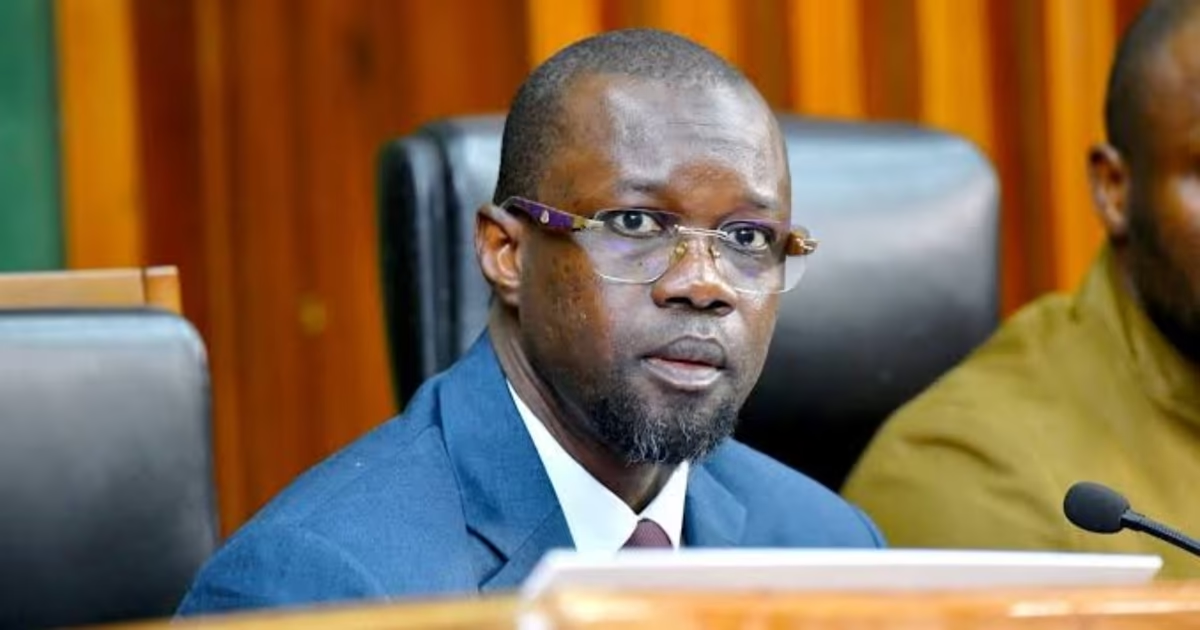
Ousmane Sonko is championing a groundbreaking bill that would require the president to publicly declare their assets upon leaving office, a move now backed by the Justice Minister. This initiative reflects a broader push for accountability and transparency in Senegal’s political landscape.
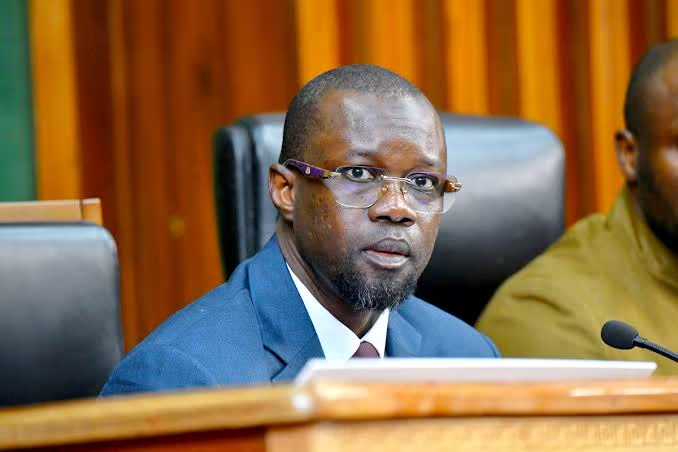
Senegal’s National Assembly gears up for sweeping reforms
Senegal’s National Assembly is preparing for an intense legislative session, with Ousmane Sonko’s majority coalition driving a series of reforms focused on transparency and public accountability. The agenda includes constitutional amendments and renewed scrutiny of state operations, signaling a decisive shift in governance priorities.
A constitutional amendment for asset declaration
The most anticipated proposal involves amending Article 37 of the Constitution to mandate that the president declare their assets upon leaving office. This bill has gained crucial support from the Justice Minister, who advocates for a comprehensive framework applying uniformly to all senior public officials. Another key initiative targets the regulation of political funds, long considered a grey area in public finance. The proposed measures aim to enhance transparency and ensure strict oversight of these financial flows.
Three new parliamentary inquiry commissions launched
In parallel, the National Assembly’s Bureau has approved the creation of three new parliamentary inquiry commissions. The first will investigate the management of state-owned property, particularly following recent controversies surrounding the Cité Fayçal and Sogepa’s operations. A second commission will revisit the long-standing issue of TRS, while the third will examine pending executive priorities, including the eagerly awaited Petroleum Code—a bill critical to Senegal’s economic and energy future.
Legislative agenda reflects broader governance goals
The upcoming session underscores Sonko’s commitment to strengthening institutional checks and balances. By prioritizing asset declaration and political fund oversight, the reforms seek to reinforce public trust in government institutions and curb corruption risks. The Petroleum Code, in particular, holds significant implications for Senegal’s economic trajectory as the country navigates evolving energy demands.