Tchad rising street vendors and the hidden cost for children
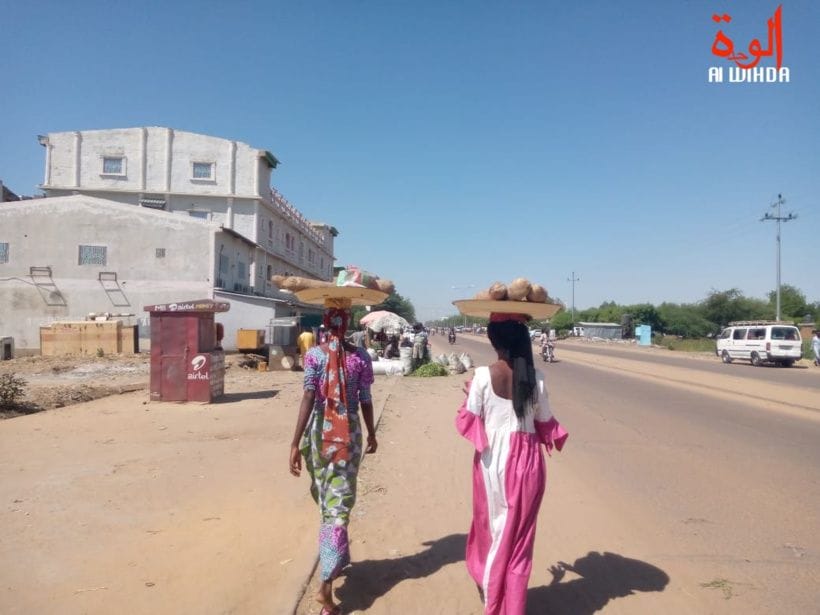
Across the bustling markets of Tchad, a quiet revolution is unfolding. Women, their heads balanced under colorful basins overflowing with fresh produce, sizzling snacks, or vibrant fabrics, weave through narrow alleys. Their voices rise above the din of motors and pedestrians, each call a lifeline of commerce. In cities like N’Djamena, Moundou, and Abéché, their presence is impossible to ignore—a relentless tide of resilience reshaping the urban landscape.
Freedom on the streets, but at what price?
Aïcha, her forehead beaded with sweat, adjusts the weight on her head as she navigates the crowded streets. Her youngest clings to her back, while she deftly offers roasted peanuts to passersby. “It’s exhausting, but no one tells me when to stop,” she confides, her voice steady despite the fatigue. Nearby, Fanta tends to her frying pan, flames licking at the edges, while her five-year-old son plays in the dust, oblivious to the heat. These women, once confined to household chores, now command the rhythm of the streets. They bargain, transport, and sustain their families—each step a declaration of independence.
Yet beneath the surface of this newfound autonomy lies a troubling reality. Children accompany their mothers, their small lungs filling with smoke from open fires, their tiny hands lugging heavy loads. In Abéché, a seven-year-old boy was spotted earlier this week, balancing a bucket of water on his head as he shouted, “One franc!” while his mother negotiated the price of millet. Schoolbooks gather dust in homes; classrooms are replaced by the unrelenting demands of survival. Is this the hidden toll of women’s empowerment—a generation of children left behind in the shadows of progress?
The double-edged sword of street vending
For these women, the streets offer a rare escape from traditional constraints. No longer bound by rigid expectations, they carve out livelihoods on their own terms. But the trade-off is stark. Children, often too young to understand, are thrust into a world of adult burdens. They cough in the acrid air, nap on uneven ground, or beg for scraps of shade. Their futures hang in the balance, caught between the necessity of labor and the promise of education.
As the sun climbs higher, the streets of Tchad grow louder with the hum of commerce. Women push forward, their strides fueled by determination. But for their children, the path ahead is fraught with uncertainty. Will the markets that empower their mothers also steal their childhoods?