From subsistence to surplus: Bénin’s agricultural revolution
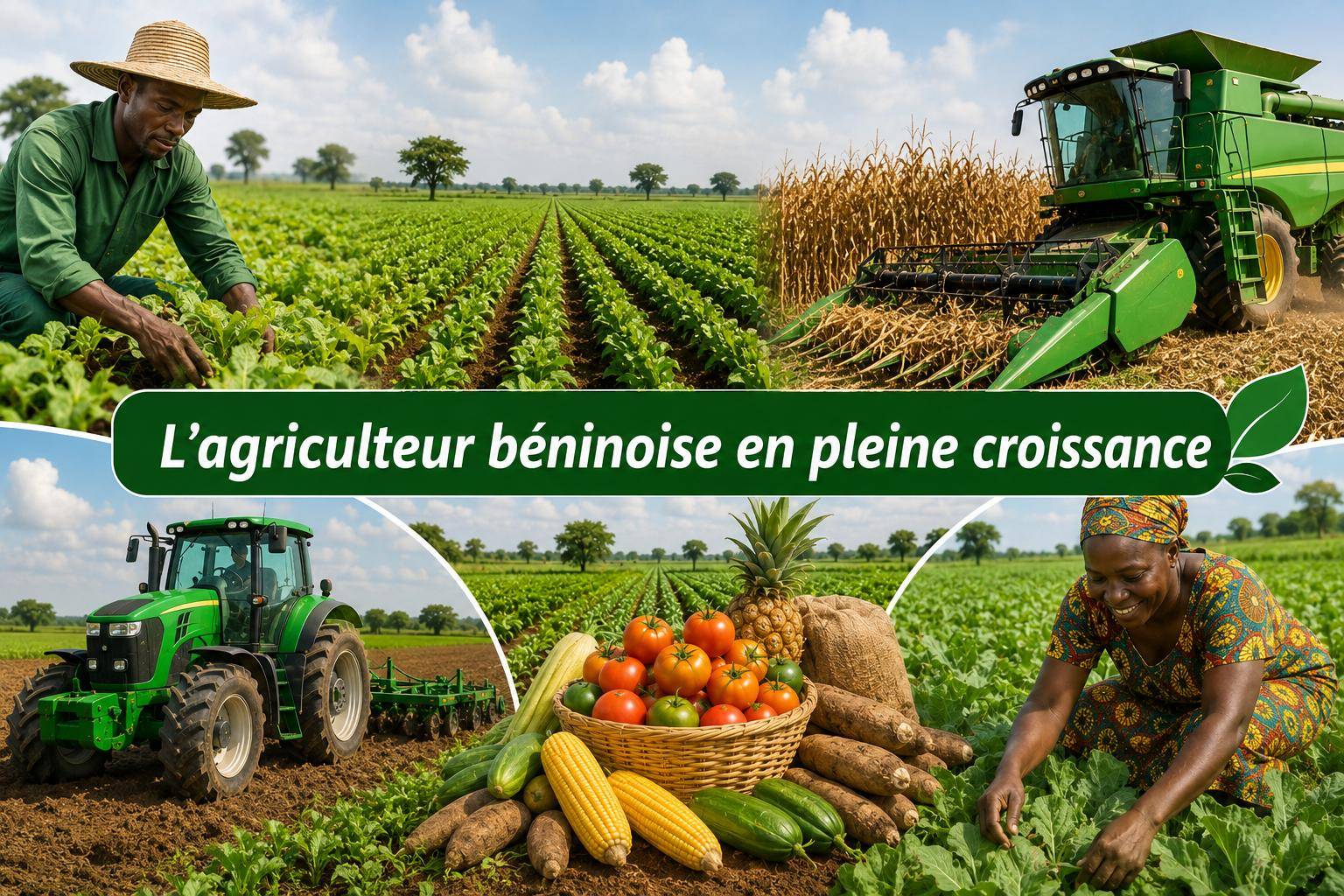
Since 2016, Bénin’s agricultural landscape has undergone a profound transformation. Strategic government policies—centered on massive subsidies, rapid mechanization, and systematic land development—have propelled the nation to historic production peaks. From cotton and pineapple to maize and soybeans, agriculture has become the cornerstone of national growth and a pillar of food security.
Agricultural success stories: numbers speak volumes
Over the past decade, Bénin’s farmlands have undergone a remarkable evolution. Bold development initiatives under President Patrice Talon’s leadership have transformed output across multiple crops, setting new benchmarks for the country’s agricultural sector.
Maize: Once producing barely 1.3 million tonnes in 2016, maize output soared to 2.5 million tonnes by 2025. With domestic demand hovering around 1 million tonnes, Bénin has achieved self-sufficiency—though managing surplus flow across borders remains a key challenge to stabilize local market prices.
Soybeans: A near-niche crop in 2016 with just 140,000 tonnes, soy production crossed 422,000 tonnes by 2022 and reached a record 606,016 tonnes in the 2024–2025 season—over four times the original volume. The surge feeds both the modern processing hubs of the Glo-Djigbé Industrial Zone (GDIZ) and the export market.
Rice: Paddy rice production jumped from 204,000 tonnes before 2016 to 525,000 tonnes in 2022 and reached 1 million tonnes by 2025.
Cotton: Long the flagship of Bénin’s agriculture, cotton production averaged just 269,000 tonnes in 2015. Since 2016, annual output has consistently exceeded 640,000 tonnes, peaking at 766,273 tonnes in 2021. This consistency has cemented Bénin’s status as Africa’s top cotton producer, with the million-tonne target within reach.
Pineapple and cashew: Pineapple output rose by 93%, from 244,000 tonnes pre-2016 to 470,000 tonnes in 2022, with projections nearing 600,000 tonnes. Cashew production doubled—up 105%—climbing from 91,000 tonnes to 187,000 tonnes by 2023, while yields improved by 34%. To boost this sector, the government subsidizes 500 FCFA of each 600 FCFA certified sapling purchased by farmers.
A lifeline for farmers: 110 billion FCFA in subsidies against rising input costs
These gains would not have been possible without state intervention. With global fertilizer and chemical input prices skyrocketing, threatening to cripple farm profitability, the government launched an unprecedented support program. From 2022 to 2025, over 110 billion FCFA in subsidies were distributed across successive farming seasons. This decisive action stabilized production costs, safeguarded yields, and shielded Bénin from food insecurity risks.
Water control and mechanization: breaking free from climate dependency
The modernization drive extends beyond financing. Hydro-agricultural infrastructure has expanded dramatically. Before 2016, only 6,200 hectares were developed—just 2% of the country’s potential. Post-2016, 25,440 hectares have been equipped across 67 municipalities—four times the prior area. The long-term goal is to develop 50,000 hectares, enhancing sector resilience and boosting farmer incomes.
Mechanization has also surged. Before 2016, less than 8% of farmland was tilled mechanically. Today, over 400,000 hectares are mechanically cultivated using 5,000 subsidized tractor kits sold at half price. Training programs have equipped 6,000 tractor operators and 300 mechanics. The government aims to raise mechanization rates to 30% by late 2026, deploying 8,000 active kits.
Financial reform and sustainable land stewardship
Outdated financing tools such as the FNDA and FADeC-Agriculture have been restructured into high-impact instruments. The National Agricultural Development Fund (FNDA) now finances over 3,000 projects totaling over 19 billion FCFA, while the Municipal Development Support Fund (FADeC-Agriculture) has driven 330 communal investments leveraging 68 billion FCFA. The focus now is on deepening governance to unlock thousands more initiatives.
Sustainability has taken center stage. With 80% of Bénin’s soils suffering low fertility before 2016, sustainable land management practices have rehabilitated over 3 million hectares, restoring fertility and preventing degradation.
Aquatic ecosystems have also been revitalized. Cleanup and restocking of once-polluted and underutilized water bodies have fueled a 79% rise in fishery output. High-quality shrimp from Bénin are now re-exported to the European Union. Livestock production has surged 53% for meat and 43% for eggs, with a national coverage target of 75% for local demand.
Territorial agriculture: building a modern, market-driven farming economy
Through targeted sectoral promotion and reinforced state functions, Bénin has restructured its rural economy from the ground up. Access to international markets has improved, and strategic partnerships are strengthening daily.
In less than ten years, bold policy choices and unprecedented financial backing under President Patrice Talon’s administration have redefined farming in Bénin. Agriculture is no longer a survival strategy—it is a dynamic, modern, and competitive economic engine. The challenge now is to sustain this momentum, strengthen oversight, and ensure the prosperity reaches every farmer in the countryside.