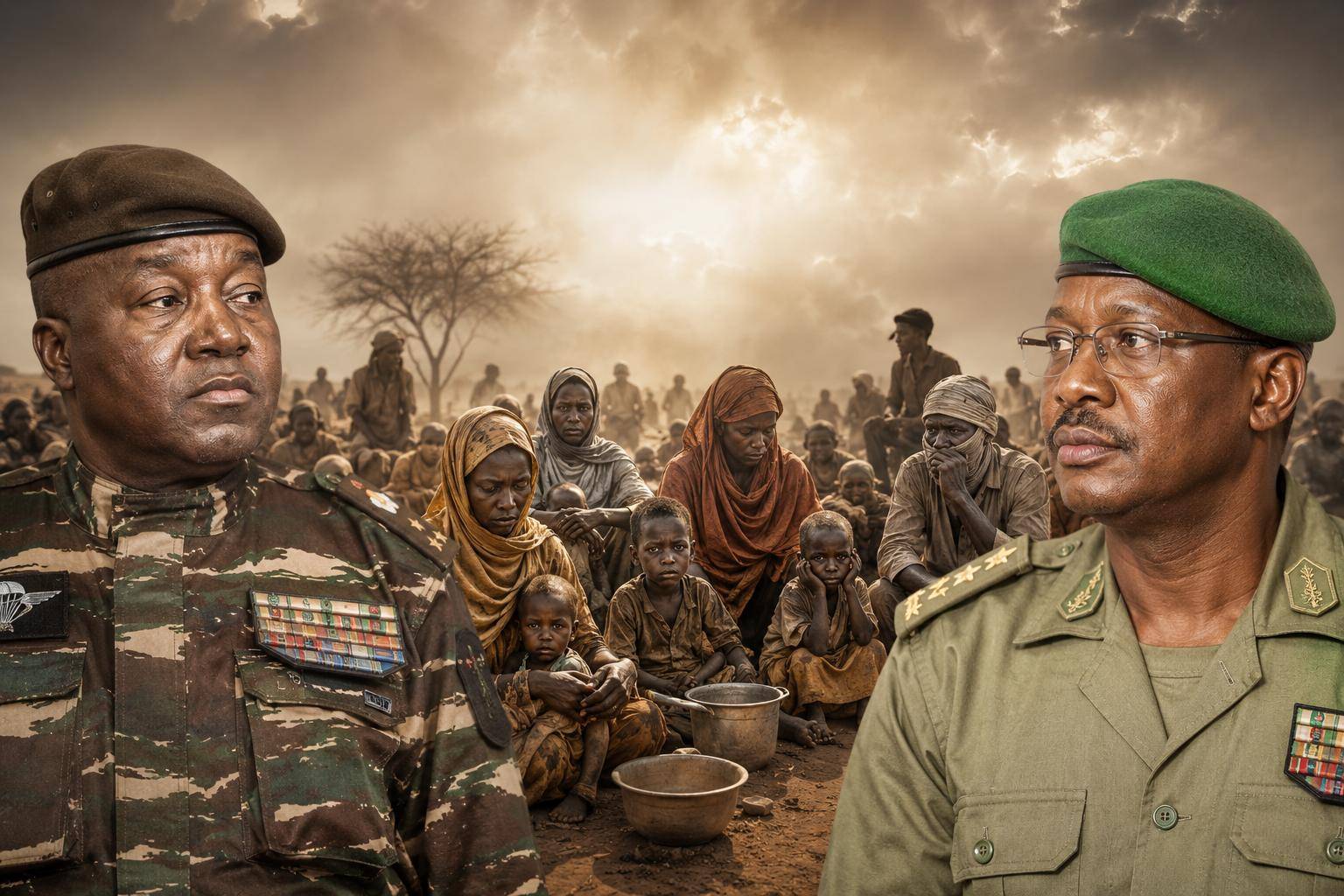
Senegal’s economic divide: Sonko vs Faye’s conflicting visions

The dismissal of Ousmane Sonko by Bassirou Diomaye Faye on May 23, 2026, wasn’t merely a clash of personalities. It marked the irreconcilable clash between two diametrically opposed economic philosophies that had briefly coexisted under the same banner. Two years after the April 2024 political transition—which brought Faye to power and Sonko to the premiership—the partnership collapsed over three critical economic questions shaping Senegal’s future: debt management, hydrocarbon policy, and the nature of capital financing national development.
Debt as the breaking point
The most visible fracture centered on debt. In September 2024, Ousmane Sonko publicly exposed undisclosed debt accumulated under Macky Sall’s administration. By March 2025, an IMF assessment revealed approximately €7 billion in unrecorded commitments, pushing the country’s debt-to-GDP ratio beyond 100%. Annual debt servicing consumes 5,500 billion West African CFA francs (€8.4 billion), while annual refinancing needs approach 6,000 billion CFA francs (€9.1 billion). The country’s sovereign credit rating was downgraded three times within twelve months.
Against this backdrop, two diametrically opposed strategies emerged. Sonko rejected any restructuring, positioning debt denunciation as the cornerstone of his public communications. He addressed the nation, the diaspora, and his militant base, refusing to be seen as the leader who would compromise his own legitimacy through negotiations with Washington. Faye, however, pursued a different path—engaging proactively with the IMF, hosting a delegation in November 2025, and initiating a national dialogue in May 2026.
The suspended €1.55 billion IMF program, closed international financial markets, and the looming threat of a 2028 sovereign default made Sonko’s position economically unsustainable—yet politically potent as a rallying cry for the PASTEF party, which he founded in 2014.