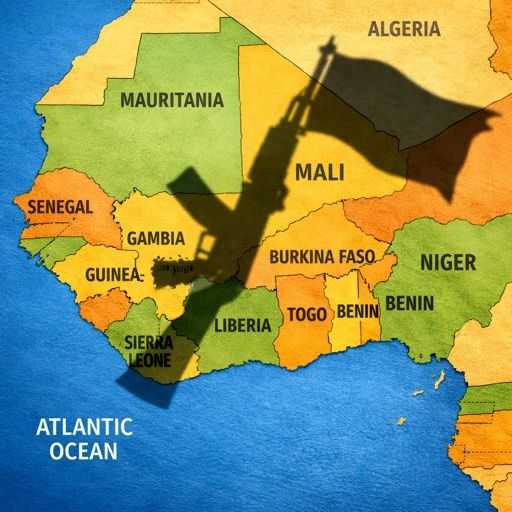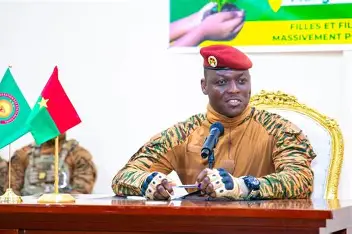
The age-old trap of leadership—where military figures ascending to power confuse rhetorical strength with ground reality—appears to be ensnaring Burkina Faso’s current leadership. Behind carefully staged appearances, disciplined uniforms, and fiery denunciations of the « treacherous West, » an alternative narrative is unfolding. The image of an unshakable authority is gradually giving way to a regime facing mounting internal fissures.
From camaraderie to suspicion: the erosion of trust
Critics argue that Captain Ibrahim Traoré’s position has become increasingly precarious, with confidence giving way to deep-seated mistrust within his inner circle. This perception is fueled by persistent rumors of plot attempts, high-level military reshuffles, and successive overhauls of the security apparatus.
« When a leadership begins to fear its own guards, it ceases to protect the nation and instead safeguards its own shadow. »
The purge of early allies
Historical precedents across Africa and beyond reveal a recurring pattern: those who assist in seizing power often become the first to be distrusted once authority solidifies. Since assuming leadership in September 2022, Ibrahim Traoré has restructured the military and security hierarchy, sidelining or transferring several influential early supporters. The removal of the intelligence services director—a key figure in the security framework—has raised particular concerns. Analysts suggest that when a head of state systematically reshapes institutions tasked with ensuring their safety, it signals a loss of faith within their closest circle.
In essence, when governance shifts from loyalty to suspicion, the crisis extends beyond security—it becomes fundamentally political.
The military’s fractured cohesion
Once united by the urgency of combating armed groups, the Burkinabè armed forces now appear riven by doubt. Frequent promotions, appointments, and replacements suggest that personal allegiance is increasingly overshadowing operational merit, a trend observers describe as:
- An initial promise of unity (2022)
- A persistent decline in security conditions
- Recurrent overhauls of high command
- A governance model steeped in rising mistrust
Governance through fear
Confronted with unrelenting security challenges, the regime has adopted a policy of political hardening, prompting criticism on multiple fronts:
- Arrests of prominent regime critics;
- Allegations of enforced disappearances and kidnappings, as reported by human rights organizations;
- Media restrictions, including suspensions and constraints on journalists;
- Coercive measures against civil society actors, perceived by supporters as retaliatory actions.
These developments align with concerns raised in international human rights reports, which highlight a marked regression in public freedoms across Burkina Faso. Official communications, meanwhile, have become heavily centered on the figure of the head of state, with state media and pro-government outlets amplifying the captain’s public engagements. For opponents, this strategy does not reflect unchallenged authority but rather an attempt to compensate for systemic weaknesses through information control.
The security crisis persists
Yet the most pressing challenge remains unchanged. Nearly four years after the power transition, the original justifications for the coup still loom large.
State control remains tenuous in many regions, where armed groups maintain influence or outright dominance. The humanitarian crisis deepens, with millions displaced by insecurity and its cascading effects. Attacks on civilians, defense forces, and civilian volunteers continue unabated. Critics warn that political consolidation is increasingly overshadowing efforts to address security and humanitarian emergencies.
Data from the United Nations, humanitarian agencies, and research institutions confirm that despite military efforts, the security crisis endures. Jihadist attacks persist across several regions, while internal displacement rates remain among the highest in West Africa.
The perils of isolation
Patriotic rhetoric, however mobilizing, cannot substitute for tangible results—military progress, institutional rebuilding, or restored public trust. For regime critics, the gravest danger now lies in Ibrahim Traoré’s growing isolation. By severing ties with former allies, initiating successive security reforms, and governing under perpetual suspicion, the junta leader risks undermining the very foundations of his own authority.
African political history offers numerous examples of military regimes that concentrated power within increasingly narrow circles, only to be weakened from within by internal distrust rather than external opposition. For Burkina Faso, the enduring challenge remains clear: to restore lasting security, rebuild institutional trust, and meet the needs of a population bearing the human cost of instability. When a government expends more energy on preempting perceived conspiracies than on resolving the crises that brought it to power, its political survival may come at the expense of the nation’s interests.