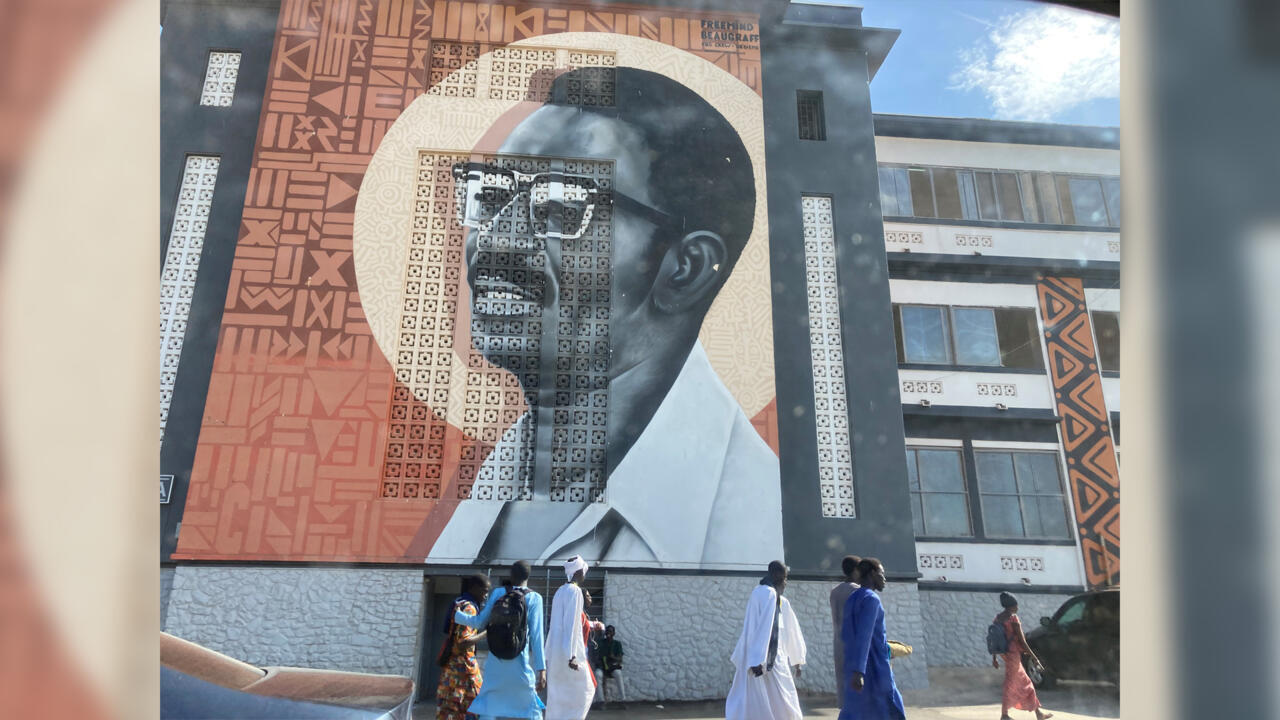
During the 1970s, a striking paradox unfolded at Dakar University: one of Africa’s most brilliant intellectuals, Cheikh Anta Diop, worked within its walls yet was denied the right to teach there. His profound ideas on an African renaissance stood in stark contrast to President Léopold Sédar Senghor’s philosophy of Négritude, fueling one of the 20th century’s most significant intellectual clashes. Our exploration of legendary African campuses now takes us to Dakar, delving into this pivotal historical debate.
In the post-independence era of 1970s Senegal, Léopold Sédar Senghor’s intellectual dominance was undeniable. However, the campus of Dakar University was already a burgeoning center of dissent. Historian Buuba Diop, who was a student at the time, vividly recalls the tension: “Relations between Senghor and the students were far from easy. Those who challenged Senghor were the majority among the students, while supporters of the Socialist Party were a minority. This led to the dissolution of several student organizations.”
Amidst Senghor’s Négritude, Cheikh Anta Diop presented a radically different vision for the continent. A consummate scholar, his groundbreaking work, Nations nègres et culture, published in 1955, posited that ancient Egyptian civilization was fundamentally Black African. Diop argued that this scientific truth should form the bedrock of any genuine African renaissance. As Buuba Diop explains, “Senghor believed ‘emotion is Black, just as reason is Hellenic.’ Cheikh Anta Diop simply could not agree with that premise.”
Sociologist Fatou Sow, also a former university student, corroborates the central role of the Egyptian origins debate. “The core issue was indeed Egypt, the origin of African civilization from Egypt, and so on. Senghor was entirely against this,” she states. “I believe Senghor simultaneously held respect for this intelligent and brilliant man, yet also an aversion to his writings. They consistently engaged in intellectual dialogue, responding to each other’s ideas.”
A champion of Wolof, often unheard
The intellectual chasm between the two figures extended to language policy. While Senghor championed French, Cheikh Anta Diop was a fervent advocate for African languages, particularly Wolof. Despite his immense scholarship, Diop was barred from teaching history at the university until 1981. Instead, he was assigned to the Institut fondamental d’Afrique noire (Ifan), where he established a carbon-14 dating laboratory, uniquely merging nuclear physics with research into African origins.
Opportunities to hear Diop speak on campus during those years were exceedingly rare. Fatou Sow recounts a memorable instance: “The Association of African Historians organized a conference on high antiquity and the Mediterranean, and Cheikh Anta Diop was not on the program. Some friends approached the association, stating, ‘You cannot conduct such a discussion without inviting Cheikh Anta Diop.’ So, they eventually invited him.” Sow adds, “I attended that conference. No one in the room stirred. He spoke entirely on his own. That, I believe, was a very significant moment because it was the first time he had spoken on campus.”
Cheikh Anta Diop passed away in 1986 at the age of 62. A year later, the university was renamed in his honor, as was Ifan. For Fatou Sow, this recognition came too late. Moreover, the Wolof language, which Diop passionately championed as a medium for instruction, has yet to be fully integrated into the curriculum of the very university that bears his name.