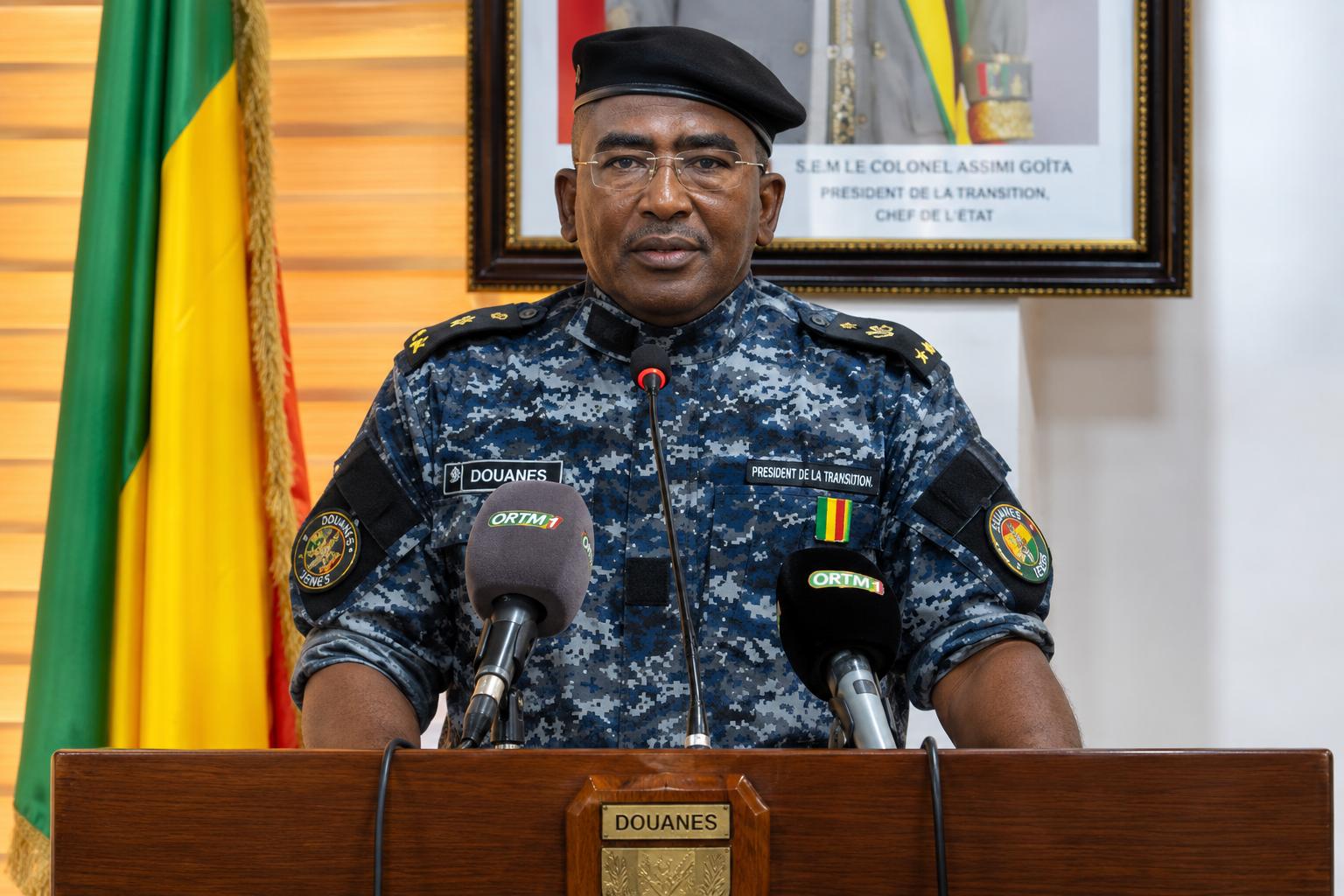
The recent wave of personnel shifts within Mali’s Direction Générale des Douanes has sent ripples through both official corridors and political backrooms. Far from a routine administrative adjustment, these changes have sparked intense debate about their true motives. Journalist and analyst Fousseyni Sissoko delves into this institutional upheaval, questioning whether it represents a strategic restructuring or a calculated purge.
Official narratives versus hidden agendas
The government frames these movements as essential to enhancing operational efficiency. With Mali navigating economic headwinds and regional pressures, officials argue that injecting fresh leadership into border management and regional offices is critical to curbing tax evasion and boosting customs performance. Yet beneath the surface, questions persist: Are these reforms purely technical, or do they serve a deeper purpose?
Power dynamics in Mali’s financial governance
Customs administrations in West Africa often sit at the nexus of economic control, making them prime targets for political maneuvering. The stakes are high—fraud prevention, revenue collection, and even national security hinge on the integrity of these institutions. Sissoko’s analysis suggests that while the public narrative emphasizes performance, the reality may be more complex, with shifts in personnel reflecting underlying power struggles.
Uncovering the shadow of political influence
One of the most compelling aspects of Sissoko’s investigation is his challenge to the official version. By highlighting the timing and nature of certain departures, he probes whether this is a subtle purge aimed at removing independent voices or dismantling entrenched networks. In a country where loyalty to ruling factions often supersedes technical competence, such moves raise concerns about the erosion of institutional independence.
Historically, Mali’s state apparatus has relied on such mechanisms to consolidate control, particularly in institutions wielding significant financial influence. The customs service, tasked with managing lucrative trade corridors—especially for hydrocarbons—is no exception. Sissoko’s work forces readers to confront an uncomfortable truth: Are these appointments driven by merit, or by the need to align the administration with current political priorities?
A customs service caught in the crossfire
At its core, Sissoko’s piece is a reminder that Mali’s customs authority is more than just a tax-collection machine. It is a battleground where economic imperatives clash with political ambitions, where technical expertise often yields to loyalty-based decisions. Whether viewed as a necessary overhaul or a politically motivated reshuffle, this episode underscores the fragility of institutional autonomy in Mali.
The public and economic partners alike would do well to heed the warnings embedded in Sissoko’s analysis: The true cost of these changes may extend far beyond the balance sheets of the Direction Générale des Douanes.