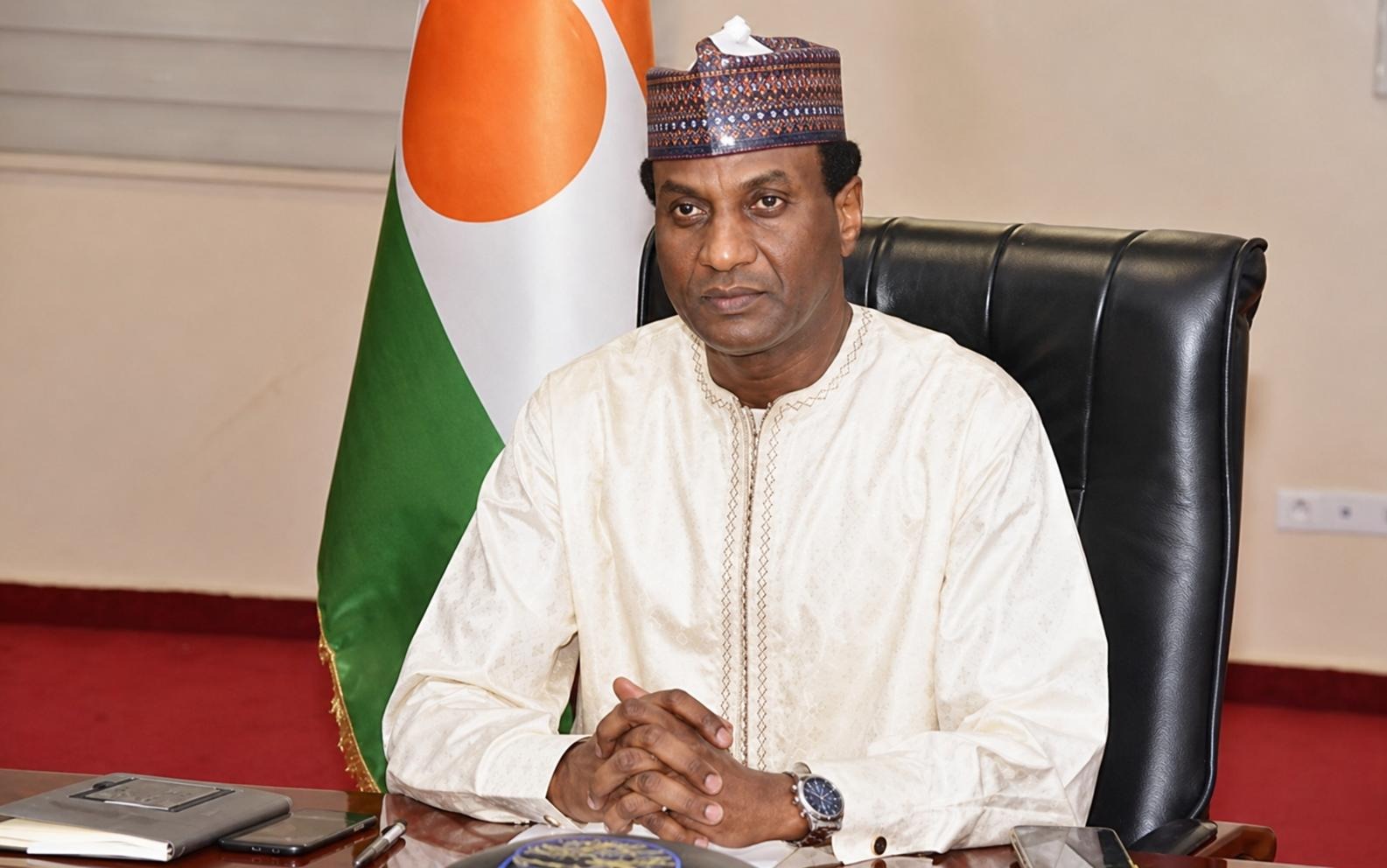
The delicate balance between serving as a trusted ally and becoming a target of suspicion under military rule is fraught with uncertainty. In Niger, recent developments surrounding Prime Minister Ali Mahamane Lamine Zeine have reignited discussions about the precarious position of civilian leaders within transitional regimes.
Sources within the Prime Minister’s inner circle report a growing unease among his closest associates. The sudden tightening of security measures around the economist has raised eyebrows: his trusted security detail has been entirely replaced without warning, and even those permitted to meet him now face rigorous physical searches before entry. While officials cite a severe bout of malaria as the reason for his prolonged absence from office, whispers in the corridors suggest a more ominous scenario—a de facto house arrest, with persistent rumors of his impending resignation circulating unchecked.
The opacity of the situation only fuels speculation. In systems where military power dominates, information control is a cornerstone of governance. The lack of a clear, transparent explanation for these measures has done little to dispel concerns, particularly when security protocols around a civilian figure resemble containment rather than protection.
a pattern of control in sahelian transitions
This episode reflects a recurring pattern in Sahelian military transitions: the ruthless enforcement of absolute conformity. When technocrats or civilian leaders resist aligning with the strategic or ideological shifts imposed by the uniformed leadership, the security apparatus swiftly moves to neutralize dissent. Rather than risk public backlash through an outright dismissal, military authorities often resort to a subtler form of marginalization—restricting movement, monitoring communications, and tightening oversight until the individual’s influence wanes.
This approach offers a strategic advantage: it preserves the illusion of institutional stability while consolidating decision-making power in the hands of the military command. It also serves as a trial balloon, allowing the regime to gauge reactions from the public, international partners, and internal factions before taking more drastic steps.
the limits of civilian authority under military rule
The case of Lamine Zeine prompts a critical question: how much real autonomy do civilian leaders truly possess in military-led transitions? In several Sahelian nations, technocrats are often brought in to reassure donors, stabilize economies, and project an image of structured governance. Yet their administrative legitimacy frequently hinges on unquestioning political loyalty to the military command.
This dynamic is not unique to Niger. Comparable dynamics have played out in neighboring countries within the Alliance of Sahel States. The political turbulence faced by Choguel Maïga in Mali and the power struggles surrounding Apollinaire Kyélem de Tambèla in Burkina Faso underscore a hard truth: civilian officials are tolerated only as long as they serve as economic buffers or diplomatic fig leaves. Should they challenge the military’s agenda, the consequences are swift and decisive.
In such environments, security measures are not merely about preventing conspiracies—they are deliberate signals to the entire state apparatus. A reshuffled security detail, restricted access, or filtered communications are not just safeguards; they are political statements. They remind everyone, even those at the highest levels of government, that absolute control rests with the military leadership.
For Ali Mahamane Lamine Zeine, the stakes have escalated beyond routine governance. He now navigates a landscape of suspicion where every move is scrutinized and every silence dissected. More broadly, this episode underscores a harsh reality: under military rule, the presence of civilian officials in the hierarchy may be visible, but their power is often fleeting. The illusion of institutional continuity masks a stark truth—trust in civilians is conditional, reversible, and perpetually at the mercy of the military’s watchful gaze.