The Symbolic Award Concealing Strategic Interests
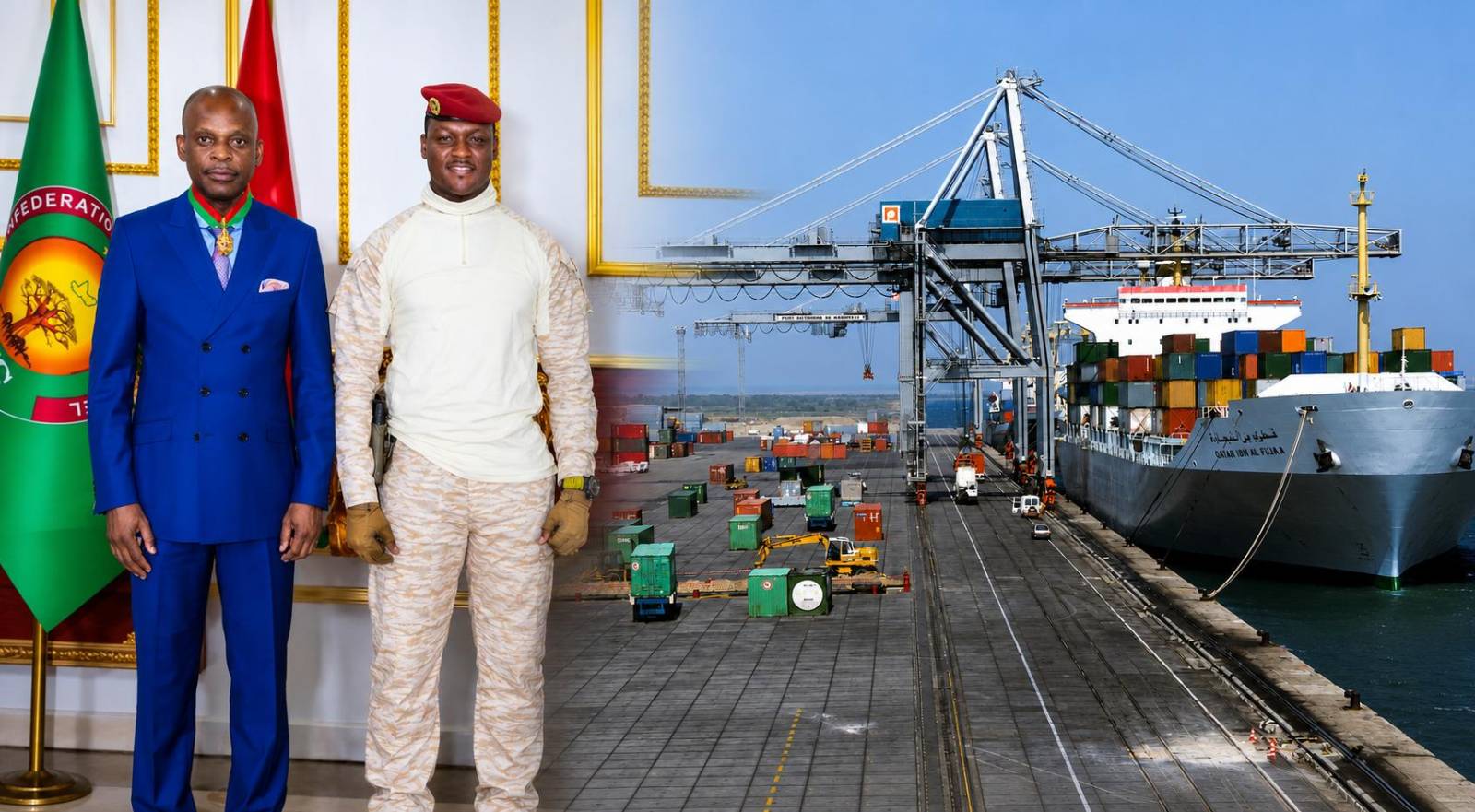
The recent elevation of Togo’s Minister of Foreign Affairs to the rank of Commander of the Order of the Stallions—Burkina Faso’s highest honorific distinction—has been presented by official channels as evidence of Lomé’s policy of openness, solidarity, and regional proximity. Yet beneath the ceremonial veneer lies a more complex—and far less flattering—reality.
The Pragmatism Behind Diplomatic Gestures
While such distinctions typically underscore diplomatic excellence, they often serve as instruments to reinforce alliances shaped by shared challenges. In this case, the accolade appears less a celebration of mutual values and more a reflection of converging interests between two regimes navigating political and economic pressures.
The timing of this award is particularly revealing. It follows a contentious episode in which Togo’s leadership chose to prioritize economic agreements over political asylum. After offering temporary refuge to Burkina Faso’s former President Roch Marc Christian Kaboré, Lomé swiftly abandoned his cause in favor of securing lucrative trade deals with Ouagadougou. The decision underscored a stark prioritization: commercial partnerships over ethical commitments.
A Relationship Anchored in Economic Interdependence
Burkina Faso’s landlocked geography makes its access to maritime trade routes a matter of national necessity. The Port Autonome de Lomé (PAL) has thus become a critical artery for the country’s imports and exports. For Togo, the transit fees generated by this traffic represent a significant revenue stream. This mutual reliance has fostered a rapprochement driven less by ideological alignment and more by economic pragmatism.
The exchange of asylum for logistical guarantees exemplifies a transactional diplomacy that prioritizes financial and strategic interests over moral or political principles. In this context, the award serves as a veneer for a partnership built on mutual convenience rather than shared values.
The Erosion of Diplomatic Credibility
While official narratives portray the award as a testament to exemplary relations, the underlying reality challenges this narrative. The decision to honor a foreign official in this manner raises questions about the true motivations behind the gesture. When diplomacy becomes entangled with commercial imperatives, the discourse on regional solidarity loses its resonance in the eyes of an increasingly skeptical public.
This episode is emblematic of a broader trend in West African diplomacy, where economic and security considerations increasingly overshadow traditional principles of governance and cooperation. Alliances are no longer forged on ideological grounds but are instead shaped by the demands of trade, logistics, and political stability. The result is a growing disconnect between the rhetoric of solidarity and the realities of statecraft.
The Hypocrisy of Diplomatic Recognition
The contrast between ceremonial accolades and political actions exposes the fragility of diplomatic integrity. Behind the smiles exchanged at summits and the medals pinned to lapels lies a cold pragmatism. This distinction, far from symbolizing disinterested fraternity, appears as a reward for a commercial partnership secured at the expense of ethical principles and asylum rights. The disparity between words and deeds continues to fuel debates about the true nature of relations between Lomé and Ouagadougou.