
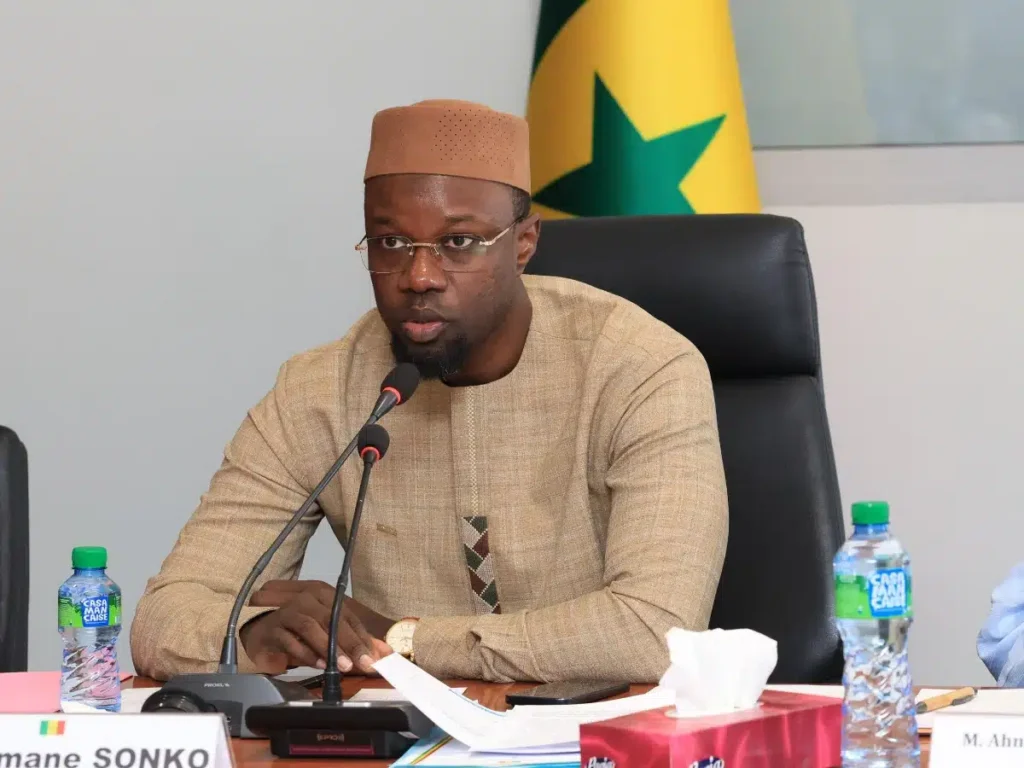
Senegal’s Prime Minister Ousmane Sonko has firmly declared that the nation’s recently strengthened anti-homosexuality legislation will be fully implemented without exception. Speaking before the National Assembly on May 22, 2026, during a session of urgent parliamentary questions, Sonko addressed growing international criticism of the law, particularly from Western nations.
The Prime Minister emphasized that Senegal remains a sovereign nation with the right to uphold values that align with its societal norms. “The Senegalese people are sovereign. The vast majority do not want certain practices in Senegal,” Sonko stated, underscoring the government’s commitment to protecting national identity and moral standards.
Confronting Western pressure and defending sovereignty
Sonko criticized what he described as a “tyranny of the West,” where a small group of Western elites seeks to impose their views on the rest of the world. “There are eight billion people in the world, but a tiny nucleus called the West, which has not resolved internal debates, yet due to its resources and control over global media, attempts to force homosexuality on the rest of humanity. On what grounds?” he questioned.
He categorically ruled out any possibility of a moratorium on the law’s enforcement once enacted. “This law will be applied,” he asserted, signaling the government’s unwavering stance despite external opposition.
Key provisions of the new legislation
The National Assembly adopted Law No. 2026-08 on March 27, 2026, amending Article 319 of the Penal Code (Law No. 65-60 of July 21, 1965). The revised law expands the definition of “acts against nature,” increases penalties, and includes provisions criminalizing the advocacy and financing of such acts.
Under the new provisions, “an act against nature” is defined as any sexual act between individuals of the same sex. Additionally, the law extends the definition to include any sexual act involving a human corpse or an animal. Violators face imprisonment ranging from five to ten years and fines between 2,000,000 and 10,000,000 West African CFA francs. These penalties are in addition to any sentences applicable for offenses such as rape or pedophilia.
The government’s firm position reflects a broader trend in West Africa, where several nations have recently enacted or reinforced laws targeting same-sex relations, citing cultural and religious values as primary justifications.
You may also like
Le carnet de Malian relance l’enquête sur la migration clandestine au Sénégal
Mamadi Doumbouya de retour à Conakry après une visite d’État en Côte d’Ivoire
Elversberg vs Bayern Munich: kick-off time, tv channel and team news
Gabon : l’association Force ouvre un espace de propositions pour la rentrée
Dakar 2026 : Diomaye Faye confie la flamme olympique à la jeunesse sénégalaise