
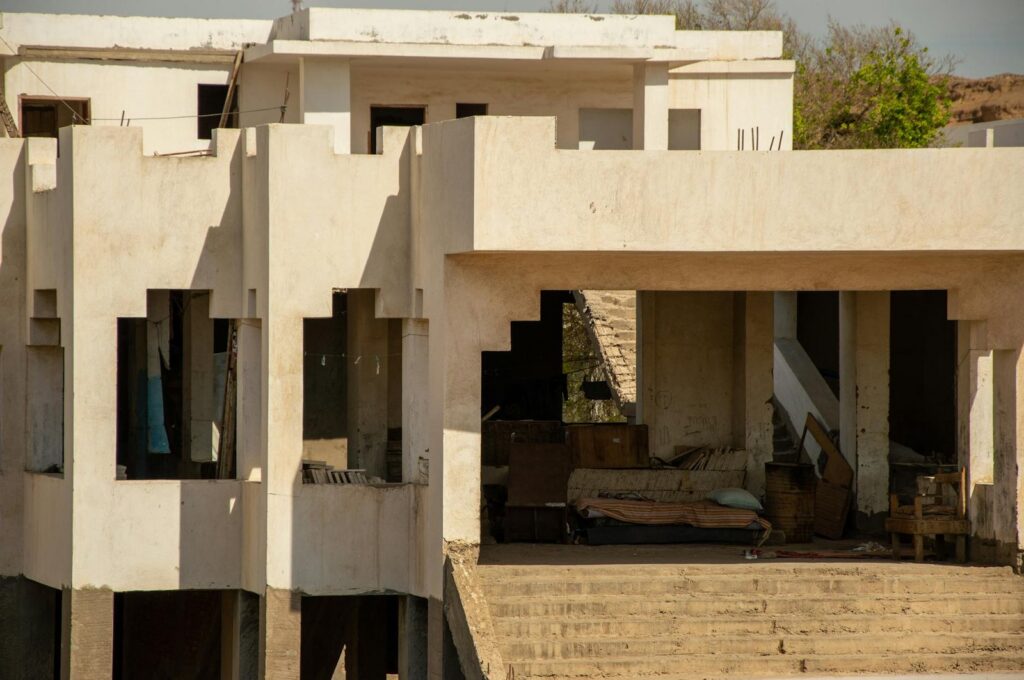
In a bold move to streamline its public assets, the Senegalese government has launched a comprehensive review of 25 completed but unused infrastructures, valued at 279 billion West African CFA francs. This initiative underscores a critical gap in public procurement: the frequent disconnect between project completion and practical functionality. These dormant assets represent a significant financial burden, immobilizing funds without delivering the expected economic or social benefits.
Identifying and addressing dormant assets
The audit focuses on systematically cataloging state-owned properties, including administrative buildings, sector-specific facilities, and economic infrastructure. Each identified asset remains a financial liability as long as it remains idle, incurring maintenance, security, and potential degradation costs. The government’s strategy involves reintegrating these properties into productive use through redeployment, inter-agency sharing, or public-private partnerships. A detailed evaluation is underway to pinpoint why each infrastructure has remained unused—whether due to missing operational budgets, unclear assignments, or logistical oversights in project planning.
Budgetary pressure drives efficiency measures
This audit aligns with the current administration’s commitment to financial transparency and expenditure control, a priority since 2024. By unlocking the value of these already-funded assets, Senegal aims to reduce reliance on external financing and ease debt servicing pressures. Mobilizing 279 billion CFA francs in existing assets provides immediate fiscal breathing room without resorting to new borrowing. The initiative also complements ongoing reviews of public contracts and parapublic entities, emphasizing the need to maximize existing resources before pursuing new investments.
This approach echoes repeated recommendations from the Cour des comptes, which has highlighted systemic weaknesses in post-delivery management within Senegal’s public procurement processes for years.
Strengthening project governance and accountability
The audit sheds light on broader governance challenges in infrastructure projects. Completion of a project marks the beginning of its utility, not the end. However, the fragmented division of responsibilities—spanning feasibility studies, financing, execution, and operation—often leads to critical oversights. International financial institutions have long advocated for clearer accountability chains to ensure seamless transitions from construction to service delivery.
For the 25 affected infrastructures, potential solutions include repurposing buildings to house government agencies currently renting private offices, generating immediate cost savings. Others may be leased or concessioned to private operators under strict performance criteria. A third option involves addressing missing links—such as equipment, staffing, or connections—to activate the intended services. Decisions will be made through case-by-case assessments and future budgetary adjustments.
This effort to revitalize idle public assets serves as a litmus test for administrative efficiency. Success hinges on transparent progress reporting and verifiable indicators. Senegal’s approach could serve as a model for neighboring economies grappling with the persistent issue of white elephant infrastructure projects. Every CFA franc must deliver tangible value, and this initiative aims to ensure just that.
You may also like
Mamadi Doumbouya de retour à Conakry après une visite d’État en Côte d’Ivoire
Elversberg vs Bayern Munich: kick-off time, tv channel and team news
Gabon : l’association Force ouvre un espace de propositions pour la rentrée
Dakar 2026 : Diomaye Faye confie la flamme olympique à la jeunesse sénégalaise
Mali: at least 80 soldiers killed in deadly assault on Dioura camp