
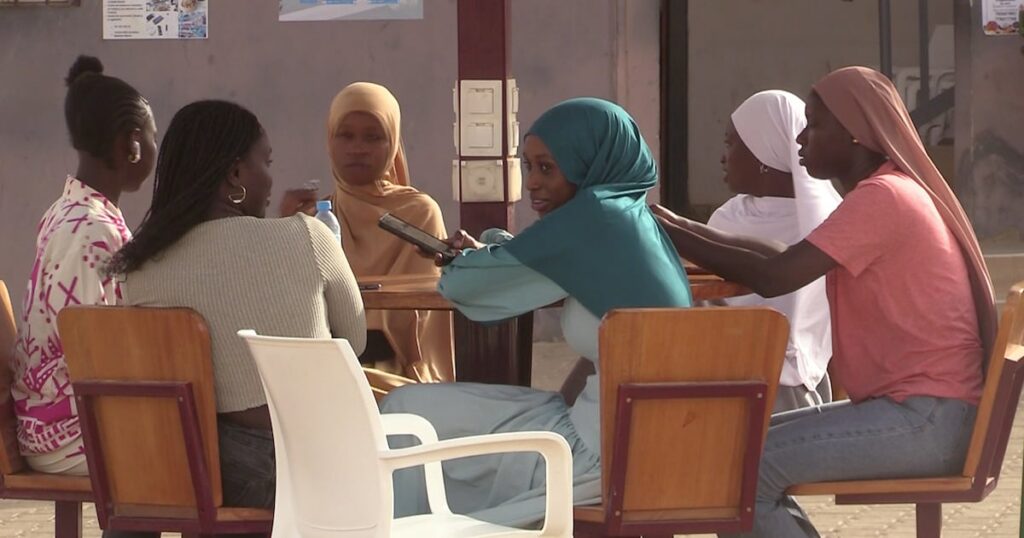
Across Senegal, a growing number of students are embracing political engagement alongside their academic pursuits. These young minds firmly believe that citizenship and higher education are not mutually exclusive, but rather complementary paths.
For many university students, joining a political movement during their studies is a strategic move. It serves as both a learning opportunity and a stepping stone toward future leadership roles. This perspective transforms the campus into a training ground where theoretical knowledge meets real-world application.
Adama Lam, a Law student at Cheikh Anta Diop University, explains why he sees politics as an extension of his studies: «Being a law student, I see no contradiction in engaging with a political party. On the contrary, it helps me develop professionally while gaining practical insights into governance. University education provides knowledge, but politics gives us the tools to apply that knowledge meaningfully. The two are inseparable in my view.»
Academic excellence and civic duty can coexist
Some students emphasize that political activism does not have to come at the expense of academic or career goals. Instead, they view it as a form of civic responsibility that enhances their personal and professional growth.
Amadou Saliou Diallo, another university student, shares this perspective: «Taking an active role in politics doesn’t mean giving up on other ambitions. Politics isn’t a career—it’s a service to the nation. You can be an accountant, an engineer, or any other professional while still being politically engaged. The key is balance.»
Building political literacy for future leadership
For a rising generation of students, early political involvement is more than just activism—it’s an investment in their future. By engaging with political movements, they aim to develop a deeper understanding of policy, governance, and leadership before stepping into professional roles.
Ousmane Seck, a committed student leader, highlights the value of this dual approach: «Combining academic knowledge with political awareness gives us a competitive edge. Programs like “Jub, Jubal, Jubanti” teach us how policies shape our society. Whether we become presidents, ministers, or party founders, this experience prepares us for the challenges ahead. The challenge, however, lies in managing both worlds without losing focus.»
Where should universities draw the line?
The debate continues: Should universities remain purely academic spaces, or should they also nurture the next generation of political leaders? With students increasingly taking on leadership roles in civil society, this question grows more relevant by the day.
You may also like
Is Chad truly experiencing a political easing of tensions?
Accord FMI-Sénégal : Thierno Bocoum exige la transparence sur les conditionnalités
Ousmane Sonko demands full transparency on Senegal’s new FMI agreement
Senegal’s political crossroads: the faye-sonko institutional challenge
Cameroun : prendre des mesures incitatives pour booster les inscriptions sur les listes électorales