
Senegal’s democratic paradox: women’s leadership in numbers
Despite being hailed as a democratic model in Africa, Senegal continues to grapple with significant challenges in achieving gender parity within its decision-making bodies. Recent figures paint a stark picture: out of 558 municipalities nationwide, only 18 are led by women mayors. Similarly, women preside over just 3 of the 43 departmental councils. These numbers reflect a troubling underrepresentation that persists despite legislative advances.
Legislative setbacks and structural barriers
Analysts point to the November 2024 snap legislative elections as a turning point in women’s political participation. The results revealed a concerning decline in female representation in the National Assembly, dropping from 44.2% to 41%. The situation is even more pronounced at the territorial level, where only 13% of electoral list leaders were women. These statistics underscore deeper issues: systemic obstacles, entrenched cultural resistance, and persistent inequalities in political financing, media visibility, and access to decision-making spaces.
Bator Seck, focal point for Senegal at the Réseau des femmes leaders pour le développement (RFLD), emphasizes that while Senegal has made progress with its 2010 parity law, the 2001 Constitution enshrining gender equality, and ratification of international conventions on women’s rights, the reality remains starkly different. “The decline in women’s representation isn’t just a statistic—it reflects structural challenges that continue to limit their access to power,” she explains.
An afrofeminist initiative to transform political participation
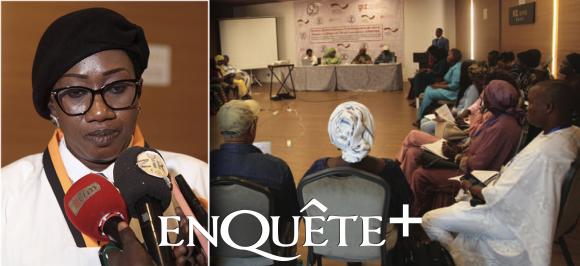
In response to these disparities, the RFLD has launched a regional afrofeminist program aimed at boosting women’s political engagement across francophone West Africa. Supported by the Afrofeminist Initiative for Human Rights Development in Francophone West Africa and funded through the SEA-T program of Germany’s BMZ with GIZ assistance, this initiative brings together 30 women leaders from diverse backgrounds—parliamentarians, party leaders, local elected officials, activists, and civil society representatives.
“This cohort represents different generations, political sensibilities, and professional paths, all united by a shared ambition: to fundamentally transform women’s political participation in Senegal,” Seck notes. The two-day seminar focuses on sharing experiences, analyzing challenges, and building strategies to strengthen female solidarity and influence public policies. “A democracy cannot be complete when women remain underrepresented in decision-making spheres,” she asserts. “Senegal’s political future must be built with women, not just for them.”
Building confidence and competence for women leaders
Maman Diouf Fall, representing Senegal’s Minister of Family and Social Solidarity, highlights another critical challenge: the need to bolster women’s self-confidence and leadership skills. “Many women possess the necessary expertise and legitimacy but hesitate to fully occupy leadership spaces due to social pressures, persistent stereotypes, and a lack of structured support,” she observes.
She stresses that sustainable progress requires comprehensive training programs in leadership, political communication, negotiation, public governance, public speaking, and strategic organizational management. “Without sustained investment in women’s human capital, progress will remain limited,” Diouf Fall warns.
Addressing systemic inequalities in capacity building
Geographical disparities also exacerbate these challenges. Training opportunities are often concentrated in urban centers, excluding women from rural and vulnerable areas who are actively engaged in their communities. “Women in remote regions face significant barriers to accessing information and skill development opportunities,” she points out.
Diouf Fall advocates for mentorship programs and intergenerational support networks to guide young women. “We need to foster a culture of excellence, civic engagement, and economic empowerment among women. Sustainable political participation also requires financial autonomy, professional stability, and the ability to balance public responsibilities with family and social obligations,” she explains.
Government initiatives to empower women and girls
The Ministry of Family and Social Solidarity has implemented several programs to strengthen women’s and girls’ capacities, including leadership training, citizenship education, human rights advocacy, and psychosocial support. These initiatives aim to enhance resilience and active participation in economic, social, and political life while addressing issues like child marriage, gender-based violence, and girls’ education.
“Working alongside technical partners, local governments, and community organizations, we are committed to creating an environment that protects and empowers women and girls,” Diouf Fall states. “Beyond laws and commitments, our collective responsibility is to ensure women can participate fully and freely in public life.”
You may also like
Gabon : la participation citoyenne au cœur de la Ve République
Is Chad truly experiencing a political easing of tensions?
Accord FMI-Sénégal : Thierno Bocoum exige la transparence sur les conditionnalités
Ousmane Sonko demands full transparency on Senegal’s new FMI agreement
Senegal’s political crossroads: the faye-sonko institutional challenge