Senegal explores new debt strategies to reduce IMF dependence
Dakar is once again at the heart of economic discussions as Senegal evaluates fresh approaches to managing its growing public debt. In recent high-level meetings, policymakers, economists and financial experts examined alternative financing and restructuring options beyond traditional reliance on the International Monetary Fund (IMF), amid tightening budget constraints and a pressing need for economic revival.
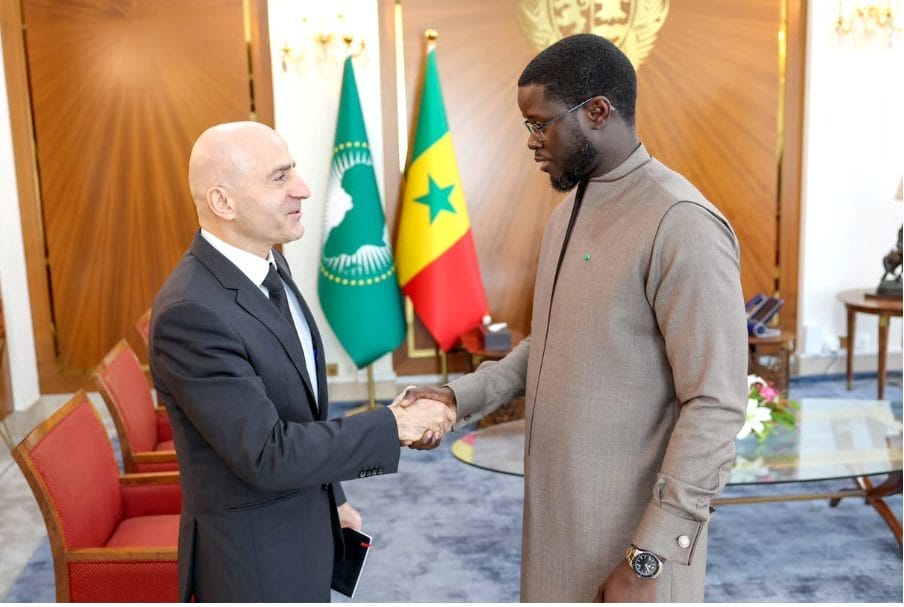
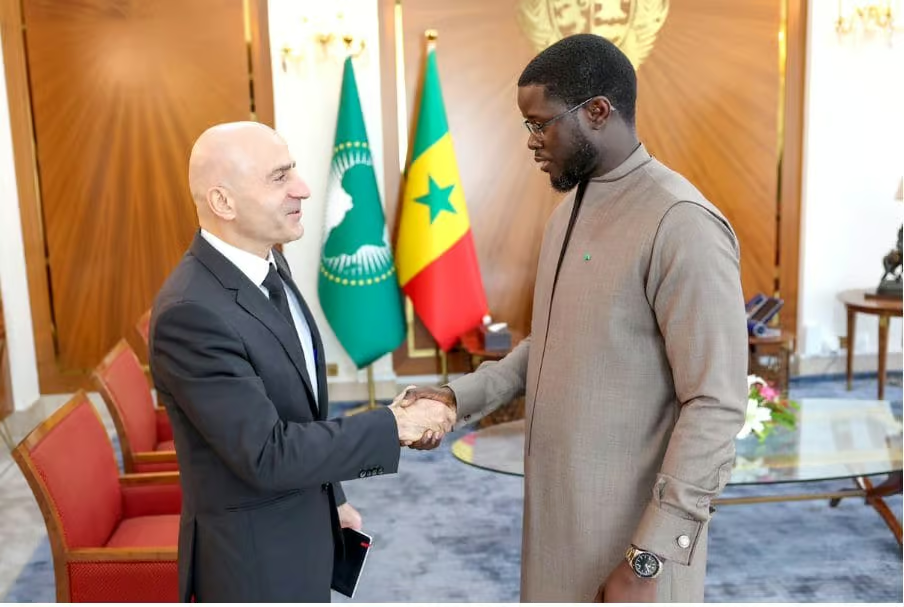 President Bassirou Diomaye Faye meets with IMF mission chief Edward Gemayel in Dakar, August 28, 2025 © DR
The deliberations come as Senegal seeks to safeguard its financial maneuverability while maintaining investor confidence, regional partners and market stability. As a member of the West African Economic and Monetary Union (UEMOA), the country operates within a shared monetary framework where debt sustainability and fiscal discipline are closely monitored across the subregion, guided by stipulations from ECOWAS, the African Union and the African Development Bank.
innovative debt financing options under review
Key discussions revolve around diversifying funding sources to ease the debt burden. Proposed solutions include increased borrowing from regional markets within UEMOA, more efficient mobilization of domestic savings, development of thematic bonds and greater utilization of concessional financing—loans offered at below-market rates. The overarching goal is to reduce the cost of servicing debt, which currently diverts critical public funds from essential services, while preventing abrupt economic adjustments that could harm households and businesses.
Experts also emphasize the importance of expanding tax revenues without stifling private sector growth, enhancing transparency in public financial management and prioritizing public investments. The situation in Senegal has drawn attention across Africa, as it underscores a broader challenge faced by many economies on the continent: finding ways to restore liquidity and spur development without over-reliance on multilateral assistance programs.
balancing growth and fiscal responsibility
Analysts warn that heavy debt servicing has already constrained public spending on infrastructure, education and healthcare in several African nations. In Senegal, the strategy being considered aims to strike a balance between fiscal prudence and economic expansion. This involves reassessing the efficiency of current debt instruments, exploring partnerships with regional financial institutions and leveraging innovative financial tools tailored to the country’s development priorities.
The outcome of these discussions could set a precedent for how African nations navigate debt sustainability in an era of constrained global financing. By pursuing these alternative pathways, Senegal hopes to chart a course toward more resilient and self-reliant economic growth.