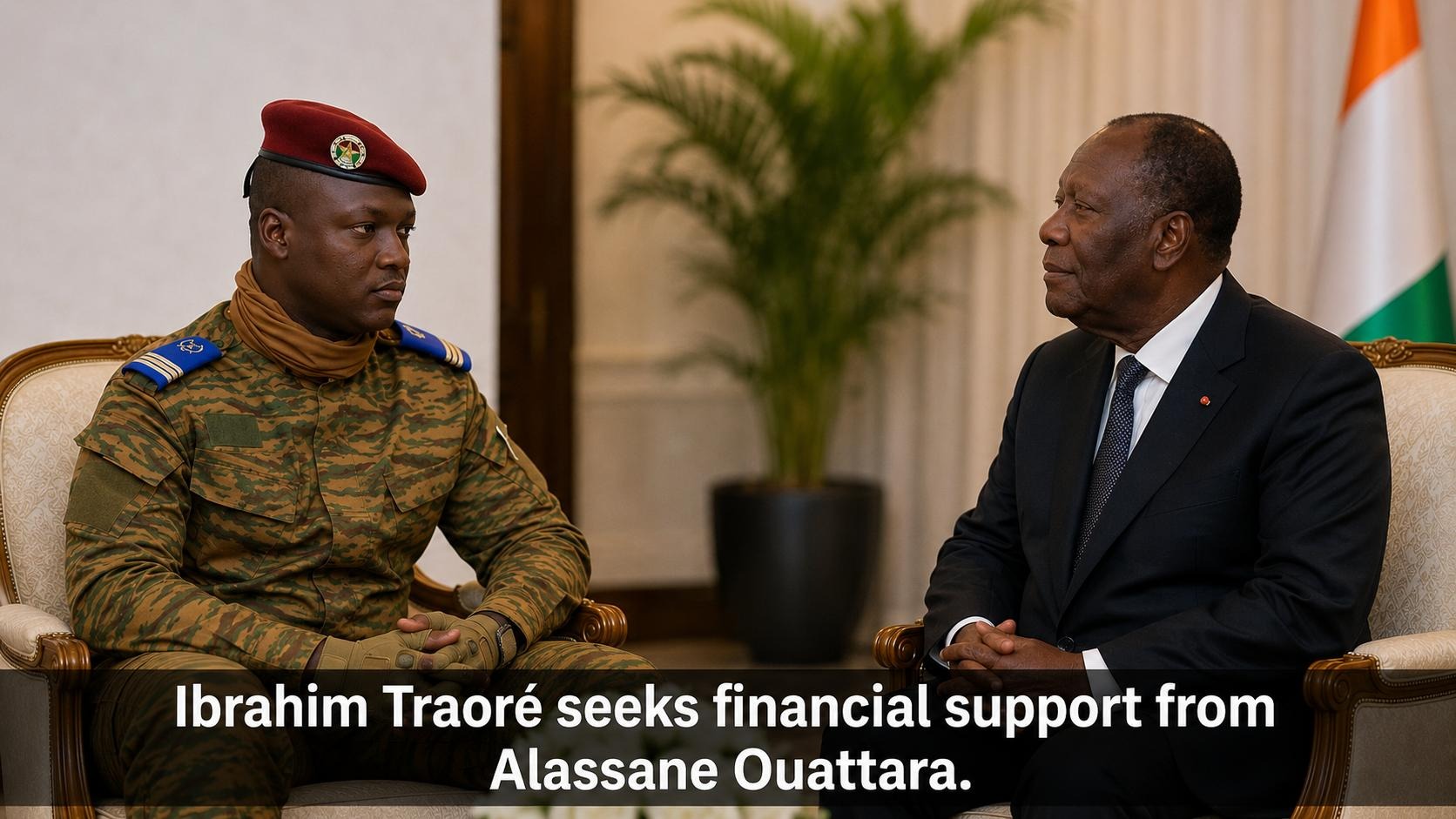
Burkina Faso’s transitional government faces a critical moment as financial constraints force Captain Ibrahim Traoré to abandon his earlier stance of regional isolation. Recent reports confirm that an official delegation was dispatched to Abidjan to urgently request financial assistance from Côte d’Ivoire, a move that contradicts long-standing claims of economic self-sufficiency.
From sovereignty rhetoric to financial dependence
The decision to seek aid from a neighboring nation that was previously criticized marks a significant shift in Burkina Faso’s economic strategy. Ibrahim Traoré, who once championed a complete break from regional blocs, now finds himself compelled to negotiate financial relief from a government he had previously accused of destabilizing the region.
The cost of isolation and military spending
The financial strain on Burkina Faso stems from two major factors: unsustainable military expenditures and the economic fallout from diplomatic isolation. As funds dwindle, the transitional government has resorted to emergency measures, including increased taxation and a so-called ‘patriotic support fund,’ yet these efforts have proven insufficient to cover state expenses.
The urgency of the situation was underscored when Ibrahim Traoré authorized a delegation to travel to Abidjan to formally request financial assistance. This move not only reveals the depth of the economic crisis but also exposes the contradictions in the government’s policies. How can a leader who has repeatedly condemned regional partnerships now seek support from those same partners to sustain his administration?
Ideology vs. economic reality
The financial appeal to Côte d’Ivoire serves as a stark reminder that economic survival often trumps political posturing. Ibrahim Traoré’s government, which has positioned itself as a champion of the Alliance of Sahel States (AES), now faces the challenge of justifying its shift toward pragmatic diplomacy. The transition from ideological rigidity to financial necessity has left many questioning the government’s credibility and long-term vision.
Consequences for Burkina Faso’s future
This financial about-face raises concerns about the sustainability of Burkina Faso’s transitional government. The reliance on external aid undermines the narrative of self-reliance that Ibrahim Traoré has promoted. As the government grapples with the fallout of this decision, citizens and regional observers alike are left wondering whether the current approach can stabilize the economy or if further concessions will be required in the future.