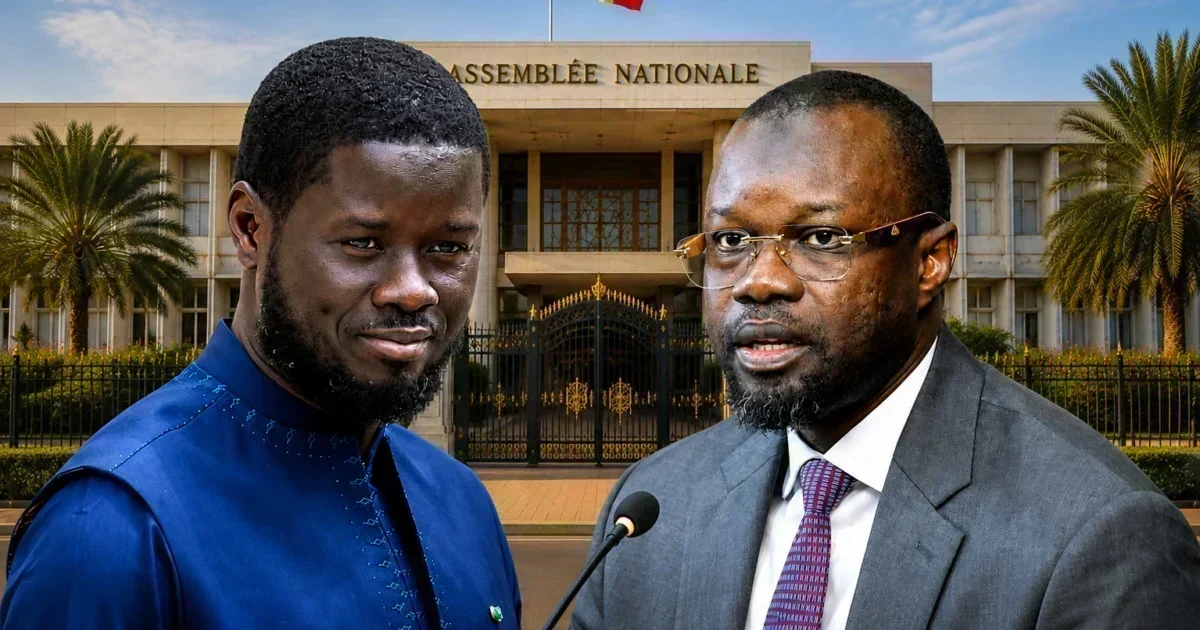
The President of the National Assembly, Ousmane Sonko, announced yesterday that seven legislative proposals submitted by President Bassirou Diomaye Faye would not be included in the agenda of the first extraordinary session. The session, convened on August 6, opened with the presentation of these bills, which aim to ratify international agreements and conventions.
Pending ratification bills blocked for now
The seven bills presented by the Executive branch include proposals to ratify the Marrakech Treaty to improve access to published works for blind and visually impaired individuals, amendments to the International Civil Aviation Organization Convention, a military cooperation agreement with the Republic of the Congo, and several extradition and judicial cooperation treaties with the United Arab Emirates and Italy. However, Ousmane Sonko clarified that these initiatives will not be prioritized in the current session.
« These bills will be scheduled for upcoming extraordinary sessions or, if necessary, the next ordinary session, » Sonko stated during the opening remarks. The decision reflects procedural scheduling rather than substantive opposition to the bills’ content.
Key legislative priorities take center stage
Instead, the National Assembly’s agenda for this session focuses on three government bills and eight opposition-led proposals, including six parliamentary inquiry commissions. Among the government’s priorities are the new Labor Code, the Social Security Code, and legislation to protect critical information infrastructure and digital security.
Urgent constitutional and financial reforms
Two opposition proposals will undergo urgent review during the session: one to amend Article 37 of the Constitution regarding presidential asset declarations, and another to establish a legal framework for special credits. These bills were submitted by lawmakers and were granted expedited consideration at their request.
The extraordinary session also provides a platform for six parliamentary inquiry commissions to examine alleged irregularities in land management, state-owned property sales, financial mechanisms like Total Return Swaps, procurement processes for the « One Student, One Laptop » program, revenue losses from tax exemptions, and fishing license issuance practices.