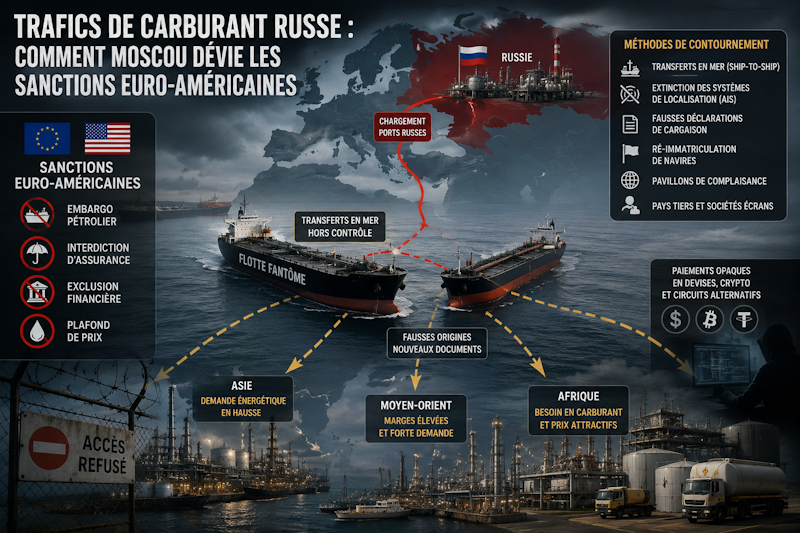
Recent investigations reveal a sophisticated network funneling Russian oil through Moroccan ports, enabling Moscow to evade Western sanctions imposed after the Ukraine invasion. The findings highlight Morocco’s growing role as a critical transit hub for Moscow’s energy trade despite international restrictions.
Geneva-based trader orchestrates Moroccan fuel imports
In 2025, Morocco emerged as North Africa’s top importer of Russian petroleum products, a position facilitated by Alvari SA, a discreet Geneva-based trading firm. The company orchestrated multimillion-dollar shipments, including three tankers—Tranquil Sea, Duke II, and Eldia—that transported fuel from Baltic terminals to Morocco’s ports of Jorf Lasfar and Mohammedia.
The Tranquil Sea case underscores the tactics used to obscure the origins of these shipments. British sanctions lists identified the vessel as early as October 2025 for its voyage to Morocco, later followed by EU and Swiss sanctions. Ukrainian defense authorities allege the tanker previously served as a platform for spying on NATO military and aerial activities, with Finnish authorities detaining it for suspected damage to underwater cables. Alvari SA’s legal representative denied any direct or indirect involvement in the vessel’s chartering or operations.
False documentation conceals Russian fuel origin
To mask the true source of the petroleum, the Cypriot Chamber of Commerce issued fraudulent certificates declaring the cargo originated from Turkmenistan. The shipments underwent Off Port Limits (OPL) transfers off Gibraltar—operations legally restricted to minor logistics, not fuel transshipments, which pose significant environmental risks.
Financial records show transactions settled in US dollars between Attijariwafa Bank—controlled by the royal holding Al Mada—and a Tangier-based offshore branch of the Popular Bank. Moroccan distributors reportedly secured discounts of $7 per metric ton compared to European benchmarks, while non-Russian fuels traded $15 above these indices. These savings, however, were not passed on to consumers at the pump.
Diplomatic timing further fueled suspicions. As the Tranquil Sea approached Morocco, Foreign Minister Nasser Bourita met with his Russian counterpart, Sergey Lavrov, days before a UN Security Council vote on Western Sahara—where Russia abstained, a move favorable to Rabat’s interests.
Spain detects Russian fuel re-exported from Morocco
Spanish customs data reveals a surge in diesel imports from Morocco, suspected to be of Russian origin. According to sector professionals, this points to a triangulation scheme allowing Russia to sell sanctioned fuel into the EU, leveraging Morocco’s lack of refining capacity.
Official figures indicate Morocco imported 645,000 tons of Russian diesel in 2025, rising to 489,000 tons in early 2026—45% of its total fuel imports. Notably, Morocco exported no diesel to Spain before the Ukraine war and 2022’s European sanctions. Following the Iran conflict in early 2026, Spain saw a revival of Moroccan diesel imports, with 76,000 tons recorded between March and April alone. Shipments were tracked at ports in Tarragona, Barcelona, and Bilbao from April to June 2026.
Spanish refiners expressed concerns over unfair competition. A spokesperson for the Spanish Fuel Industry Association (AICE) emphasized the need to combat fraud in hydrocarbon trade, warning that illicit fuel imports distort market equilibrium.
The evidence and remaining questions
Combined, these investigations map a suspected route: Russian oil rerouted through Morocco before potentially entering the EU. While both reports rely on maritime tracking data (Kpler), customs documents, and industry testimonies, they acknowledge the difficulty in tracing refined products once blended into global supply chains. No definitive proof confirms every shipment follows this exact path, but the patterns suggest a deliberate circumvention strategy.