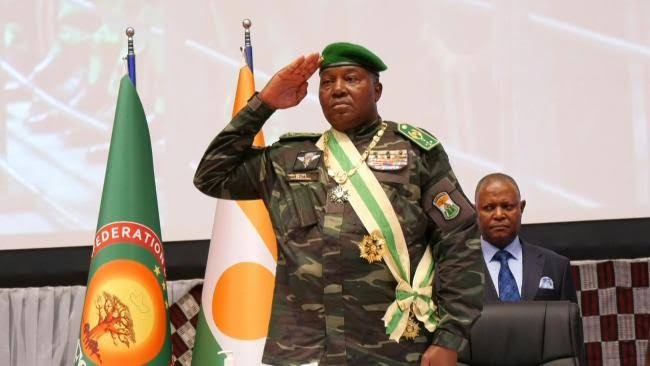
Niger’s military leadership, under General Abdourahamane Tiani, faces a dire financial crunch that has pushed the country to the brink of economic collapse. In a bold—yet potentially reckless—maneuver, Niamey has issued a 45-day ultimatum to its most critical oil partner, the China National Petroleum Corporation (CNPC). The demand? A staggering $5.3 billion (3.2 trillion CFA francs) in alleged unpaid oil revenues, serving as both a financial lifeline and a geopolitical landmine.
Is this a desperate bid to salvage the nation’s economy or a suicidal move that could further isolate Niger on the global stage? The answer hinges on whether the junta’s gamble pays off—or collapses under the weight of Beijing’s retaliation.
How Niger’s economic crisis fueled this high-stakes confrontation
Niger’s financial woes have spiraled out of control. Chronic mismanagement, exorbitant defense spending, and a brutal 10% cut to the national budget (shrinking from 3.03 trillion to 2.75 trillion CFA francs) have drained the treasury. Compounding the crisis is a $400 million Chinese loan secured in 2024, repayment for which is tied to oil revenues—leaving the regime with few options.
Rather than addressing systemic weaknesses, the military government has opted for a high-risk financial bluff. Authorities allege that only $175 million in oil earnings reached Niger over two years, conveniently omitting the intricacies of global payment systems and past Chinese financial aid. Now, the regime is wielding its leverage over CNPC to plug the financial black hole—even if it means severing a lifeline.
The gamble is fraught with peril. A CNPC exit could cripple Niger’s economy, but the junta appears willing to gamble everything on this confrontation—even at the cost of burning bridges with Beijing.
Seven ruthless demands that could strangle CNPC’s Niger operations
The ultimatum’s explosive nature lies not just in the astronomical sum but in the seven draconian conditions designed to strip CNPC of its operational autonomy in Niger’s oil sector. These demands are less about fair compensation and more about asserting total control over the Chinese firm.
The list reads like an economic declaration of war:
- Forced capital infusions: CNPC must repatriate vast sums on an impossible timeline, draining its African liquidity reserves.
- Local hiring mandates: Up to 90% of CNPC’s Niger workforce must be Nigerien—regardless of technical qualifications.
- Pipeline renegotiation: Unilateral revisions to the $2.3 billion Niger-Benin pipeline terms, including manipulated tariff structures.
- Refinery power shift: Gradual removal of Chinese executives from the management of the SORAZ refinery.
- Reserve value manipulation: Arbitrarily increasing tax obligations by revaluing oil reserves in the Agadem field.
- Forced exploratory spending: Mandating an additional $1 billion investment in projects like Dinga Deep and Abolo-Yogou.
- Corporate infiltration: Installing junta-appointed officials into CNPC’s decision-making processes.
Each demand erodes CNPC’s operational independence, transforming the joint venture into a state-controlled entity. Niamey isn’t just seizing revenue—it’s attempting to nationalize the company itself.
China’s probable response: a frozen financial relationship
This isn’t Niger’s first attempt at economic brinkmanship. Earlier in 2025, Chinese executives were deported within 48 hours, a clear signal of Beijing’s growing frustration with Niamey’s unpredictable tactics. The latest move—a $5.3 billion shakedown—could be the final straw.
Beijing has demonstrated a zero-tolerance stance toward perceived exploitation. If CNPC complies under duress, China may retaliate by:
- Halting new investments in Niger’s oil and infrastructure sectors.
- Demanding urgent loan repayments, including the 2024 $400 million facility.
- Redirecting aid to more cooperative regional players like Angola or Mozambique.
- Using diplomatic channels through the African Union or ECOWAS to isolate Niger.
The junta’s gamble rests on a shaky assumption: that Beijing will yield under pressure. Yet, with China’s global influence expanding, Niger risks facing a total economic abandonment. The 45-day countdown is underway—and the clock is not in Niamey’s favor.
Weighing the fallout: can Niger afford to sever ties with its top investor?
Niger’s oil sector is its economic backbone. The Agadem bloc alone has contributed over 60% of the country’s export income in recent years, making the CNPC partnership vital for energy security and financial stability.
Yet the junta’s aggressive tactics expose a harsh reality: desperation breeds recklessness. By attempting to strong-arm a partner it depends on more than that partner depends on it, Niamey risks catastrophic consequences:
- Investor exodus: Other foreign firms may follow CNPC’s exit, fearing arbitrary seizures or policy unpredictability.
- Fuel shortages: The SORAZ refinery could grind to a halt without Chinese expertise, threatening essential fuel supplies.
- Geopolitical realignment: Pushing Niger into Moscow’s sphere may come at a steep price, including sanctions and diplomatic isolation.
The stakes couldn’t be higher. Failure could plunge Niger into an economic abyss. Success may temporarily fill state coffers—but at the cost of long-term ruin.
One thing is clear: this high-stakes gamble could detonate in Niger’s face.