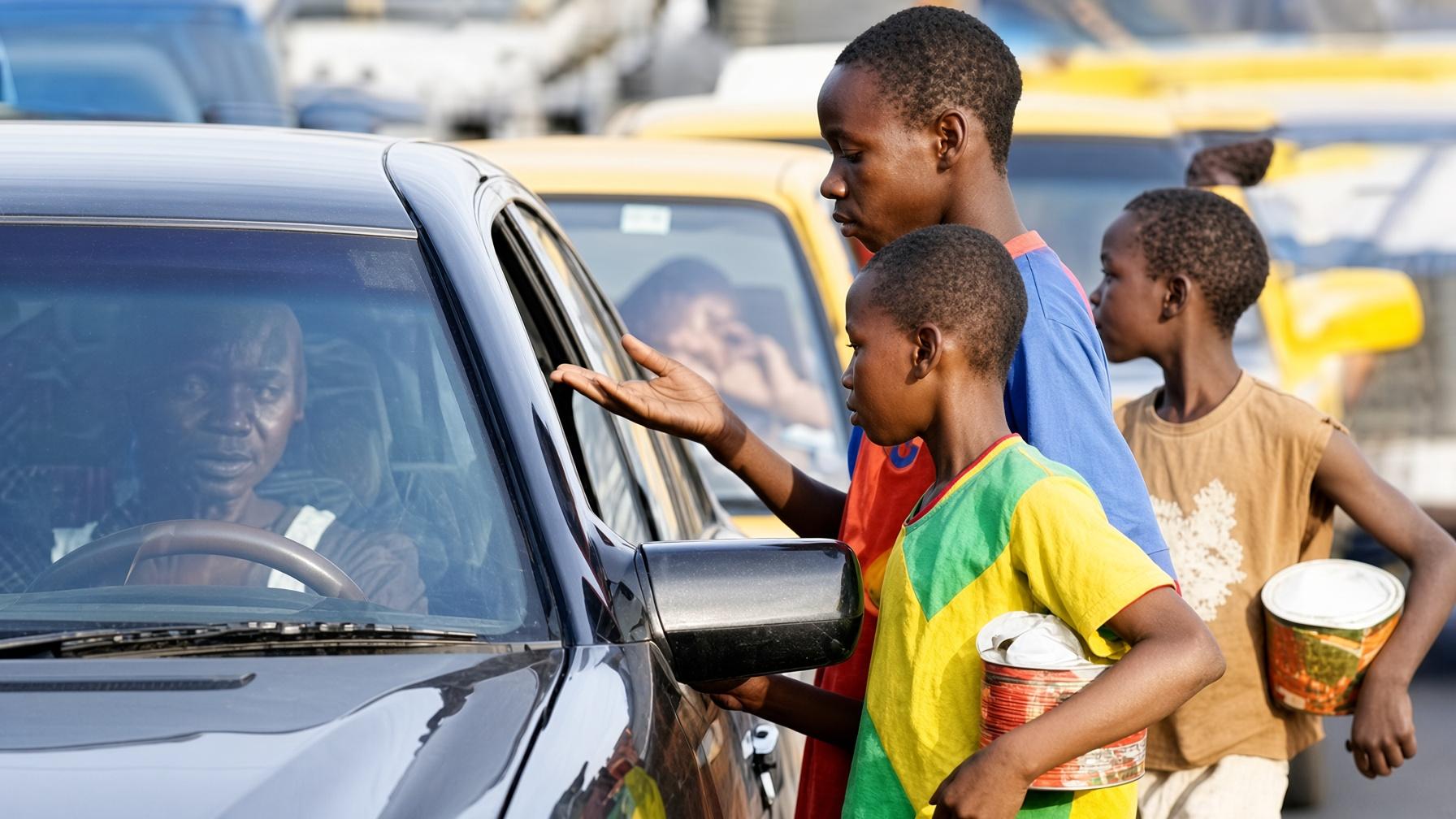
Every day in Bamako, a sobering scene unfolds: vulnerable individuals—including children, people with disabilities, and the elderly—line the streets of major roundabouts, outside government offices, and near places of worship, their hands outstretched for alms. Despite repeated government pledges and public campaigns, Mali’s escalating street begging epidemic has spiraled into an intractable crisis, revealing systemic governance failures and a chronic lack of accountability.
The growing plague of street begging in Mali’s capital
The problem is no longer confined to isolated pockets—it has metastasized into a full-blown structural disaster. At nearly every traffic intersection, groups of children, often young talibés under the control of unscrupulous Quranic instructors, dart between vehicles in a dangerous quest for spare change. Meanwhile, scores of abandoned minors wander the city, left to survive without protection or support.
Although authorities have vowed to rescue these children and bolster social protection, little progress has been made. Short-lived raids or community awareness drives offer only fleeting relief. With no long-term shelters, consistent funding, or follow-up mechanisms in place, many returnees find themselves back on the streets within hours. The cycle of poverty and begging persists, untouched by hollow promises.
Systemic failure: why governance gaps fuel Mali’s begging epidemic
Street begging is not a standalone issue—it is a warning sign of a nation in systemic distress. Several critical factors contribute to the spread of this crisis:
- Failing social infrastructure: Chronic underinvestment in education and social welfare has pushed millions of families into extreme poverty. Unable to afford schooling, desperate parents often relinquish their children to the streets, where they fall prey to exploitation and abuse.
- Lax oversight of religious schools: Many traditional médersas operate in legal limbo, with certain instructors coercing students into begging to generate income. Authorities often refrain from intervention due to political and religious sensitivities, allowing exploitative practices to thrive.
- Distorted budget priorities: While defense spending and institutional maintenance consume the bulk of national funds, allocations for poverty alleviation and human development remain critically low. Billions allocated for vulnerable groups vanish into bureaucratic inefficiencies or are diverted through corruption.
- Corruption and weak institutions: Social programs, whether donor-funded or domestically managed, suffer from pervasive mismanagement and embezzlement. Accountability is nearly nonexistent, and much-needed aid is routinely siphoned off by corrupt officials, leaving beneficiaries without support.
Why Mali’s street begging crisis threatens national stability
The consequences of this crisis extend far beyond urban blight—they pose a direct threat to Mali’s future security and social cohesion. Thousands of uneducated, destitute children are easy prey for criminal syndicates and extremist groups proliferating across the Sahel. The longer this issue goes unaddressed, the more it erodes trust in the state and fuels instability.
By prioritizing empty rhetoric over concrete action and temporary measures over systemic reform, Mali is not just failing its people—it is sowing the seeds of future chaos. Street begging is more than a social nuisance; it is a barometer of a collapsing social contract. Without decisive intervention, transparency, and robust enforcement, Mali’s youth will remain trapped in a cycle of poverty, vulnerability, and lost potential.
Is there hope for change in Mali’s fight against street begging?
Mali stands at a critical crossroads. Will it continue to turn a blind eye to the rot beneath the surface, or will it confront the hard truth that street begging is merely a symptom of a larger governance failure? The path forward hinges on whether the government can prioritize its citizens over political interests, transparency over opacity, and justice over impunity. Time is running out—and each day of inaction deepens the crisis.