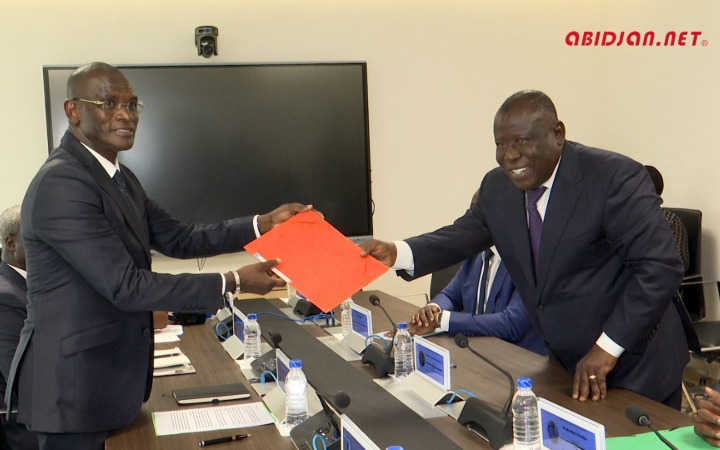
Côte d’Ivoire stands at a pivotal crossroads as the ruling Rassemblement des Houphouëtistes pour la Démocratie et la Paix (RHDP) submits a bold proposal for a new electoral body to the Interior Ministry. The move raises a critical question: could this reform finally silence the drums of electoral uncertainty that have echoed across the nation for decades?
What does the proposed electoral body change for Ivorian voters?
The RHDP’s proposal outlines a series of structural changes designed to enhance the transparency and independence of Côte d’Ivoire’s electoral process. At its core, the plan calls for the creation of an independent electoral commission, replacing the current system criticized for perceived political interference. Key provisions include:
- Autonomous governance: A commission free from executive branch control, with members selected through a consensus-based process involving civil society and opposition parties;
- Enhanced funding transparency: A publicly disclosed budget to prevent misuse of resources and ensure fair resource allocation across regions;
- Technology integration: Mandatory use of biometric voter registration and real-time vote tallying systems to minimize human error and fraud;
- Civil society oversight: Establishment of independent observer panels, including international monitors, to validate every stage of the electoral cycle.
Why this reform matters more than past attempts
Previous efforts to reform Côte d’Ivoire’s electoral framework, including the 2016 constitutional changes, failed to restore public trust. Polls showed that over 60% of Ivorians doubted the integrity of past elections, a crisis of confidence that deterred investment and fueled political tensions. Unlike those efforts, the RHDP’s proposal directly addresses the core grievances:
- Political neutrality: The new commission would operate outside the direct influence of the ruling party, a requirement absent in past reforms;
- Civil society inclusion: Opposition voices and independent groups would have a formal role in shaping electoral processes;
- Legal protections: Strict penalties for electoral fraud, with provisions for independent judicial review of disputed results.
The economic stakes: can electoral reform boost investor confidence?
The timing of this proposal is no coincidence. Côte d’Ivoire’s economy, one of West Africa’s fastest-growing, faces rising skepticism from investors wary of political instability. A credible electoral process could:
- Unlock infrastructure funding: International lenders and private investors often delay projects in high-risk political environments;
- Stabilize currency markets: A transparent election reduces the likelihood of post-election volatility that destabilizes the franc CFA;
- Attract foreign direct investment (FDI): Businesses require predictability; a flawed election process has historically led to capital flight;
The World Bank estimates that political instability costs Côte d’Ivoire $1.5 billion annually in lost economic potential. With presidential elections looming in 2025, the stakes couldn’t be higher.
Political reactions: unity or division?
While the RHDP frames the proposal as a step toward national reconciliation, not all stakeholders are convinced. Opposition parties, including the Parti Démocratique de Côte d’Ivoire (PDCI), have raised concerns about the commission’s composition and the pace of implementation. Critics argue that:
- Too little, too late? Some question whether the reforms can be fully implemented before the 2025 elections;
- Lack of consensus: The PDCI and other opposition groups demand a broader national dialogue to agree on electoral rules;
- Skepticism over independence: Historical distrust of government-appointed commissions fuels doubts about the new body’s neutrality.
Meanwhile, civil society groups have largely welcomed the proposal, praising the inclusion of international observers and biometric systems. However, they caution that political will will determine whether these reforms translate into tangible change.
What happens next? A timeline for reform
The Interior Ministry has confirmed it will review the RHDP’s proposals within 30 days, after which a draft law will be submitted to parliament. Key milestones include:
- Phase 1 (October 2024): Ministry review and public consultations;
- Phase 2 (November–December 2024): Parliamentary debate and potential amendments;
- Phase 3 (January 2025): Enactment of the new electoral law and commission formation;
- Phase 4 (2025 elections): Implementation and international validation of the process.
Analysts warn that delays or half-measures could reignite post-election disputes. As one political observer noted, “Côte d’Ivoire has tried reforms before. The difference this time will be whether the government treats these proposals as a starting point—or just another promise.”
Could this be Côte d’Ivoire’s turning point?
For a nation still grappling with the ghosts of 2010–2011 post-election violence, the stakes extend beyond politics. The RHDP’s proposal represents more than institutional change—it’s a test of whether Côte d’Ivoire can finally shed its reputation for electoral disputes. Success would not only secure the 2025 elections but also reaffirm the country’s position as a stable, forward-looking democracy in West Africa. Failure, however, risks plunging the nation back into a cycle of uncertainty, with dire consequences for its people and economy.
The clock is ticking, and Ivorians will be watching closely.