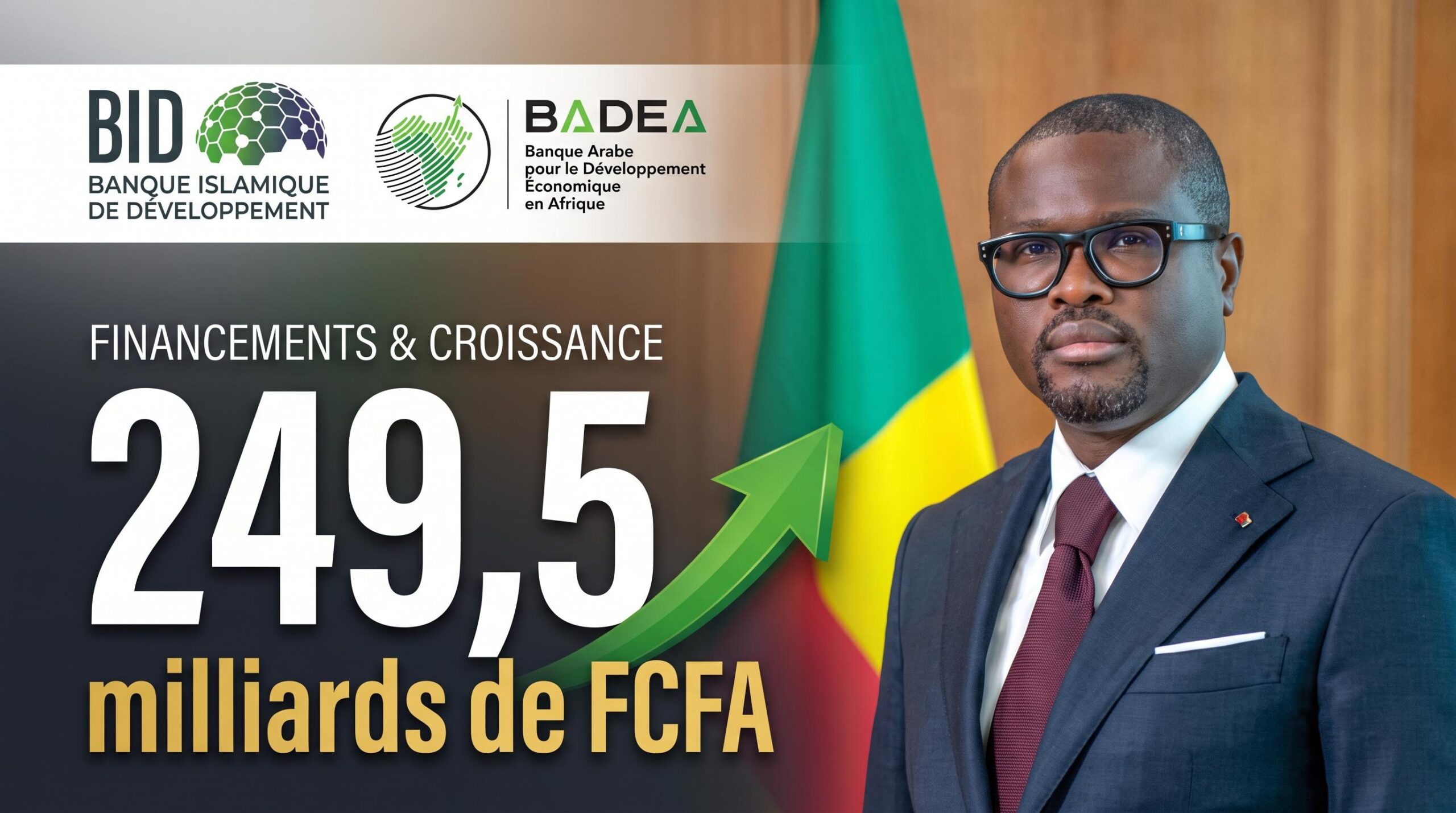
As global financial institutions gather in Bangkok for the 2026 IMF and World Bank Annual Meetings, Benin has engineered a financial breakthrough that will shape its economic trajectory for years to come. Through three strategic financing agreements totaling 249.5 billion FCFA, signed with the Islamic Development Bank (IsDB) and the Arab Bank for Economic Development in Africa (BADEA), the country has demonstrated an unprecedented ability to secure development capital while maintaining fiscal discipline. But with debt sustainability under global scrutiny, the critical question emerges: Can Benin leverage this financing to drive transformative growth without compromising long-term financial stability?
Strategic Partnerships Fuel Infrastructure Expansion
The landmark agreements, finalized during the high-profile international forum, represent more than just a financial transaction—they signal Benin’s growing diplomatic and economic influence within African and Islamic financial networks. The IsDB, a key player in development finance across Muslim-majority nations, has committed substantial resources to Benin’s infrastructure ambitions, while BADEA’s involvement diversifies the country’s funding sources beyond traditional Western donors.
This financial diversification is no accident. Benin has deliberately cultivated relationships with Arab financial institutions to reduce dependency on single-source financing, a strategy that strengthens negotiating power and spreads financial risk. The agreements cover multiple sectors, from transportation corridors to energy infrastructure, reflecting a holistic approach to national development that prioritizes connectivity and economic integration.
Debt as a Catalyst, Not a Constraint
The 249.5 billion FCFA financing package arrives at a pivotal moment in Benin’s economic evolution. Far from representing reckless borrowing, these funds are carefully calibrated to address critical infrastructure gaps that have long constrained growth. When strategically deployed, sovereign debt can serve as a powerful accelerator of economic transformation—creating jobs, reducing trade costs, and unlocking new economic opportunities.
Benin’s financial team has calculated that each FCFA invested in infrastructure generates a multiplier effect throughout the economy. Improved road networks lower transport costs for farmers and traders, while reliable energy supplies power small businesses and industrial zones. The challenge lies in ensuring these projects deliver measurable returns on investment within defined timelines. Benin’s commitment to transparent procurement processes and independent project evaluations demonstrates an understanding that fiscal responsibility extends beyond loan approval to implementation excellence.
Prudent Financial Management Underpins Success
The IMF’s latest assessment, released in mid-2026, confirms Benin’s progress in fiscal consolidation. The country has reduced its budget deficit from 7.2% of GDP in 2021 to just 3.1% in 2024, a remarkable achievement that reflects disciplined spending and revenue optimization strategies. Perhaps more significantly, the IMF noted a reduction in public debt levels between 2023 and 2024, even after implementing comprehensive statistical revisions to account for state-owned enterprise commitments.
This financial prudence hasn’t come at the expense of development ambitions. Benin has maintained its infrastructure investment pipeline while simultaneously reducing its debt-to-GDP ratio, proving that growth and fiscal responsibility aren’t mutually exclusive. The key has been focusing debt proceeds on high-impact projects with clear economic spillovers rather than spreading resources thinly across marginal initiatives.
From Financing to Lasting Impact
The true test of this financial strategy will play out over the coming years in Benin’s communities. Citizens won’t measure success by accounting ledgers alone, but by tangible improvements in their daily lives. The roads they travel, the lights that power their homes, the water systems that serve their families—these are the real indicators of whether 249.5 billion FCFA has been prudently deployed.
Benin’s government has pledged to publish detailed project information and establish independent oversight mechanisms to ensure accountability. This transparency serves dual purposes: it reassures international partners about fund utilization while building public trust in government institutions. For a nation where youth unemployment remains a pressing challenge, the successful conversion of financing into job-creating infrastructure could prove transformative.
Safeguarding Financial Credibility for the Future
The IsDB and BADEA agreements represent more than immediate financial relief—they constitute a vote of confidence in Benin’s economic management capabilities. To maintain this hard-won credibility, Benin must focus on three critical areas:
- Project execution excellence: Delivering infrastructure projects on time and within budget to maintain investor confidence.
- Debt service planning: Ensuring repayment schedules align with projected economic benefits from financed projects.
- Continuous reform: Sustaining fiscal discipline while creating an enabling environment for private sector growth.
Benin’s financial diplomacy has opened new avenues for development financing, but the ultimate measure of success lies not in the billions secured, but in the prosperity those billions help create. As global capital becomes increasingly scarce and expensive, Benin’s ability to balance growth ambitions with fiscal prudence will serve as an important case study for developing nations worldwide.
Looking Beyond the Numbers
The 249.5 billion FCFA financing package represents more than a temporary liquidity boost—it signals Benin’s arrival as a sophisticated player in international development finance. The agreements with IsDB and BADEA demonstrate that with the right reforms and transparent governance, African nations can access alternative financing sources beyond traditional Western institutions.
For Benin, the path forward requires navigating complex trade-offs between immediate development needs and long-term financial sustainability. The financing secured in Bangkok provides a crucial opportunity, but the real work lies in translating these funds into lasting economic transformation that benefits all citizens—not just through economic statistics, but through improved quality of life across the country.