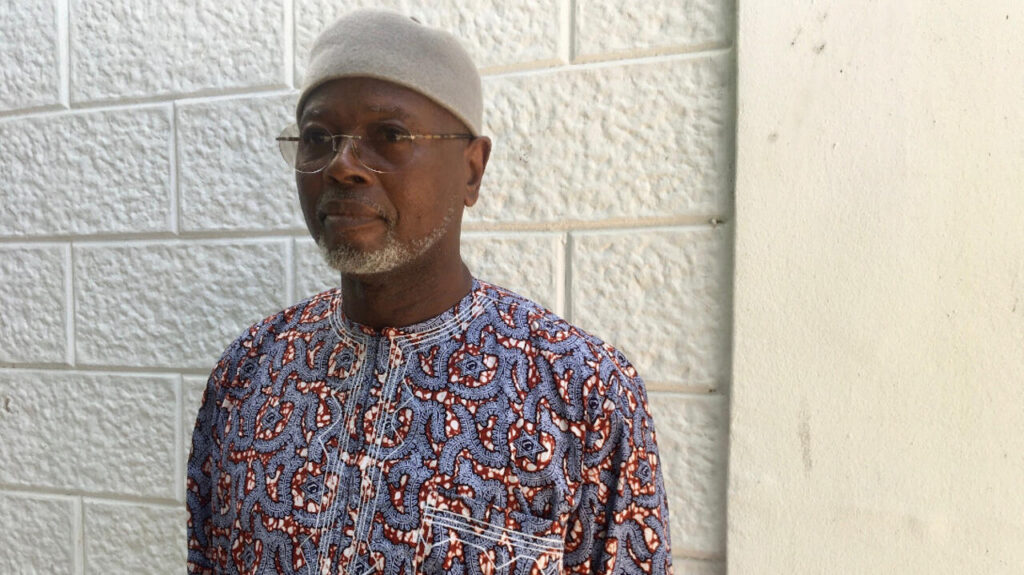
Niger has been without any trace of journalist Moussa Kaka since August 31. His forced disappearance is already sending shockwaves far beyond the newsroom: families of detained reporters are living in fear, independent media outlets in Niamey are scaling back their coverage, and businesses that rely on a free flow of information are bracing for a tougher climate. Senegalese human rights figure Alioune Tine, a former United Nations expert on human rights and founder of the Afrikajom think tank on democracy and security in Africa, says nothing — absolutely nothing — can justify this arrest. He warns that the consequences are being felt by ordinary citizens, the press and the wider region.
A disappearance that leaves citizens and journalists exposed
For more than a month now, no one has been able to confirm where Moussa Kaka is being held or why. In a country where security forces already operate with wide latitude, his case has become a warning sign for anyone who reports on politics, security or corruption. Tine points to what he calls the total indifference of both the African and international communities toward what he describes as a forced disappearance. The practical effect is that journalists in Niger now think twice before publishing sensitive stories — and the public pays the price in reduced access to reliable, independent news.
Economic fallout: uncertainty deters investment and aid
The consequences are not only moral. When a journalist vanishes without explanation, international partners, investors and aid organisations reassess the risk of operating in the country. Tine, who has spent years working on democracy and security across West Africa, argues that this silence sends a damaging signal. Countries and institutions that support Niger’s fragile economy may grow more cautious, while local businesses — from media houses to advertising-dependent start-ups — lose both audience trust and revenue.
Why Alioune Tine is calling for a collective response
From his position as founder of Afrikajom, Tine is urging African public opinion and the organisations that represent it to mobilise. In his view, the lack of reaction from African governments and continental bodies is as troubling as the disappearance itself. He insists that a forced disappearance on this scale cannot be treated as an internal affair: it concerns every citizen who expects the state to follow the law, and every entrepreneur who needs predictable conditions to operate. A collective, cross-border response, he says, is the only way to prevent the case from being buried.
What is at stake for West Africa
Niger sits at the centre of a region already grappling with insecurity, political transitions and economic pressure. Tine’s call echoes wider concerns that if a well-known journalist can disappear without a trace, the space for civic debate will continue to shrink. That, in turn, affects how citizens hold power accountable, how local media survive financially, and how the region is perceived by international partners. The disappearance of Moussa Kaka is thus not just one man’s fate — it is a test of whether West Africa’s institutions can protect the basic rights that underpin both democracy and economic stability.
You may also like
Lyon’s goalless stalemate with Chelsea: the real-world fallout for fans, clubs and the women’s game
Eastern DRC peace mediation: what the latest Tshisekedi letter to Gnassingbé means for civilians and local businesses
Mali: JNIM ambush on Russian Africa Corps convoy near Niono — what it means for civilians and local trade
Mali’s poverty crisis: how hunger and hardship are reshaping daily life for millions
Guinea-Bissau’s December election: what Embaló’s return means for daily life, stability and the economy