Morocco Maintains Historical Claims Over Ceuta and Melilla
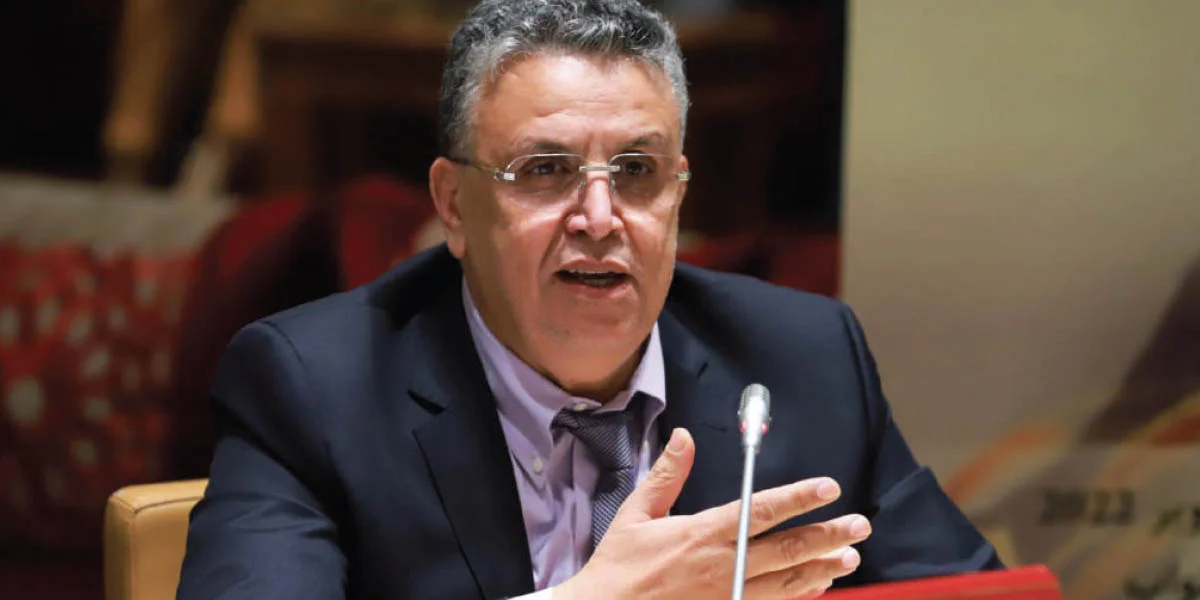
In a recent statement, Morocco’s Minister of Justice, Abdellatif Ouahbi, reaffirmed the country’s long-standing territorial claims over Ceuta and Melilla, two Spanish enclaves located along the North African coast. During an interview, he emphasized that Rabat remains committed to pursuing negotiations with Madrid regarding the status of these cities, which Morocco considers integral parts of its territory. The minister stressed that the issue remains an active topic in bilateral discussions, treated with strategic patience and dialogue as key components of Morocco’s approach.
Addressing the recent surge in irregular migration, with thousands crossing into Ceuta on July 30 and 31, Ouahbi underscored the need for Spain to take full responsibility for unaccompanied Moroccan minors arriving in the enclaves. He also criticized Spain’s demand for Morocco to curb irregular crossings, arguing that those who successfully reach Spanish soil gain access to legal procedures, effectively incentivizing further attempts.
Highlighting the broader challenge of migration management, the minister noted that effective solutions require shared legal frameworks and operational mechanisms between both nations. He firmly rejected the idea that Morocco should act as Europe’s sole enforcer in this matter, calling for a balanced and collaborative approach.
Spain Rejects Moroccan Claims, Reaffirms Sovereignty
Following Morocco’s statements, Spain’s Ministry of Foreign Affairs swiftly dismissed any possibility of negotiations regarding Ceuta and Melilla. Officials clarified that the status of these territories is not and will never be subject to discussion, firmly asserting that Ceuta and Melilla are “part of Spain’s internationally recognized territorial integrity.”
The diplomatic response came as no surprise, given Spain’s long-standing position on the matter. However, the timing of Morocco’s renewed claims coincided with a period of heightened migration activity, adding complexity to an already tense bilateral dynamic.
Spanish Officials React to Morocco’s Stance
Spanish Foreign Minister José Manuel Albares, currently visiting Ceuta, avoided addressing Morocco’s territorial claims in his public remarks. Instead, he focused on the immediate migration situation, acknowledging Morocco’s willingness to accept the return of unaccompanied minors who entered during the recent influx.
In contrast, Juan José Imbroda, President of the Autonomous City of Melilla and a prominent figure from Spain’s opposition Partido Popular (PP), took a more confrontational stance. In a fiery public statement, he questioned the utility of Ceuta and Melilla if Spain cannot manage its own borders and prevent youth from fleeing. Imbroda described the migration crisis as an “international embarrassment” for Morocco, urging the country to handle the situation with dignity and responsibility.
Morocco’s Ministry of the Interior responded by emphasizing the shared responsibility of both nations in managing irregular migration flows toward Ceuta. The ministry cautioned against online narratives encouraging further crossings on August 15, stressing that combating human trafficking and irregular migration requires coordinated efforts rather than unilateral actions.