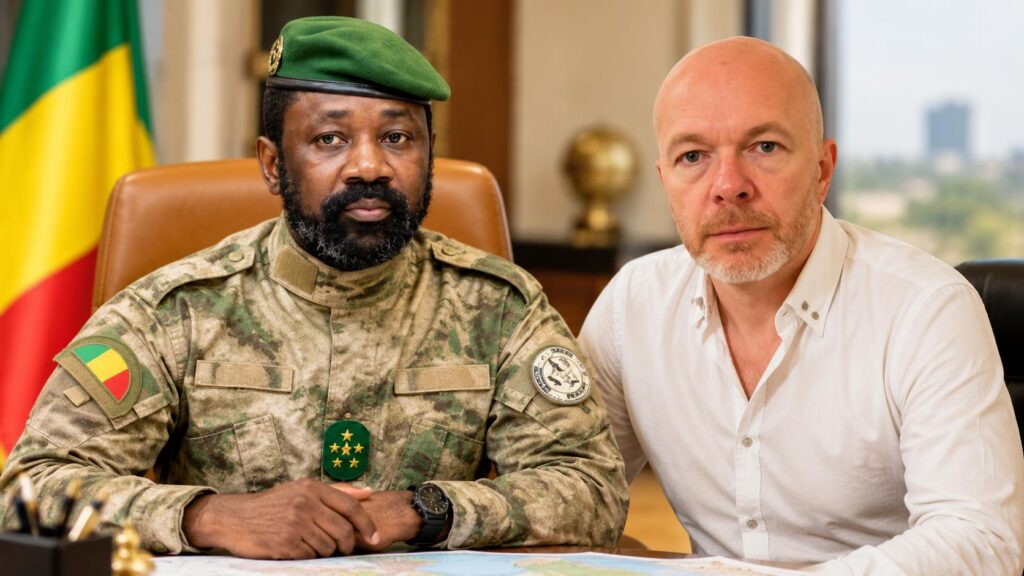
When Mali’s interim authorities disclosed the presidential pardon for Yann Vézilier, a French intelligence officer detained in Bamako for over a year, the announcement followed the customary rituals of state sovereignty. Convicted in June of attempted destabilization and handed a 20-year prison sentence, the covert diplomat was set to return to France. Yet, while Malian officials framed the decision as an act of magnanimity and national forgiveness, the reality behind the scenes tells a far different story.
Diplomatic theatrics disguised as mercy
The use of a presidential pardon was not an impulsive gesture of clemency, nor a standard judicial procedure. Instead, it served as the final act in a carefully staged performance—one designed to reinforce political messaging rather than deliver justice. From the moment of Vézilier’s arrest in August 2025, his case was never about enforcing the law. It was about crafting a narrative.
Justice as a tool for internal cohesion
Officially accredited and known to Mali’s security apparatus, Vézilier’s sudden arrest and subsequent portrayal as a foreign conspirator were deliberate moves. The military regime sought to rally domestic support by framing him as a threat from the former colonial power. The harsh 20-year sentence handed down in June was never intended to be served in full. Instead, it was a strategic bargaining chip—one that could be exchanged for concessions on other fronts.
Legal experts and diplomats agree: the trial’s swift proceedings and lack of publicly disclosed evidence made its political nature undeniable. The charges, hastily labeled as threats to state security, were less about proven crimes and more about creating a usable narrative.
Behind the scenes: money talks in Mali’s security deals
While Bamako’s official communications tout military strength and control, the truth is far more complex. Recent clashes with armed groups like the Cadre Stratégique Permanent (CSP-DPA / FLA) and the Group for the Support of Islam and Muslims (JNIM) have exposed gaps in Mali’s defense strategy. Contrary to state propaganda, Russian instructors and mercenaries from Africa Corps played no direct role in these confrontations and remained on the sidelines.
To secure the release of Malian soldiers captured in prior defeats, the regime turned not to force, but to negotiation. Direct, discreet talks with FLA and JNIM commanders led to agreements involving substantial financial payments. These transactions, hidden from public view, underscore a harsh reality: Mali’s military leadership prioritizes financial compromise over battlefield victories.
The pardon as a political maneuver
The presidential pardon is not a sign of goodwill—it is the final stroke in a calculated diplomatic play. By pardoning Vézilier, Bamako achieves multiple objectives: it maintains the illusion of judicial rigor, reinforces the president’s supreme authority, and preserves the political capital gained from the initial trial. The case will not be remembered for its clemency, but as a stark example of how justice can be manipulated from sentencing to forgiveness, serving as little more than a tool of strategic communication.
The affair reveals a regime that prefers transaction over confrontation, symbolism over substance, and public spectacle over genuine accountability. In the end, the pardon is less about mercy and more about control.
You may also like
General Barmou’s fall in Niger: the real cost for citizens, businesses and the economy
Mutiny in Niamey exposes cracks in Niger’s military leadership
Why does Niamey keep crying sovereignty while begging the un for handouts?
Why is the Malian junta so afraid of independent journalists?
Badara Gadiaga critiques former prime minister ousmane sonko’s political fund management