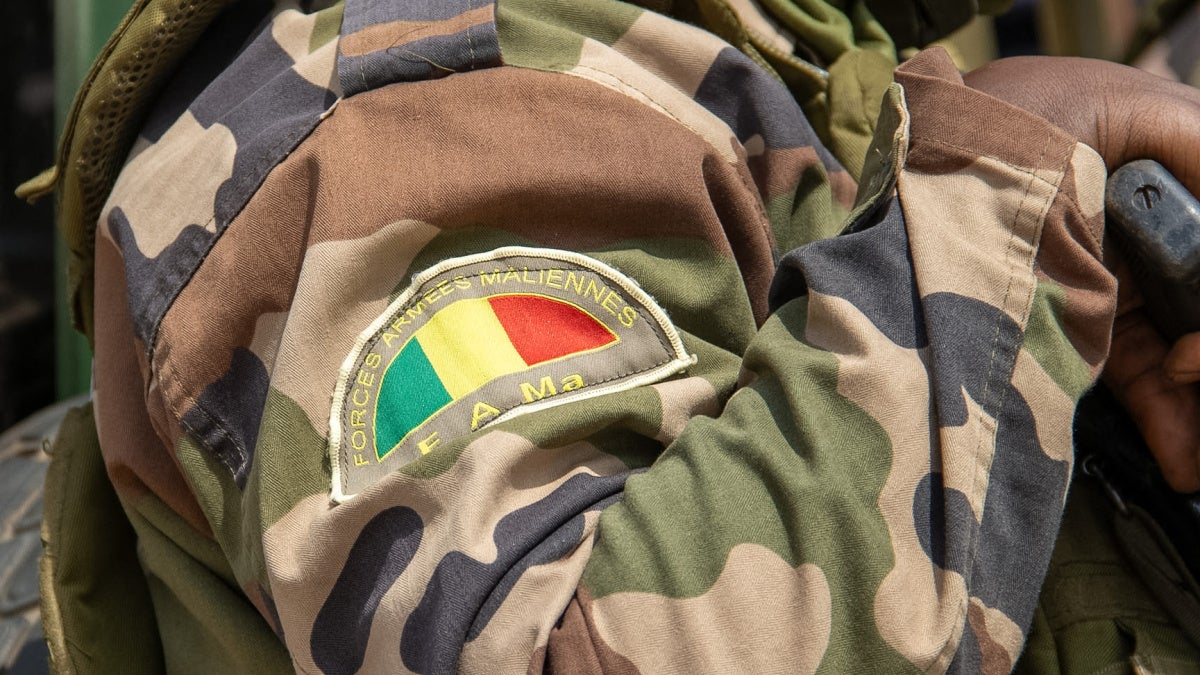
At least 31 civilians were killed and homes torched by Mali’s army along with allied militias in two villages in the troubled central region of Ségou during coordinated attacks on October 2 and 13. The incidents occurred in an area under the sway of the Group for the Support of Islam and Muslims (GSIM), an Al-Qaeda-linked faction.
On October 2, soldiers and dozos—traditional hunters from the Bambara ethnic group who have fought alongside the army for a decade—stormed the village of Kamona. Witnesses reported that at least 21 men were executed and 10 homes set ablaze. The assault followed warnings from GSIM fighters, prompting many villagers to flee before the attackers arrived.
A local survivor described the scene: “Those who couldn’t escape were rounded up and shot. The bodies were later found under a tree, riddled with bullets.” The victims, all men aged 20 to 65, were buried in a mass grave. Residents believe up to 15 more men may have been killed in the surrounding bushland.
The second attack unfolded on October 13 in the village of Balle, roughly 55 kilometers away. Soldiers in five pick-ups and dozos on at least 30 motorcycles descended on the settlement, forcing some residents to flee. Survivors recounted how soldiers went door-to-door, assaulting men and ultimately killing nine men and one woman. Over 100 cattle were also stolen. The bodies, found strewn in the village center, showed signs of severe abuse, including broken limbs.
A 21-year-old woman whose mother was among the dead recalled: “She confronted the soldiers, accusing them of mistreating the villagers. They dragged her to where the men were held and shot her.”
Local leaders confirmed that Balle had been under GSIM control for years. “We pay zakat to them annually,” one resident explained. “They settle disputes. There are no soldiers or police here—only them. The army makes no distinction between us and them.”
The Malian military has dismissed the accusations, claiming a “counterterrorism operation” in Balle resulted in the “neutralization of about twenty terrorists.” However, no evidence of armed clashes was reported by villagers.
Since 2012, Mali has grappled with Islamist insurgencies, leaving thousands dead and displacing over 400,000 people. Both state forces and militant groups have been accused of war crimes, including indiscriminate killings and torture. The Group for the Support of Islam and Muslims has intensified attacks near the capital, Bamako, cutting off fuel supplies and forcing temporary school closures.
Under international humanitarian law, all parties in the conflict must protect civilians. Violations, including deliberate attacks on non-combatants and extrajudicial killings, may constitute war crimes. Though Mali withdrew from the International Criminal Court in September, it remains bound by the Rome Statute until 2026, when its withdrawal takes full effect.
The African Union has faced criticism for its limited response to the escalating crisis. Analysts urge the bloc’s Peace and Security Council to prioritize accountability, strengthen diplomatic efforts, and coordinate regional action to address abuses by all factions.