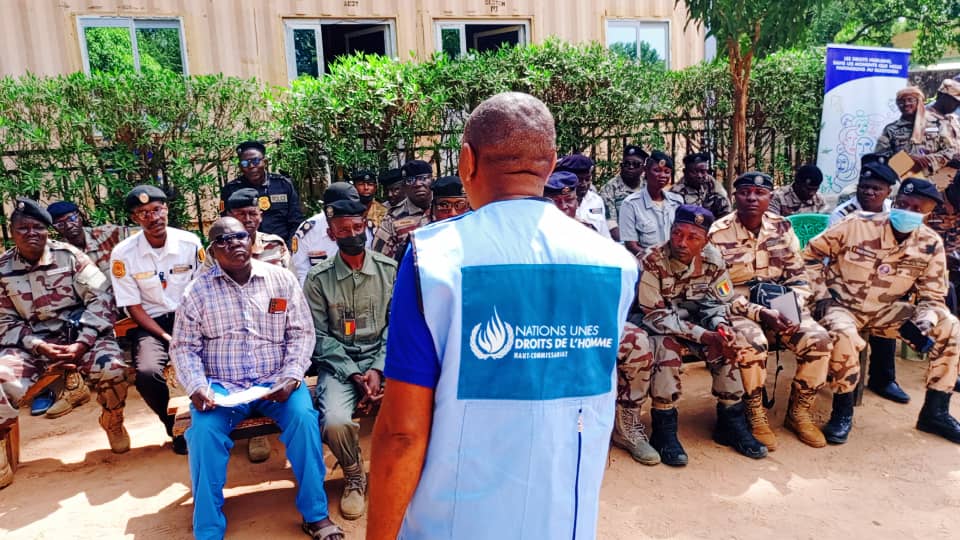
A significant human rights training initiative for the defence and security forces (FDS) kicked off on May 21 at the central police station in Koumra. The programme is designed to embed the principles of human rights and the fight against impunity deeply within the ranks of the military and law enforcement.
Balancing security and human dignity
Ensuring public order while upholding human dignity remains a constant challenge for security personnel. The United Nations High Commissioner for Human Rights and the United Nations Development Programme have joined forces to address this challenge, particularly in judicial procedures.
A nationwide initiative
This campaign is part of the Support Project for the Promotion and Protection of Human Rights, targeting military personnel, gendarmes, police officers, and members of the National and Nomadic Guard of Chad. Training sessions are being held across various barracks belonging to these forces.
The project’s core mission is to prevent abuses, break the cycle of impunity, and rebuild trust between the population and those sworn to protect them.
Key objectives of the training
The programme focuses on raising awareness among FDS members about the rigorous protection of human rights, combating gender-based violence, and familiarizing them with the complexities of military justice. Gendarmes are also being introduced to the specific code of conduct governing their service to ensure procedural excellence.
Beyond mere legal reminders, this initiative aims to reshape institutional culture so that every officer becomes a proactive guardian of fundamental freedoms.
Interactive and intensive sessions
Over two days, UN experts and senior officers engage in dynamic discussions with FDS personnel. The training blends legal overviews, real-world case studies, and open debates on ground realities, all structured within a tight schedule.
By equipping its uniformed personnel with the tools to prevent abuses and violence, Chad is taking a decisive step toward building an army that respects human rights. The ultimate test will be translating this theoretical knowledge into everyday practices that benefit justice seekers.