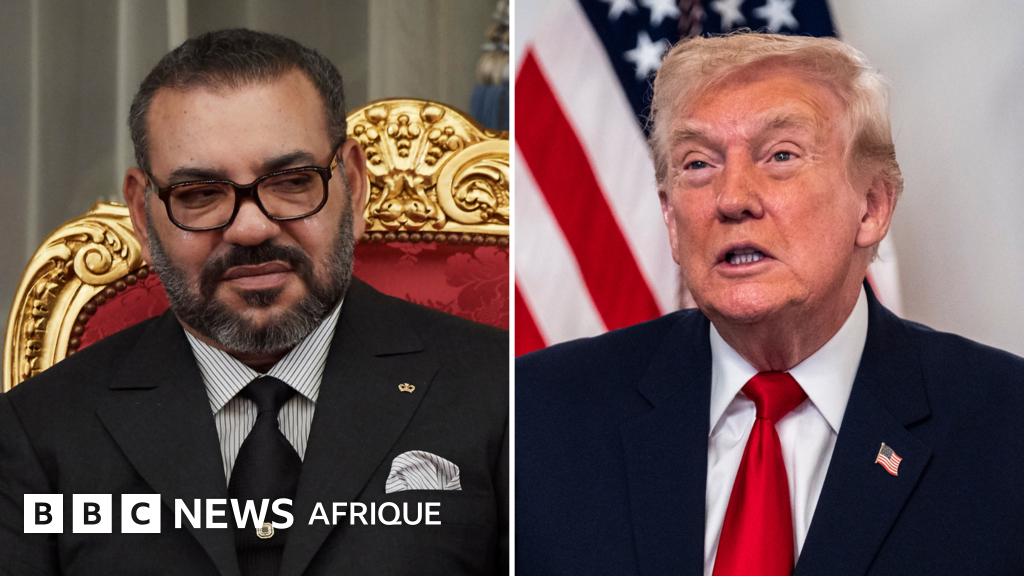
How the US-Morocco alliance shapes North Africa’s security and beyond
Photo credit, Getty Images
From a two-century-old friendship treaty to a 1,000-kilometer highway named after a US president, the bond between Morocco and the United States has stood the test of time. The recent renaming of a key Saharan route in honor of former US President Donald Trump—just days after a mass exodus of over 70,000 people from Morocco into Spain’s Ceuta enclave—highlights the depth of this partnership. The crisis left at least 140 dead on both sides of the border, underscoring the alliance’s role in one of North Africa’s most pressing challenges.
The US response to the Ceuta incident further reinforced perceptions of a strong Moroccan-American partnership. While Washington described the events as a “catastrophe” akin to an “invasion,” no criticism was directed at Rabat—despite thousands crossing from Morocco into Spain. Instead, the White House and State Department criticized Spain’s immigration policies, accusing them of fostering globalist extremism.
This stance surprised few but unsettled Spain, a NATO ally hosting US military forces in Rota and Morón. Though Morocco is not part of the Atlantic Alliance, it remains a key US partner in intelligence and military cooperation. The evolving dynamics between the two nations have reshaped regional security and diplomatic strategies, influencing everything from migration to geopolitical alliances.
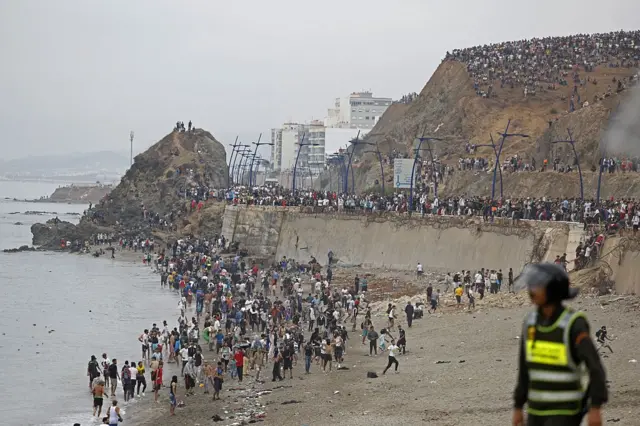
Photo credit, Getty Images
Roots of a lasting partnership
Though separated by geography and culture, Morocco and the US forged an early alliance rooted in mutual benefit. In 1776, as the American colonies declared independence from Britain, Morocco—under the Alaouite dynasty—was already an independent sultanate. By 1777, Sultan Mohammed III granted American ships free access to Moroccan ports, a move Rabat later hailed as the first international recognition of the United States.
The two nations formalized their ties in 1786 with the Treaty of Peace and Friendship in Marrakech, signed in June of that year. For the young American republic, this was more than diplomacy—it was survival. With no British naval protection, US merchant ships were vulnerable to raids by Barbary corsairs. The treaty secured safe passage, opened trade routes, and bolstered America’s global standing.
“Morocco’s strategic position at the Mediterranean’s gateway, linking Europe, Africa, and the Islamic world, made it invaluable to early US ambitions for global trade and recognition,” explains Timothy W. Kneeland, a history and political science professor at Nazareth University in New York.
The treaty, renegotiated in 1836, remains in force today—making it the longest-standing agreement in US diplomatic history. While colonial divisions in 1912 briefly strained relations, Washington recognized Morocco’s independence in 1956 and reopened its embassy in Rabat just three months later.
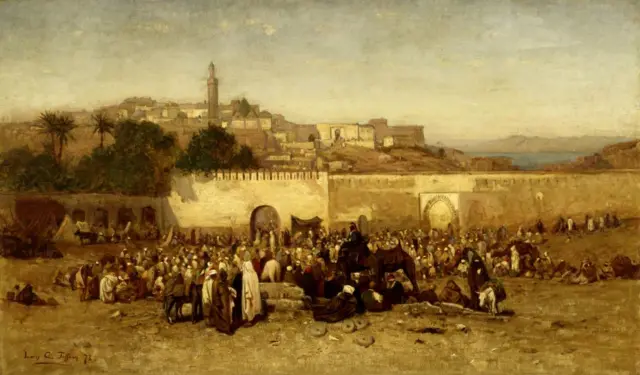
Photo credit, Getty Images
Security, trade, and the Western Sahara question
Military cooperation predates Morocco’s independence. In 1950, while still under French rule, the US secured agreements to develop air bases in the country. By the mid-1970s, Washington’s quiet support for Rabat’s ambitions in Western Sahara became evident. As Spain’s Franco lay dying in 1975, Morocco’s Hassan II organized the Green March, mobilizing 350,000 civilians to pressure Spain into ceding control of the territory to Morocco and Mauritania.
Publicly, the US advocated neutrality, but declassified documents reveal a pro-Moroccan stance. Henry Kissinger told Hassan II in 1974, “If I were you, I’d do the same.” By 1976, US diplomats acknowledged their policy was “essentially pro-Moroccan.”
Post-9/11, security ties deepened. The US designated Morocco as a Major Non-NATO Ally in 2004, unlocking advanced military cooperation. Today, Morocco hosts African Lion, AFRICOM’s largest annual exercise, and co-chairs the Africa group of the global coalition against ISIS. US arms sales to Morocco have surged, accounting for 60% of its imports between 2021 and 2025, per SIPRI data.
Economically, the 2006 US-Morocco Free Trade Agreement—Washington’s first with an African nation—dramatically boosted bilateral trade. By 2025, two-way commerce reached $7.4 billion, nearly eight times the $927 million recorded in 2005. Though modest for the US, it strengthened Morocco’s economy and solidified the alliance’s trade dimension.
Western Sahara: A diplomatic victory for Morocco
Morocco’s biggest diplomatic win came in 2020, when the US recognized its sovereignty over Western Sahara under Trump. Washington’s continued support for Rabat’s autonomy plan—seen as the only viable solution—has kept the issue off the UN agenda. “Morocco is the most successful participant in the Abraham Accords,” notes Carnegie Middle East scholar Sarah Yerkes. “Its normalization with Israel has endured Gaza’s conflicts.”
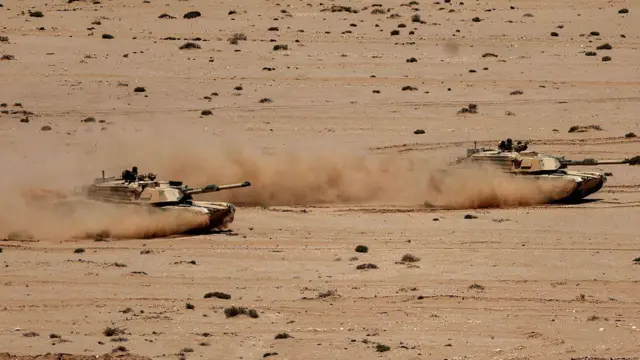
Photo credit, Getty Images
The Morocco-US-Spain triangle: Tensions and alliances
The Ceuta crisis exposed strains in the US-Morocco-Spain triangle. Madrid, a key NATO ally and US military host, depends on Rabat for border security. Yet, Spain’s handling of Ceuta has drawn sharp criticism from Washington, which accused Madrid of undermining NATO’s military spending caps and blocking US operations in Iran from Spanish bases.
While Spain blamed human traffickers and social media for the influx, Moroccan involvement was widely suspected. Yet, the US refrained from questioning Morocco’s role, instead attacking Spain’s immigration policies. Trump’s remarks framed the crisis as a consequence of Spanish mismanagement, deepening rifts within NATO.
Experts suggest Morocco’s strategic value to the US is growing, especially as Spain restricts base access. The timing of Trump’s message to King Mohammed VI during Morocco’s Throne Day celebration—highlighting 250 years of friendship and US support for Western Sahara—sent a clear signal: Washington’s alliance with Rabat remains its priority in North Africa.
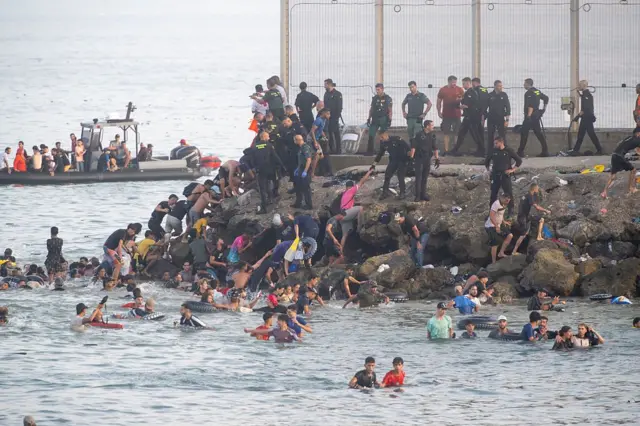
Photo credit, Getty Images
“Washington’s reaction confirms the strength of its alliance with Morocco, contrasting sharply with tensions in its NATO partnership with Spain,” notes Yerkes. “Rabat’s strategic importance is only set to rise as Madrid limits US military flexibility.”
You may also like
Burkina Faso: shrinking civil service payroll exacts a heavy toll on households and local economies
Simporé’s TV admission: Burkina Faso reacts as the security narrative crumbles
Gabon’s ghost payroll purge: public reaction, union pushback and what happens next
After Burkina Faso’s imam crackdown: the fallout, the anger, and the road ahead
Benin’s disability card rollout: reactions, scrutiny and what happens next