Sufi brotherhoods in Senegal: more than just faith
In a country where Islam permeates daily life, Senegal’s Sufi brotherhoods wield an influence that extends far beyond spiritual matters. These religious networks, deeply embedded in society, have long served as pillars of social cohesion and moral guidance. Today, however, their historical legacy is being reclaimed as a powerful political tool, shaping national discourse in ways unseen for decades.
From spiritual guides to political icons
Figures like Cheikh Ahmadou Bamba, founder of the Mouride brotherhood, and El Hadj Oumar Tall, leader of the Tijaniyya, are no longer just revered as religious icons. They have become symbols of resistance against colonialism, invoked by political leaders to bolster nationalist narratives. This phenomenon is particularly evident among younger generations who see these figures as architects of an authentically African development model, untainted by foreign interference.
Political pilgrimages to Touba
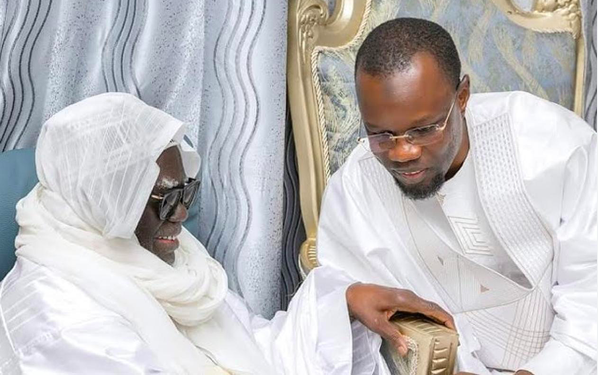
In late July, just days before the Grand Magal pilgrimage, both President Bassirou Diomaye Faye and National Assembly President Ousmane Sonko made high-profile visits to Touba, the spiritual heart of the Mouride brotherhood. These trips were not mere courtesies; they were strategic moves to align themselves with one of the country’s most influential religious authorities, Serigne Mountakha Mbacké, the general khalif of the Mourides. Such gestures underscore the enduring role of Sufi leaders as kingmakers in Senegalese politics.
Ousmane Sonko went further, explicitly invoking Cheikh Ahmadou Bamba’s legacy in a speech that drew parallels between his own policies and the marabout’s refusal to accept French funding. Sonko framed this as a commitment to safeguarding the independence of local communities—a message that resonated with a growing sovereignist movement.
The rise of a nationalist awakening
This trend reflects a broader intellectual shift. Cheikh Gueye, a researcher and Mouride disciple, notes that more young Senegalese are rediscovering the anticolonial struggles of their religious leaders, not as purely spiritual figures, but as political inspirations. “These figures are being reimagined through an anticolonial and militant lens,” he explains. “They are seen as pioneers of a development model rooted in African values.”
Yet this narrative is not without its complexities. Some of these same leaders, in later years, facilitated the recruitment of African soldiers to fight for France—an ambivalence that younger, more critical minds are now grappling with. Mamadou Fall, editor of the upcoming General History of Senegal, argues that while these figures deserve recognition, their legacy must be presented in full context. “We must acknowledge that some were also viewed in other regions as violent conquerors,” he says.
A new chapter in Senegalese identity
The push to integrate these religious figures into school curricula is gaining momentum. Advocates argue that teaching their stories can foster a sense of pride in Senegal’s past while encouraging a more nuanced understanding of history. This effort aligns with a broader movement to reclaim national identity, one that seeks to move beyond the shadows of colonialism.
For now, the political elite continues to court the favor of Sufi leaders, knowing full well that their blessings carry weight with the electorate. Whether this revival of anticolonial rhetoric will translate into tangible policy shifts remains to be seen. What is clear, however, is that the Sufi brotherhoods are once again at the center of Senegal’s political stage—this time as active participants in the nation’s evolving identity.
You may also like
Senegal’s shadow funds: How unchecked spending drains public trust and budgets
Bénin: le Sénat tient sa séance inaugurale sous la conduite de Patrice Talon
Gabon : la participation citoyenne au cœur de la Ve République
Is Chad truly experiencing a political easing of tensions?
Accord FMI-Sénégal : Thierno Bocoum exige la transparence sur les conditionnalités