How a massive ransom payment fueled Al-Qaïda’s expansion in the Sahel
A $50 million ransom, paid in late 2025 to secure the release of foreign hostages held by Al-Qaïda-affiliated militants in Mali, has become a turning point in the group’s financing strategy across West Africa. According to a confidential United Nations report, these funds have directly fueled the Jama’at Nusrat al-Islam wal-Muslimin (JNIM)’s military campaigns, while also funneling resources to the central command of Al-Qaïda itself.
The 50 million dollars, whose origin remains undisclosed, were transferred after negotiations involving three individuals—an Emirati, a Pakistani, and an Iranian—all reportedly freed in exchange for the payment. While Abu Dhabi has not confirmed its involvement, officials have reiterated the country’s commitment to combating extremism and disrupting financial flows to militant groups.
From Mali to the Sahel: how the money fueled terror networks
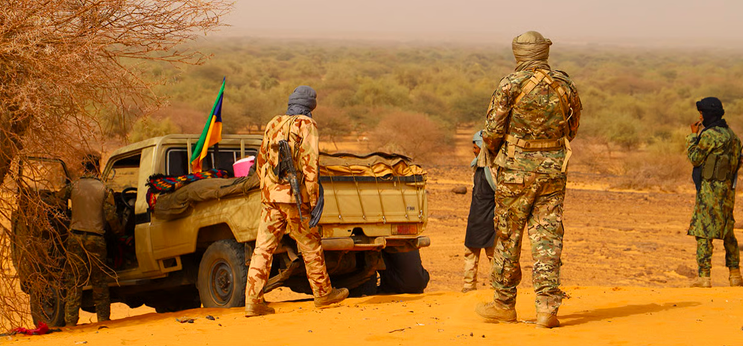
The UN report, finalized on August 10, reveals that the vast majority of the ransom was distributed among JNIM’s regional branches operating across the Sahel. These funds played a decisive role in strengthening the group’s operational capacity, particularly in Mali, where it now commands between 7,000 and 8,000 fighters. The document highlights how the money enabled large-scale offensives, including a daring assault on the Malian capital in April, which resulted in the death of the country’s Defense Minister. Just two months later, the group escalated its tactics by offering multi-million-euro rewards for information leading to the capture of the Malian President.
Security analysts tracking the group’s evolution note that kidnapping for ransom has become a primary revenue stream for JNIM. While typical ransoms for foreign hostages range between $4 million and $6 million, the 2025 payment stands out for its scale and strategic impact. The UN warns that such financial mechanisms not only sustain militant activities but also erode public trust in state security apparatuses, further destabilizing the region.
Tracing the flow of funds: from the Sahel to Al-Qaïda’s core
The report details how a portion of the ransom money was channeled through Al-Qaïda in the Islamic Maghreb (AQIM)—a key affiliate operating in the Sahel—before reaching the organization’s central leadership and its Yemeni branch. This financial lifeline has allowed the terror network to consolidate its presence, recruit more fighters, and expand its influence beyond traditional hotspots in Mali and Burkina Faso.
The document underscores the growing sophistication of JNIM’s financial operations, which now mirror those of larger, more established terror organizations. By leveraging ransom payments, the group has diversified its funding sources, reducing reliance on external donors and local extortion.
As the Sahel grapples with an escalating insurgency, the 2025 ransom episode serves as a stark reminder of how illicit financial networks continue to undermine regional stability. For governments across West Africa, the challenge now lies in dismantling these funding channels while addressing the root causes of militancy—poverty, weak governance, and porous borders.
You may also like
Eastern DRC peace mediation: what the latest Tshisekedi letter to Gnassingbé means for civilians and local businesses
Mali: JNIM ambush on Russian Africa Corps convoy near Niono — what it means for civilians and local trade
Mali’s poverty crisis: how hunger and hardship are reshaping daily life for millions
Guinea-Bissau’s December election: what Embaló’s return means for daily life, stability and the economy
The $20 million bounty on Robert Brovdi: what it means for Ukraine’s citizens, businesses and war economy