Gabon’s new diplomatic vision under president Oligui Nguema
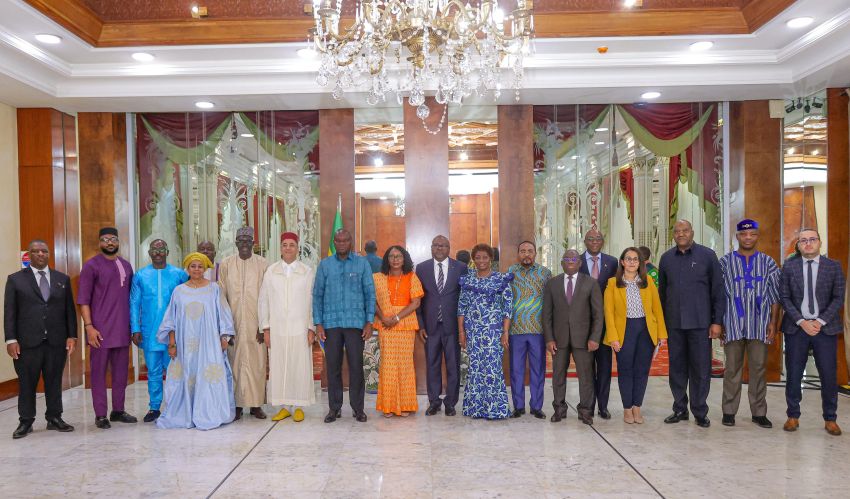
Libreville, Saturday June 13 2026 – In a continent undergoing profound geopolitical shifts, Gabon is redefining its diplomatic ambitions. President Brice Clotaire Oligui Nguema has begun outlining a new foreign policy doctrine that positions Libreville as a key player in continental affairs.
During an unprecedented gathering of African ambassadors accredited to Gabon, the president delivered more than protocol statements. He presented a strategic vision designed to reposition Gabon as a stabilizing force, a bridge for dialogue, and a champion of African-led integration. With Africa facing persistent security crises, shifting power dynamics, and debates over development models, Gabon is making its voice heard.
An Africa shaped by Africans
The cornerstone of President Oligui Nguema’s address was a bold assertion: Africa’s future must be built by Africans themselves. This principle reflects a growing continental consensus, from the Sahel to Southern Africa, where leaders increasingly demand greater sovereignty over economic, security, and institutional challenges.
Gabon’s new diplomatic roadmap is built on three pillars. First, accelerating regional integration to boost intra-African trade—currently among the lowest in the world. Second, strengthening South-South cooperation as a tool to share best practices and leverage economic complementarities. Third, strengthening national capacities so each country can independently address its development challenges.
This approach moves beyond traditional pan-African rhetoric toward a results-driven strategy focused on tangible outcomes.
From stability to regional influence
Diplomatic feedback on Gabon’s transition has been positive. Ambassadors praised recent improvements in infrastructure, urban development, and public services implemented over the past three years.
Now, Libreville aims to convert this domestic progress into regional influence. The announcement of renewed joint commissions with African partners signals a shift from political diplomacy to project-based partnerships in energy, transport, agriculture, digital innovation, and vocational training.
Gabon is also increasing its international visibility. Its bid to host the 2027 African Union-Regional Economic Communities biannual meeting and its candidacy to host the 2030 Francophonie Summit reflect a strategy to position Libreville as a major diplomatic hub linking Africa, the Francophone world, and global partners.
Balancing openness with sovereignty
The meeting also addressed practical concerns raised by African diplomats regarding the status of foreign nationals in Gabon. President Oligui Nguema reaffirmed his commitment to international conventions and improving administrative processes, while emphasizing that hospitality must align with national laws—a balance between regional attractiveness and good governance.
In a message to the Sahel states of the Alliance of Sahel States, he advocated dialogue, mutual listening, and collective problem-solving as the preferred means to resolve regional tensions. This stance underscores Gabon’s ambition to serve as a neutral mediator capable of engaging with diverse African perspectives.
The June 12 gathering revealed a clear ambition: Gabon is no longer content to be seen merely as a stable nation in Central Africa. It now seeks to play a more active role in shaping continental balances, anchoring its influence in cooperation, peace, and regional integration. The challenge now is translating this vision into measurable results—because in today’s Africa, credibility comes from action.
You may also like
Senegal: how Sonko’s playful jab at Sadio Mané over 2029 is reshaping the political conversation
Senegal’s shadow funds: How unchecked spending drains public trust and budgets
Bénin: le Sénat tient sa séance inaugurale sous la conduite de Patrice Talon
Gabon : la participation citoyenne au cœur de la Ve République
Is Chad truly experiencing a political easing of tensions?