equitable development transforms Gabon’s territorial divide
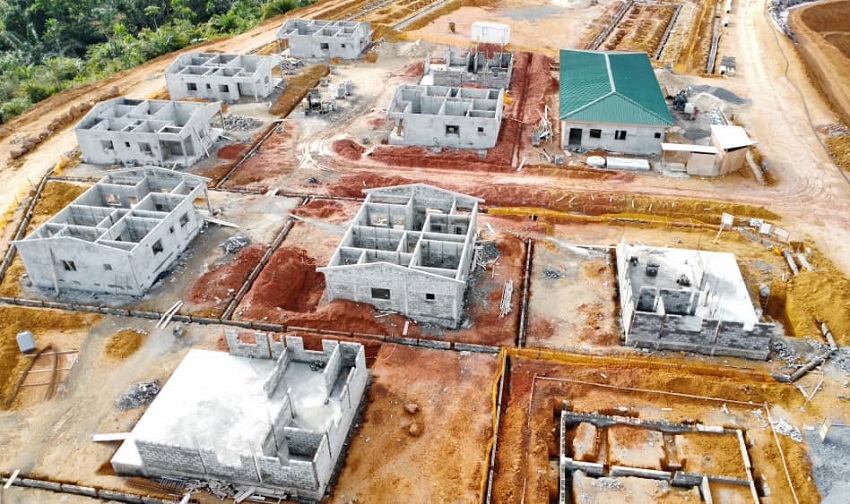
Libreville — For decades, Gabon’s growth has been defined by an unsettling paradox. Despite abundant natural wealth, a sparse population, and substantial financial resources, the country has struggled with glaring disparities between its urban centers and vast rural areas.
In many provinces, access to essential services like healthcare, education, and economic opportunities has lagged far behind expectations. President Brice Clotaire Oligui Nguema has made addressing this territorial divide a cornerstone of his administration’s agenda.
Addressing a joint session of Parliament, the president delivered a bold pledge: “No community will be left behind.” This declaration signals more than just infrastructure development—it reflects a vision where geography no longer dictates opportunity, where every region contributes to national prosperity, and where the state regains visibility across the country.
The challenge of bridging a historical divide
For years, public investment has overwhelmingly favored urban hubs like Libreville and Port-Gentil. This concentration of resources fueled rural-to-urban migration, deepened regional imbalances, and left many inland communities feeling abandoned. The consequences extend beyond mere inconvenience. Without reliable roads, functional hospitals, adequate schools, or accessible administrative services, entire regions are cut off from economic potential.
Development economists widely recognize territorial inequalities as a major obstacle to sustainable growth in Africa. Without infrastructure, attracting investment, harnessing local resources, and creating lasting jobs becomes nearly impossible. This is where the presidential strategy takes shape. Initiatives in cities like Cocobeach, Makokou, Oyem, Bifoun, and underserved neighborhoods of Libreville mark an unprecedented push for regional balance.
Building an economy of proximity
The impact of this policy goes beyond mere construction statistics. It is rooted in a powerful economic conviction: national progress cannot depend on a handful of decision-making centers. Each new road, hospital, university, or housing project is designed as a catalyst for local activity. A new road unlocks agricultural production. A hospital boosts local attractiveness. A university retains homegrown talent. A housing program revives the construction sector. These efforts create ripple effects that can reshape entire economies.
This approach aligns with global best practices. Countries such as Morocco, Rwanda, and Senegal have shown how active regional development policies can accelerate growth while easing social tensions. For Gabon, this strategy could also foster the rise of new economic hubs, complementing the roles of Libreville and Port-Gentil.
A new social contract between the state and citizens
Beyond economics, this policy carries deep political significance. It aims to restore trust between the state and its people. In numerous regions, presidential tours and project monitoring missions have refocused government action on local realities. This shift breaks with a governance model long seen as disconnected from ground-level needs.
Yet the real test lies ahead. Expectations are enormous. Citizens will judge this agenda not by words, but by tangible outcomes: roads delivered on time, hospitals fully operational, schools with adequate resources, and consistent access to water and electricity. This is where the president’s promise—“No community will be left behind”—will be put to the test.
This pledge is more than a development program. It embodies a vision of the Republic itself—a nation that refuses to allow any territory to fall outside the orbit of progress. If realized, this transformation could redefine Gabon. The strongest nations are not those that develop only a few cities, but those that empower every region to shape its own future. This is President Oligui Nguema’s true challenge: turning territorial equity into a driver of national cohesion and shared prosperity.
You may also like
Senegal: how Sonko’s playful jab at Sadio Mané over 2029 is reshaping the political conversation
Senegal’s shadow funds: How unchecked spending drains public trust and budgets
Bénin: le Sénat tient sa séance inaugurale sous la conduite de Patrice Talon
Gabon : la participation citoyenne au cœur de la Ve République
Is Chad truly experiencing a political easing of tensions?