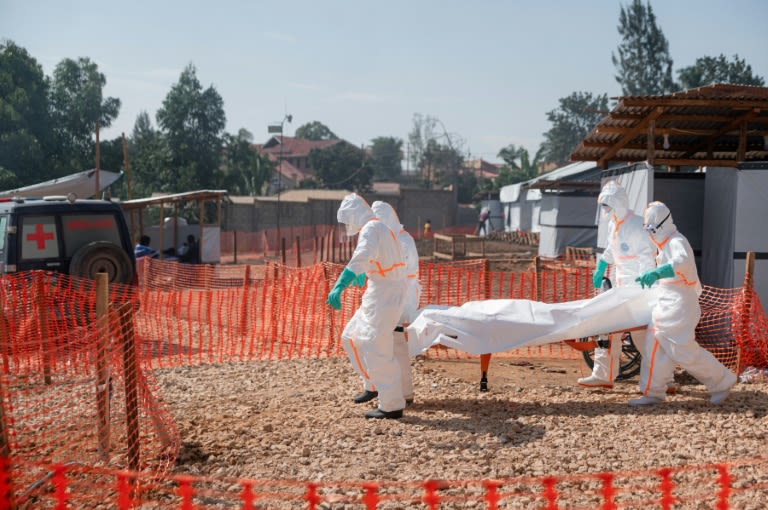
ebola outbreak spreads to sixth province in democratic republic of Congo
An aggressive ebola outbreak in the Democratic Republic of Congo (DRC) has expanded to a sixth province, raising urgent concerns about further cross-border transmission to South Sudan. The situation marks one of the most severe public health crises in the country’s history, with officials warning of an unprecedented spread rate.
The DRC declared its 17th Ebola epidemic on May 15, nearly two months after the first cases were detected. This outbreak has already surpassed previous ones in both scale and speed, with more than 2,128 fatalities recorded among 4,566 confirmed cases in just three months—figures that eclipse the early stages of the devastating 2014 West Africa outbreak.
Current impact and spread within Congo
Initially, the outbreak was concentrated in five provinces: Ituri (bordering Uganda and South Sudan), North Kivu, South Kivu, Haut-Uélé, and Tshopo. However, health authorities confirmed the first fatality in Bas-Uélé, a previously unaffected province in northern DRC bordering the Central African Republic. The victim had traveled from the neighboring Haut-Uélé region, where multiple cases had already been documented, according to health officials.
The Africa Centres for Disease Control and Prevention (Africa CDC) described the outbreak’s progression as unprecedented in speed and reach, highlighting the urgency of containment efforts. With cases now reported just 35 kilometers from the South Sudanese border, health experts fear the virus could spill into the neighboring nation through high-risk movement corridors.
Challenges to containment efforts
Stopping the spread has proven difficult due to a combination of factors. Mercy Corps, an international humanitarian organization, warned that severely overburdened health services, limited access to clean water and sanitation, and widespread distrust of authorities are hampering response efforts. Additionally, ongoing insecurity in the North Kivu and South Kivu provinces—split by active conflict between government forces and the M23 rebel group—has restricted access to affected communities.
Despite these obstacles, health officials reported a significant milestone in South Kivu, where no new cases have been recorded in over 42 days. Authorities declared the end of the outbreak there on Monday, offering a rare glimmer of progress amid the crisis.
Regional risks and global context
Public health experts are particularly alarmed by the potential for cross-border transmission. The World Health Organization (WHO) has expressed cautious optimism, stating that reversing the upward trend of new infections within three months is possible with intensified efforts. Meanwhile, concerns persist over a suspected case detected on a boat traveling down the Congo River toward Kinshasa in early August. Although no further infections were confirmed among passengers—who were allowed to disembark near the capital last Friday—the incident underscored the virus’s potential to spread through unconventional routes.
Since its identification in 1976, Ebola has claimed over 15,000 lives across Africa over the past five decades. Transmitted through direct contact with bodily fluids, the virus causes severe hemorrhagic fever and remains one of the deadliest known pathogens.
You may also like
Lyon’s goalless stalemate with Chelsea: the real-world fallout for fans, clubs and the women’s game
Eastern DRC peace mediation: what the latest Tshisekedi letter to Gnassingbé means for civilians and local businesses
Mali: JNIM ambush on Russian Africa Corps convoy near Niono — what it means for civilians and local trade
Mali’s poverty crisis: how hunger and hardship are reshaping daily life for millions
Guinea-Bissau’s December election: what Embaló’s return means for daily life, stability and the economy