
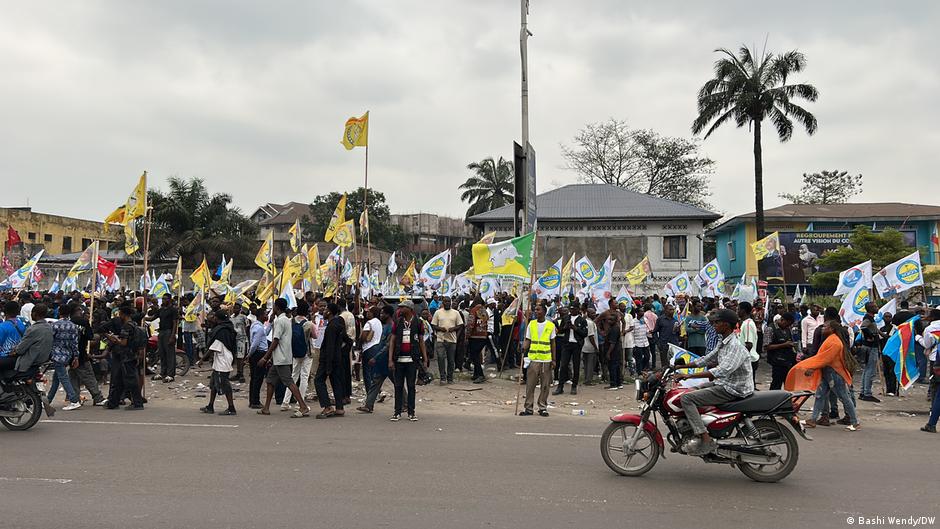
Constitutional court ruling sparks fresh political turmoil in Kinshasa
The Democratic Republic of the Congo stands at a crossroads as the Constitutional Court’s validation of a referendum-organizing law intensifies the political standoff. While the government views this as a procedural victory, opposition forces see it as a dangerous step toward constitutional manipulation.
Opposition coalition Article 64 has vowed to escalate its resistance, with spokesperson Prince Epenge declaring, “We will not back down. We will pool our strength and energy to ensure this law never takes effect in our country.”
Epenge warned of widespread public anger, urging citizens to “remain standing, mobilized and determined to reject both a third term and the country’s disintegration.”
Kinshasa residents brace for potential unrest
As Article 64 leaders convened to plot their next move, residents of Kinshasa expressed growing concerns about the possibility of renewed protests spiraling into violence. One local resident questioned whether opposition demonstrations could remain peaceful, emphasizing the need “to avoid loss of life.”
Another resident warned that “the political climate in the DRC could deteriorate further following this decision.” Others accused the government of deliberately provoking instability, with one stating, “The trouble-makers are the ones in power. They often deploy agents to disrupt opposition marches.”
A third resident expressed fear for ordinary citizens, noting “it will be the people who suffer when protests erupt.”
Analysts fear constitutional crisis escalation
Timo Roujean, an analyst at the Konrad Adenauer Foundation, cautioned that swift presidential approval of the law could derail ongoing political dialogue efforts. “If the president signs the text before August 15, all dialogue attempts could collapse,” he warned, adding that in an already tense environment—where talk of a constitutional coup circulates—this court decision could embolden those advocating armed resistance.
The ruling leaves the DRC in a precarious position: the presidential camp now holds a legal framework, while the opposition remains steadfast in blocking any constitutional reforms. The coming weeks will be critical in determining whether the country moves toward resolution or deeper confrontation.
You may also like
-
Secure digital tools for Cameroun’s president working remotely
-
Secure digital tools for remote presidential governance in Cameroon
-
Secure digital tools for Cameroon’s president remote work
-
Imam kanté addresses moundiaye cissé’s remarks on ousmane sonko
-
L’état de santé de Paul Biya : un sujet sensible au Cameroun