
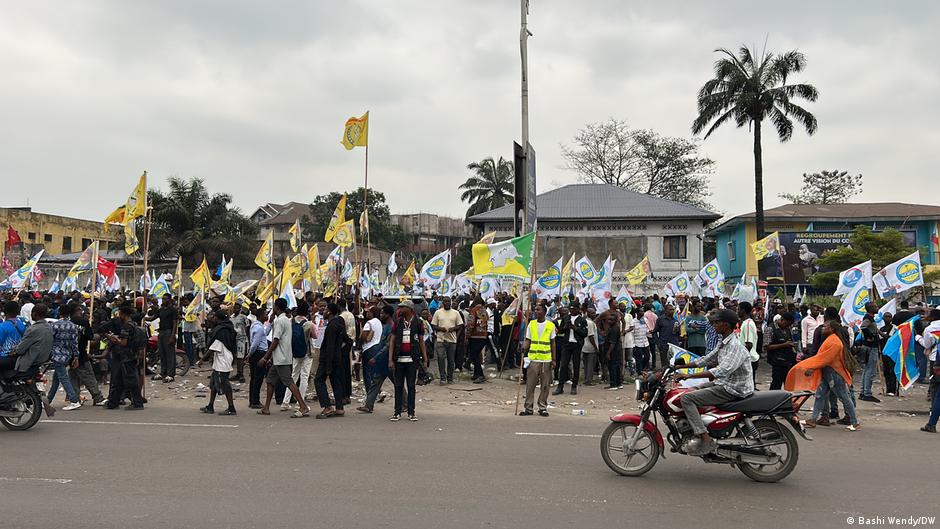
Rising political tensions in Democratic Republic of Congo over constitutional changes
Recent moves by the Constitutional Court have reignited debates about potential constitutional amendments, escalating concerns among opposition groups and citizens alike in the Democratic Republic of Congo. The court’s validation of a law governing a constitutional referendum has intensified fears of a third term bid and further political instability.
The opposition coalition Article 64 has strongly condemned the court’s decision, viewing it as a step toward constitutional reform that could pave the way for a third presidential term. Prince Epenge, a spokesperson for the coalition, has issued a rallying cry to the public, urging sustained resistance.
“We will not back down. We will pool our strength and energy to ensure this law does not take effect in our country,” Epenge declared. He added, “The people are angry. They must remain steadfast, mobilized, and determined to reject any third term and the fragmentation of our nation.“
Kinshasa residents voice concerns over escalating tensions
As coalition leaders gathered in the capital to strategize, residents of Kinshasa shared their apprehensions about the potential for further unrest. Many fear that protests could disrupt daily life or escalate into violence.
“Will their methods of protest remain peaceful?” questioned one resident, emphasizing the need to avoid “loss of life.” Another expressed worry that “the political climate in the DRC could deteriorate further following this decision.“
Some citizens went further, accusing the ruling power of orchestrating instability: “The real trouble-maker right now is the current government. They often deploy individuals to destabilize opposition marches.” A third resident voiced concern for ordinary people, stating, “It is the population that will suffer if protests turn violent.“
Constitutional law could derail political dialogue
Timo Roujean, an analyst at the Konrad Adenauer Foundation, warns that the swift enactment of the law could harden the political climate. He cautions that if President Félix Tshisekedi signs the legislation before August 15, it may undermine ongoing efforts to foster dialogue and embolden factions advocating confrontation.
“If the law is promulgated before mid-August, the dialogue process could collapse entirely,” Roujean cautioned. He added, “In an increasingly tense discourse, where talk of a constitutional coup is already circulating, this court decision risks fueling the narrative that armed resistance is the only way to oppose the government.“
The court’s decision has not resolved the dispute. With the presidential camp now armed with a legal framework and an opposition unwilling to compromise on constitutional reform, the coming weeks are poised to be pivotal in shaping the trajectory of the DRC’s political crisis.
You may also like
-
Opposition vows renewed protests after constitutional court ruling in DRC
-
Drc constitutional reform sparks renewed opposition protests
-
Drc political tensions rise as opposition vows further protests
-
Imam Kanté clarifies stance on Ousmane Sonko amid political debate
-
Niger infrastructure loans highlight risks of governance challenges