
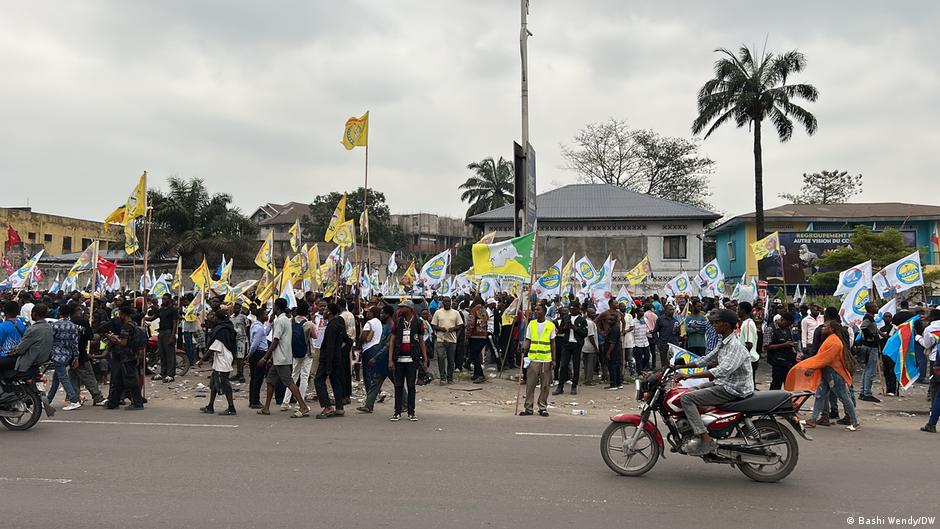
The Constitutional Court’s endorsement of the referendum framework has reignited fierce debate over a potential constitutional overhaul in the Democratic Republic of the Congo (DRC). While authorities frame it as a procedural step, the opposition warns of a dangerous slide toward unconstitutional change and has vowed to escalate its resistance.
The coalition Article 64, a leading opposition bloc, condemned the ruling, calling it a direct threat to democratic principles. Spokesperson Prince Epenge made the group’s stance clear: “We will not back down. We will channel all our strength and energy to ensure this law never takes effect in our country.”
Epenge went further, painting a picture of nationwide unrest: “The people are outraged. They must remain standing, united, and resolute in rejecting a third term and any attempt to fragment the nation.”
Kinshasa’s residents voice deep concerns
As opposition leaders gathered in the capital to plot their next move, ordinary citizens shared their fears of escalating unrest. Many worry that fresh demonstrations could spiral into violence, disrupt daily life, and claim innocent lives.
“Will their methods remain peaceful?” asked one resident, emphasizing the need to “avoid any loss of life.”
Another voiced apprehension over the broader political climate: “The decision risks turning the situation in the DRC even more volatile.”
One resident bluntly accused the ruling power of stoking instability: “Those sowing chaos today are the ones in power. They routinely deploy forces to sabotage opposition marches.”
A third resident echoed these concerns, highlighting the human cost: “The real victims will be ordinary people when protests erupt.”
Dialogue at risk as political crisis deepens
Political analyst Timo Roujean, of the Konrad Adenauer Foundation, cautioned that a swift presidential endorsement of the law could derail fragile dialogue efforts. He warned that if President Félix Tshisekedi signs the text before August 15, it may irreparably damage trust and embolden factions advocating for armed resistance.
“A hasty promulgation would render ongoing dialogue meaningless,” he stated, adding that “in an already tense climate—where talk of a constitutional coup is growing—this court decision will only fuel the narrative that confrontation is the only way to challenge the government.”
The Constitutional Court’s decision has not quelled the dispute. With the presidential camp now armed with a legal framework and the opposition dug in to block any constitutional reform, the coming weeks will be pivotal in shaping the DRC’s political future.
You may also like
Somaïr and Niger’s uranium collapse: technical failure behind a logistics smokescreen
Why Niger’s soldiers are walking away from Tiani’s army
Behind the sovereignty talk, AES states owe 7,727 billion CFA francs on the regional market
Benin back to school: classes reopen nationwide on 14 september 2026
Sonidep’s 2026 loss: how Niger’s cheap fuel policy is draining the state oil company