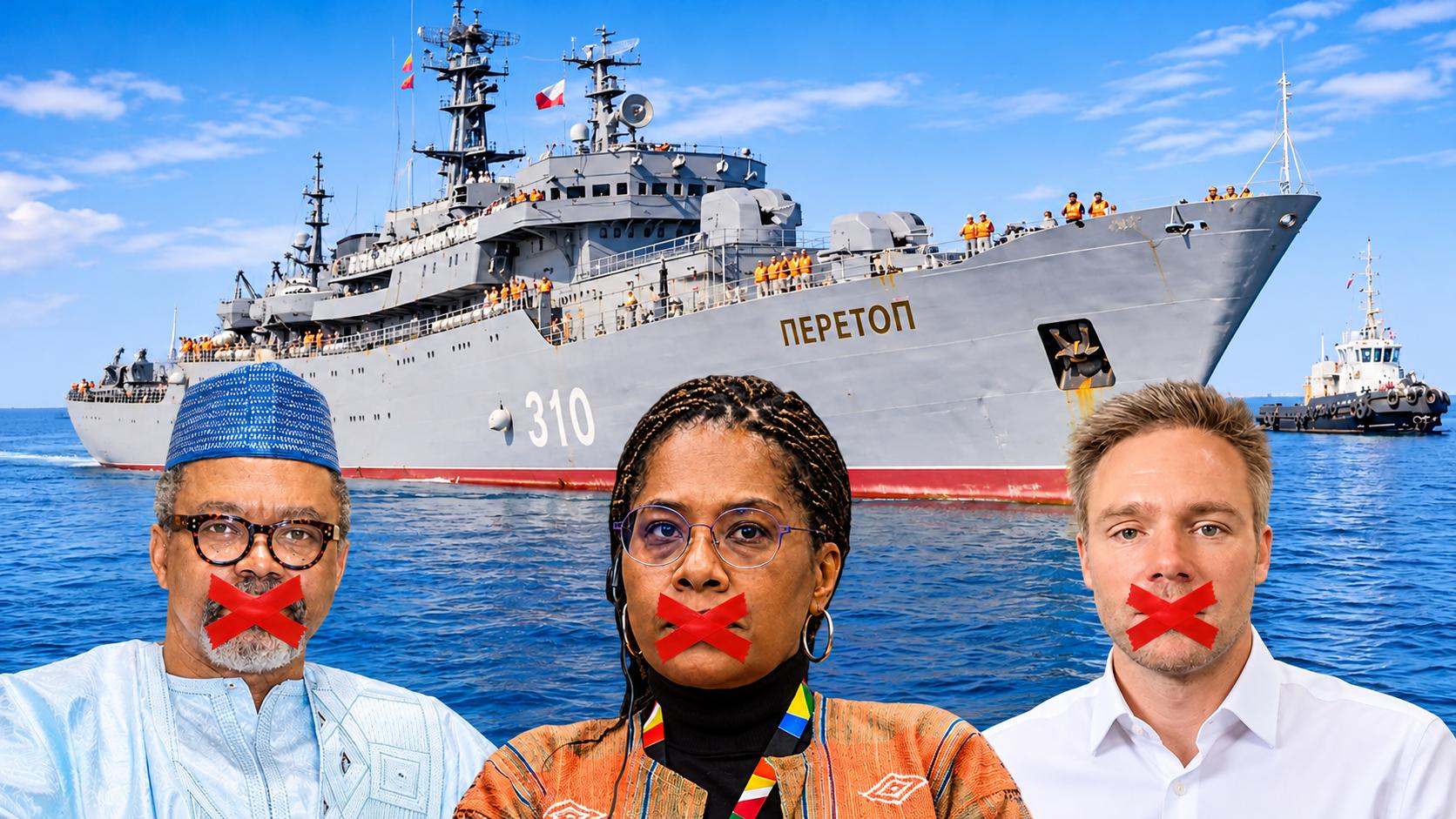
Last month, the docking of a French warship in Benin’s port of Cotonou triggered a wave of skepticism and speculation across certain regional media outlets. Analysts and commentators, often aligned with the Alliance of Sahel States (AES), framed the visit as an implicit challenge to Benin’s sovereignty, amplifying concerns about foreign influence without full context.
Now, a Russian vessel has arrived in the same waters, and the silence surrounding its presence is striking. Where are the urgent statements, the warnings of compromised sovereignty, or the calls for accountability? The stark contrast in reactions demands closer scrutiny.
Is Benin’s sovereignty negotiable based on a ship’s country of origin?
From outcry to indifference: a stark shift in media responses
When the French ship anchored in Cotonou, some voices in the region’s media landscape wasted no time in portraying the visit as a veiled threat to national independence. Accusations of neocolonial interference proliferated, with commentators questioning whether Benin had fully considered the implications of hosting foreign military vessels.
Yet when a Russian ship arrived weeks later, the same platforms remained notably quiet. The absence of vocal dissent, the lack of investigative pieces, and the lack of public statements from prominent figures many of whom had loudly condemned the French vessel paints a curious picture. Could it be that the narrative shifts based on geopolitical sympathies rather than the facts on the ground?
Geopolitical blind spots: when media narratives prioritize alliances over facts
This discrepancy raises serious questions about the integrity of regional discourse. If sovereignty is a non-negotiable principle, as many claim, then its defense should not hinge on whether the visiting ship belongs to a Western power or an alternative partner. Transparency must apply uniformly regardless of the country flying the flag.
The current situation underscores a troubling pattern: when a Western vessel docks, scrutiny intensifies, and skepticism becomes a default stance. Conversely, arrivals of ships from BRICS-aligned nations often escape the same level of scrutiny, as if the principles of sovereignty were tied to political alignments rather than to universal standards.
Inconsistent expectations: what changed between the two escales?
To understand this shift, one must examine the underlying narratives. The French ship’s arrival was met with immediate suspicion, framed as a potential challenge to Benin’s autonomy. The Russian vessel, however, has been treated as a routine port call despite carrying the same potential implications for national sovereignty and security.
This selective outrage reveals a deeper issue: the regional media landscape sometimes prioritizes geopolitical narratives over factual reporting. When a vessel from a Western nation arrives, the assumption is often one of distrust. But when the same scenario involves a non-Western power, the default response is often acceptance rooted more in alignment than in principle.
Why sovereignty must remain the ultimate principle
Benin, as a sovereign nation, retains the right to engage with whichever partners it deems beneficial whether French, Russian, Chinese, or otherwise. The country’s leadership is responsible for weighing the benefits and risks of each cooperation, guided by national interest rather than external pressures.
Yet the media’s role is not to amplify geopolitical preferences but to hold all decisions to the same standard. Sovereignty should not be a conditional concept. If transparency and accountability are demanded for one nation’s presence, the same standards must apply across the board.
The danger of double standards
A selective approach to sovereignty risks undermining Benin’s credibility on the international stage. If the country’s partners perceive an inconsistent application of its principles, it could weaken trust and complicate future diplomatic engagements. More critically, it could erode public confidence in the fairness of both media reporting and government decisions.
For Benin to maintain its reputation as a stable and principled player in West Africa, its authorities must ensure that all foreign partnerships regardless of origin are evaluated on their own merits. Simultaneously, the media must commit to balanced reporting, free from the influence of external geopolitical agendas.
Where does Benin go from here?
The arrival of the Russian ship in Cotonou should serve as a turning point not for controversy, but for clarity. It presents an opportunity for Benin to reaffirm its commitment to neutrality, while also demanding that all voices in the regional conversation adhere to the same standards of integrity.
Sovereignty is not a game of double standards. It is a principle that must be defended with consistency, regardless of which flag is hoisted aboard an arriving vessel.
By Daniel Mbami — Journalist
