- Top Stories
- Politics
Dialogue and Mali’s future: Étienne Fabaka Sissoko’s vision for peace
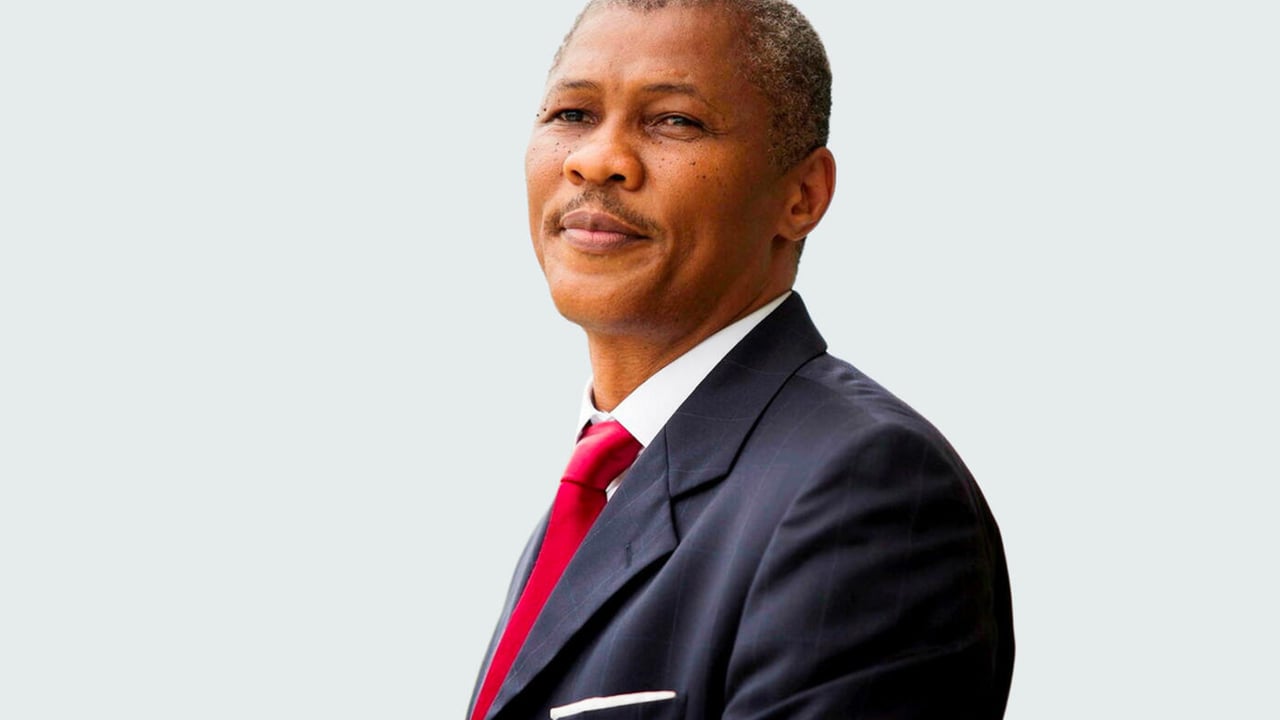
Should Mali engage with armed groups like the Jama’at Nusrat al-Islam wal-Muslimin (JNIM)? Is negotiation possible without compromising national unity? What role could Imam Mahmoud Dicko play in a potential transition? And should Mali reconsider its territorial organization? In an exclusive interview, Étienne Fabaka Sissoko, spokesperson for the Coalition of Forces for the Republic (CFR), outlines his vision for resolving the crisis, defines critical red lines, and emphasizes that for his movement, “dialogue does not mean alliance.”
Security challenges in Bamako and beyond
How do you assess the current security situation in Mali, particularly in Bamako? Is the blockade effective?
Étienne Fabaka Sissoko: Labeling the blockade as “effective” would imply that a strategy designed to starve, block, and hold civilians hostage could be deemed successful. Its primary outcome is suffering—complicating daily life in Bamako, inflating prices, and deepening uncertainty for families. For a landlocked nation like Mali, controlling supply corridors is a matter of national sovereignty. The CFR rejects this approach because it disproportionately harms civilians.
This crisis also exposes the limitations of an exclusively military response. A political solution is essential to protect populations, secure supply routes, and create conditions for a lasting end to the conflict.
The CFR’s mission and public reception
Launched in December 2025, how would you evaluate the CFR’s progress? What has been the response from the Malian public?
É.F.S.: Though still young, the CFR responds to a real demand. Malians yearn for peace and seek alternatives to the current deadlock. We position ourselves not as a traditional political party but as a national safeguarding platform. There is a clear need—politically, socially, and internationally—for a structured, responsible Malian voice. Our goal is to offer an alternative between prolonged military rule and national stagnation.
Some observers suggest the CFR maintains close ties with the National Liberation Front of Azawad (FLNA). How do you respond to this?
É.F.S.: The CFR is not the political wing of the FLNA, nor is the FLNA our armed branch. We engage in dialogue with all crisis stakeholders, but dialogue does not equate to alliance or coordinated action. The CFR is a civilian movement with no involvement in military operations. Our stance is uncompromising: we reject any partition of Mali. However, territorial and governance issues must be addressed politically. The CFR advocates for dialogue within a transparent, strictly political republican framework—prioritizing peace over war.
Transition scenarios and armed group legitimacy
Following the JNIM’s coordinated offensive in April 2026, was the CFR prepared to assume political responsibility if the state collapsed?
É.F.S.: A responsible movement must always consider crisis scenarios. However, the CFR’s strategy does not rely on state collapse or the military victory of armed groups. The April attacks underscored Mali’s entry into a dangerous political phase—but they do not automatically grant legitimacy to armed factions to shape the nation’s future.
Yes, we have envisioned a civilian transition to safeguard the nation. Its mandate would include restoring public freedoms, securing populations, initiating national dialogue, drafting a new Constitution, and organizing elections. The presidency should conclude—not initiate—this process. Without minimal security or national consensus, the same issues will recur.
If the CFR were to come to power, what role could Imam Mahmoud Dicko play?
É.F.S.: Imam Mahmoud Dicko should not be seen as a substitute political leader. His role could be that of a moral authority—helping ease tensions, facilitate dialogue, and rebuild trust among Mali’s diverse communities. Executive responsibilities must remain with legitimate civilian institutions. Political legitimacy must derive from the people and the ballot box.
Dialogue with JNIM: limits and conditions
You advocate dialogue with the JNIM. What are your boundaries? Are there non-negotiables?
É.F.S.: Our dialogue is neither surrender nor reward. It is a tool to end war and protect civilians. The JNIM’s affiliation with Al-Qaeda is incompatible with a national peace process. Our red lines are absolute: preserving Mali’s unity, upholding the republican state, protecting fundamental freedoms, severing ties with transnational armed agendas, ending attacks on civilians, and ensuring no impunity for grave crimes.
Regarding Iyad Ag Ghali, the CFR does not base strategy on assumptions. We neither confirm nor deny his readiness to renounce transnational jihad. Only verifiable actions matter: halting attacks, protecting civilians, allowing humanitarian access, cutting ties with Al-Qaeda, and accepting Mali’s unity. Neighboring countries’ experiences show the issue extends beyond Mali. Any break from transnational agendas must be proven, not declared. We do not negotiate the Malian state—we discuss conditions to end war without abandoning the Republic.
Decentralization, not theocracy
The debate often focuses on the application of sharia in certain regions. Is this not reductive?
É.F.S.: Absolutely. The real issue is the collapse of local governance. In many areas, the state is absent, justice inaccessible, and public services failing. Communities turn to remaining authorities: traditional leaders, notables, religious figures, or local mediators. The CFR does not propose sharia. We propose a Malian Republic that integrates local mediation within a strictly constitutional framework. Principles are non-negotiable: constitutional respect, citizen equality, protection of women and children, and access to national justice.
How do you envision federalism in Mali?
É.F.S.: Federalism is about power, resource, and revenue allocation between Bamako and local governments. The CFR supports a unitary, sovereign, and indivisible Mali—yet more regionally empowered. Local governments need greater responsibilities and resources, while the state retains core sovereignty functions. Centralizing everything in Bamako is inefficient. The state must guarantee national unity while empowering regions to manage local affairs.
A structured transition plan
Beyond criticism of current leadership, does the CFR have a concrete political program? What are your priorities in education, justice, security, and economic development?
É.F.S.: Yes. The CFR’s transition program prioritizes restoring a functional state: reopening schools, strengthening justice, protecting populations, and reviving the economy. We advocate judicial independence, teacher support, enhanced security forces, and protection of key economic corridors. The crisis is also humanitarian. Restoring access to education, justice, security, energy, and food is the first step toward national reconstruction.
What is the relationship between the CFR and the Alliance of Sahel Democrats (ASD)?
É.F.S.: The ASD is a civic and democratic convergence among Malian, Burkinabè, and Nigerien citizens who share a common diagnosis: the Sahel crisis is institutional and democratic. It is not a military structure or a unified political command. The CFR remains a Malian initiative addressing Mali’s crisis. The ASD coordinates advocacy, defense of public freedoms, and solidarity among Sahelian democrats facing shrinking political spaces.
The CFR rejects revenge, partition, theocracy, or a return to the old system. We champion a transition out of war through civilian leadership, national dialogue, territorial reform, a republican army, and the restoration of democratic choice. Mali will not be saved by a strongman—it will be saved by a strong national pact.