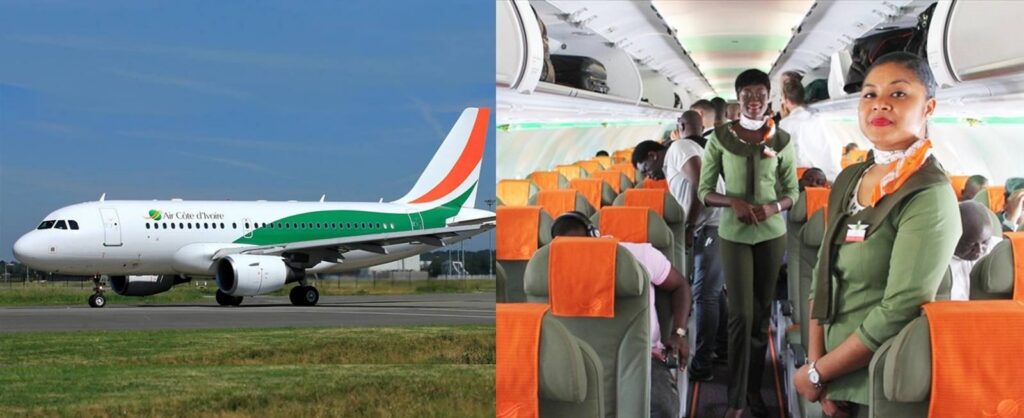
The Ivorian government has initiated a significant measure to bolster its national aviation sector. A substantial 25% reduction in passenger levies has been formally implemented, aiming to support the national airline, Air Côte d’Ivoire, and enhance the overall accessibility of air travel.
This decision sends a powerful message to the aviation industry. By opting to decrease airport taxes by one-quarter, the Ivorian administration is undertaking more than a mere symbolic gesture; it is enacting a strategic reform designed to profoundly transform the nation’s air transport landscape.
Why is this reduction so pivotal?
The overall cost of an airline ticket often appears opaque to travelers. In actuality, a significant portion of the final price comprises various taxes and charges, which are allocated not to the airline but to the state and airport operators.
By addressing these expenses, the government activates two critical mechanisms:
- Traveler Purchasing Power: A reduction in these levies inherently leads to lower ticket prices. Consequently, air travel, once considered an exclusive luxury, is becoming increasingly accessible to a wider demographic.
- Air Côte d’Ivoire’s Competitiveness: In a market dominated by major international carriers, the national airline now possesses a pricing advantage, enabling it to attract a greater number of passengers and optimize its aircraft load factors.
Abidjan: a future west african aviation nexus
This initiative is not an isolated policy; it forms part of a broader strategic vision: to transform Abidjan’s Félix Houphouët-Boigny International Airport into a prominent regional aviation hub.
Officials have noted that previously, the substantial burden of air taxation significantly hindered citizen mobility and constrained the expansion of the national carrier. The current 25% reduction is therefore viewed as a crucial step in removing a major impediment to sectoral growth.
By making “Abidjan” a more economically attractive destination for both airlines and travelers, Côte d’Ivoire anticipates capturing a larger share of passenger traffic within West Africa and extending its reach further afield.
Key Outcomes:
- Measures: A 25% reduction in passenger levies; direct support for Air Côte d’Ivoire; an ambitious plan for a regional aviation hub.
- Objectives: To decrease airfare costs; to fortify the national airline’s position; to establish Abidjan as a pivotal air transport nexus.
- Beneficiaries: Both Ivorian and international passengers; the broader Ivorian economy; and enhanced regional influence.
You may also like
Senegal’s 2026 budget revision: how the deficit surge hits households, businesses and the Pastef majority
Benin’s €544,042 UNAIDS funding: the tangible consequences for patients, communities and the economy
Senegal-Azerbaijan pact in New York: what it means for jobs, trade and cooperation
What Luxembourg’s 9.8 billion FCFA port training pledge means for Benin’s workers and businesses
Burkina Faso: shrinking civil service payroll exacts a heavy toll on households and local economies