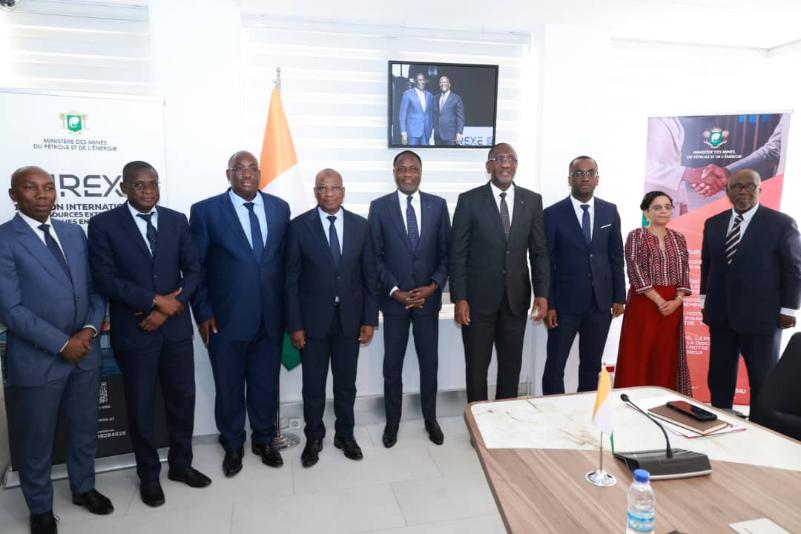
Ivory Coast has officially launched its energy governance framework, marking a significant step toward achieving its national energy commitments. The first steering committee meeting for the Pacte national énergie took place on August 4, 2026, at the SCIAM building in Abidjan, led by Dr. Souleymane DIARRASSOUBA, Minister of Planning and Development. Key figures including the Minister of Mines, Petroleum and Energy, M. Mamadou SANGAFOWA-COULIBALY, and senior government officials attended the session, which focused on accelerating progress under the initiative.
The meeting served as a platform to assess the current status of energy projects and strategize for the future. Participants validated progress reports and decided to organize a high-level roundtable to secure funding for priority projects outlined in the pact.
The Pacte national énergie aligns with the broader Mission 300 initiative, a joint effort by the World Bank and the African Development Bank to connect 300 million people across Sub-Saharan Africa to electricity by 2030. Ivory Coast adopted its national energy pact in January 2025, positioning itself as a model country under the initiative. The pact outlines a total investment of 6.56 billion USD (approximately 3.98 trillion CFA francs) for the period 2025-2030, with 1.18 trillion CFA francs expected from private sector contributions.
The governance structure includes a steering committee, a technical committee, and a coordination unit dedicated to overseeing the pact’s implementation. During the session, the Minister of Planning and Development highlighted the pact’s four core objectives: universal electricity access, clean cooking solutions for households, a 45% renewable energy share in the energy mix, and financial sustainability for the sector. He emphasized the pact’s alignment with the National Development Plan and the UN’s seventh Sustainable Development Goal, underscoring energy’s critical role in the country’s economic and social progress.
Progress reports presented to the committee revealed strong momentum toward 2030 targets. In 2025 alone, Ivory Coast connected 684,735 households to the grid, benefiting nearly 3.6 million people and surpassing its annual target by 105.3%. Since 2024, the country has provided electricity access to 7.7 million citizens, with a national electrification rate now standing at 81.1%.
The next phase includes a robust investment portfolio for 2026-2030, totaling nearly 2.84 trillion CFA francs, aimed at financing priority projects. The committee also set new deadlines for outstanding actions to ensure timely execution.
Ivory Coast’s strategic position in West Africa’s energy landscape is further strengthened by its long-standing role in regional electricity trade. The pact’s projects are expected to enhance this integration, contributing to the development of a unified West African electricity market.
You may also like
Niger’s August mutiny: the fallout, the unanswered questions, and what lies ahead
What Benin’s AirBadminton gold over Mauritius really changes for the sport
Benin’s CCI budget for 2027 sparks debate: what the 6.6 billion FCFA plan means for businesses
Bambali agro park: what the launch means for Sédhiou and Senegal
Senegal’s palm oil deal with Indonesia: reactions, debate and what happens next