When a secretive crude processing facility was uncovered in Nigeria’s Ogun State, authorities uncovered more than just an illegal operation—they exposed a fragile frontier in the battle for economic sovereignty. The installation, allegedly operated by foreign nationals, exploited the nation’s petroleum resources outside regulatory oversight, threatening both financial stability and environmental integrity. Now, the discovery forces a critical question: how deep do these clandestine networks run, and can Abuja reclaim control over its most valuable resource?
The hidden engine of Nigeria’s black market oil trade
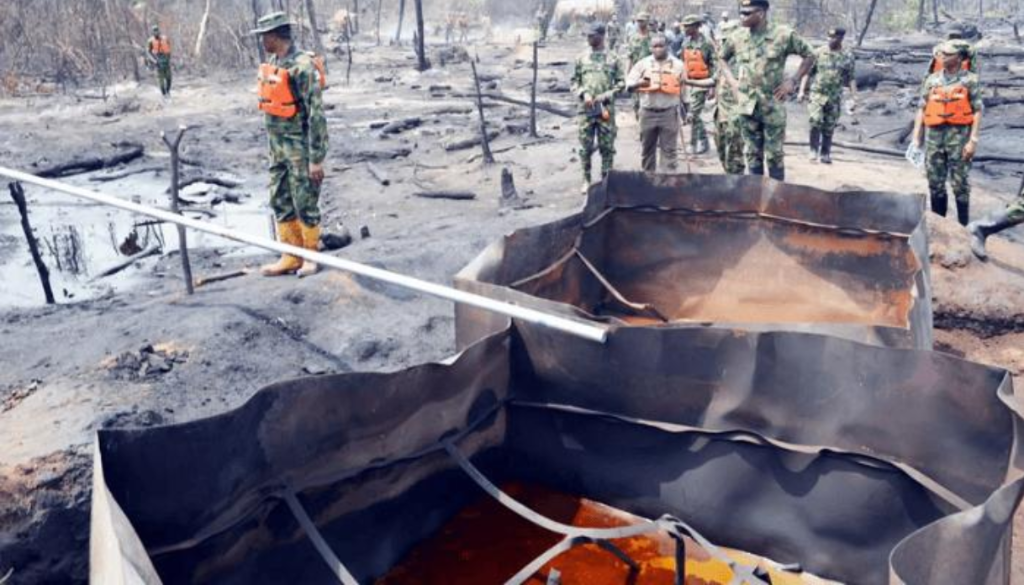
The facility near Ogere, detected by the Economic and Financial Crimes Commission (EFCC), was no small-scale backyard setup. Spanning over three hectares, it featured industrial-grade tanks, heating systems, separation units, and cooling mechanisms—equipment capable of transforming petroleum residue, locally known as black sludge, into marketable diesel fuel (AGO). With one storage tank holding up to 90,000 litres, the operation pointed to a well-organized network.
Investigators traced incoming raw materials to major oil hubs in Warri (Delta State) and Port Harcourt (Rivers State), transported over hundreds of kilometres before being refined and distributed. Despite the scale, the site was abandoned during the raid, leaving key operational questions unanswered.
Who benefits from Nigeria’s unregulated petroleum trade?
Behind every clandestine refinery lies a supply chain—suppliers, financiers, transporters, and buyers. Who supplied the raw residue? Who funded the infrastructure? Who purchased the finished fuel? Without answers, authorities risk overlooking the broader network fueling illegal trade.
The absence of arrests on-site suggests the operators had time to vanish, raising concerns about local complicity. Such a large-scale operation likely required tacit support at some level—whether administrative, logistical, or financial—but no institutional involvement has yet been confirmed.
The invisible cost of illegal refining: environment, economy, and trust
The environmental fallout from artisanal refining is severe. Unregulated heating and separation processes release toxic emissions and contaminate soil and water, endangering nearby communities. Fires and explosions are constant threats due to non-compliant infrastructure.
Economically, the illicit trade drains government revenue by avoiding taxes and royalties, while undercutting licensed refineries. Worse, uncertified fuel jeopardizes vehicle engines and industrial equipment, posing safety risks across the economy.
The public health and safety risks of unregulated diesel production
Products from such plants often contain high levels of sulfur and other contaminants. When sold as AGO, they pollute engine components, increase emissions, and accelerate air pollution—directly impacting public health, especially in densely populated areas.
China’s economic footprint in Nigeria: coincidence or cause for concern?
China’s growing presence across Africa—from mining to infrastructure—has raised both opportunities and scrutiny. In Nigeria, Chinese businesses operate across energy, trade, and industrial sectors. The discovery of a foreign-run, unlicensed refinery therefore highlights a critical gap: who is monitoring foreign economic activity?
Yet experts caution against conflating individual misconduct with national policy. While Chinese nationals may be involved, linking this activity to Beijing’s official strategy remains unsubstantiated. The core issue lies in Nigeria’s enforcement capacity, not foreign origin.
As Africa’s top oil producer, Nigeria must strengthen oversight across the entire petroleum value chain—regardless of the actors involved.
The sovereignty test: can Nigeria enforce control over its oil?
This case isn’t just about law enforcement—it’s about sovereignty. Despite vast oil reserves, Nigeria continues to struggle with illegal refining, pipeline vandalism, and fuel smuggling. Each breach underscores a deeper failure: the inability to protect and regulate its most strategic asset.
Moving forward, the government faces a dual challenge: identifying the masterminds behind the Ogun facility, dismantling the supply chain, and prosecuting offenders. Equally important is addressing systemic weaknesses—corruption, weak border controls, and underfunded regulatory agencies—that allow such operations to thrive.
What’s next for Nigeria’s oil security?
To prevent future breaches, authorities may need to deploy satellite monitoring, deploy undercover agents in high-risk zones, and tighten penalties for illegal refining and fuel adulteration. Public-private partnerships with licensed refiners could help track black-market fuel flows.
Ultimately, the Ogun discovery is a wake-up call. Nigeria’s oil wealth isn’t just a resource—it’s a national responsibility. Without robust control and political will, even Africa’s largest economy could see its strategic advantage slip into the shadows.
Lessons from Ogun: rebuilding trust in Nigeria’s energy sector
The uncovering of this clandestine refinery highlights the urgent need for transparency and accountability. Strengthening collaboration between security agencies, environmental regulators, and corporate stakeholders can help curb illegal refining and restore confidence in Nigeria’s energy governance.