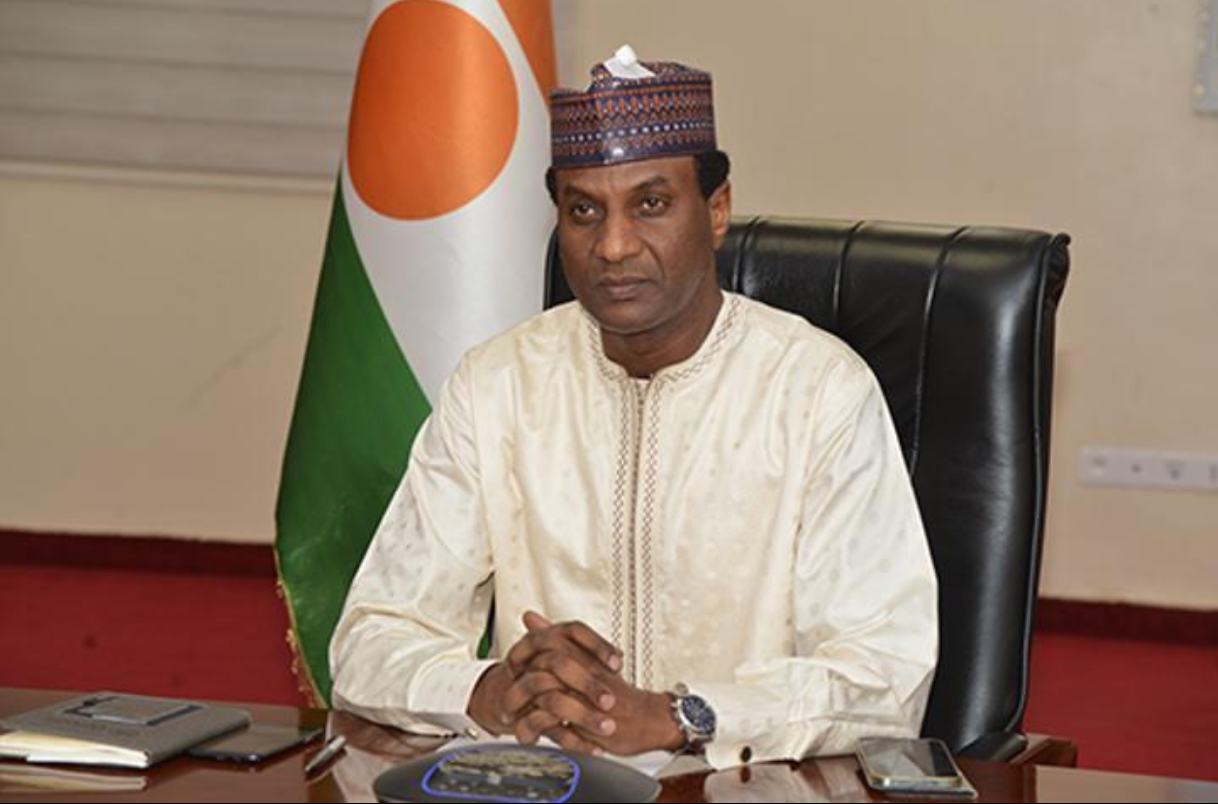
In a bold diplomatic maneuver, Niger’s Prime Minister Ali Mahaman Lamine Zeine traveled to Benghazi on November 1st to sign a landmark strategic cooperation protocol with Libya’s eastern authorities. The move arrives at a critical juncture, as Algeria’s unprecedented military deployment inside Niger reshapes the power dynamics across the shared Sahara-Sahel frontier.
The visit was not merely ceremonial. Accompanied by Saddam Haftar, the deputy commander of Libya’s armed forces, and Oussama Hammad, head of the eastern Libyan government, Zeine signaled that Niamey is actively diversifying its alliances amid escalating regional tensions. The newly signed accord could extend beyond economics into defense and intelligence cooperation—a prospect that places Algeria’s strategic calculus under fresh scrutiny.
Why Algeria is accelerating its military footprint in Niger
Algeria’s Parliament granted authorization on October 25 to deploy units of the Armée nationale populaire (ANP) onto Nigerien soil, a historic departure from its longstanding policy of non-intervention abroad. Officials cite protection of economic assets—especially oil installations and the planned Trans-Saharan Gas Pipeline—as primary justifications. Yet behind closed doors, the decision also addresses rising security anxieties: controlling the lifelines connecting the Maghreb to the Sahel.
The proposed staging ground at Madama, near the Libyan border, would allow Algerian forces to monitor movements of armed groups in the Sahara and intercept threats crossing porous desert corridors. However, the deployment raises a pivotal question: could this presence inadvertently bolster Haftar’s southern Libyan ambitions and, by extension, shift the regional balance of power?
The tri-border zone: where Algeria and Haftar’s Libya compete for influence
The triangle formed by Niger, Libya, and Algeria serves as a crossroads for people, trade, and militant networks. It is also where Algeria’s worst-case scenario may be unfolding. As Khalifa Haftar’s forces consolidate control in southern Libya, Algerian strategists fear erosion of their ability to regulate the crucial Saharan-Sudanian transit routes.
Complicating matters, certain armed factions hostile to Niger’s government are alleged to operate from southern Libyan sanctuaries. While exact chains of support remain opaque, the perception of backstage support in Algiers is sufficient to fuel reciprocal anxieties in Benghazi and Niamey.
For Niamey, the newly inked protocol with Benghazi offers a counterweight: enhanced political and security cooperation that could stabilize the southern flank and reduce reliance on any single external patron. Yet the gamble is high—aligning too closely with Haftar risks entangling Niger in Algerian-Haftar hostilities that neither party can fully control.
Decoding Algeria’s stance: Tripoli versus Benghazi
Algeria has historically favored Libya’s internationally recognized Government of National Accord (GNA) in Tripoli, advocating a negotiated settlement to the Libyan crisis. In contrast, Haftar’s eastern administration has cultivated its own alliances with regional heavyweights. That divergence now plays out directly on Nigerien territory, where Algeria’s troops are preparing to arrive.
From Algiers’ perspective, any deepening of Niamey-Benghazi ties may appear as an attempt to neutralize Algerian influence—especially if future clauses include intelligence sharing or coordinated border patrols. Yet publicly released details of the protocol remain scarce, leaving room for interpretation rather than confrontation.
Niger’s balancing act: survival amid shifting sands
Niger’s leadership faces an unenviable choice: lean on Algeria for immediate security guarantees while risking strategic subordination, or court Haftar’s eastern Libyan faction and invite Algerian pushback. The November 1st accord suggests Niamey has chosen neither full alignment nor outright confrontation—at least for now.
By welcoming Haftar’s representatives and signing the cooperation framework, Niger asserts its sovereignty and signals it will not be a passive bystander in the contest between Algiers and Benghazi. The strategy could yield dividends—enhanced intelligence, diversified arms suppliers, and a stronger voice in future Sahelian security architecture—but the timeline remains unpredictable.
The stakes for regional stability
- Military escalation risk: Algerian deployments and potential Niamey-Benghazi defense pacts raise the specter of direct or proxy confrontation.
- Economic spillover: Disruption of hydrocarbon transit lines could ripple through regional energy markets already strained by sanctions and terrorism.
- Sahelian spillover: Increased arms flows and militant mobility could exacerbate instability in Burkina Faso and Mali, further straining Niger’s borders.
- Diplomatic isolation: Niger risks alienating one or both regional powers, leaving it exposed to economic coercion or security vacuums.
What the Benghazi protocol may—and may not—deliver
Early assessments suggest the accord focuses on border security, counter-terrorism training, and energy infrastructure protection. There is no public evidence of a formal military alliance aimed at Algeria, nor any clause explicitly targeting Algerian interests. Still, symbolism carries weight: by hosting Haftar’s deputies on Nigerien soil and elevating the Benghazi administration, Niamey elevates Haftar’s regional profile—and implicitly challenges Algeria’s narrative of Libyan legitimacy.
In the coming months, the protocol’s implementation will reveal whether it fosters cooperation or becomes another instrument in a widening shadow war across the Sahara.