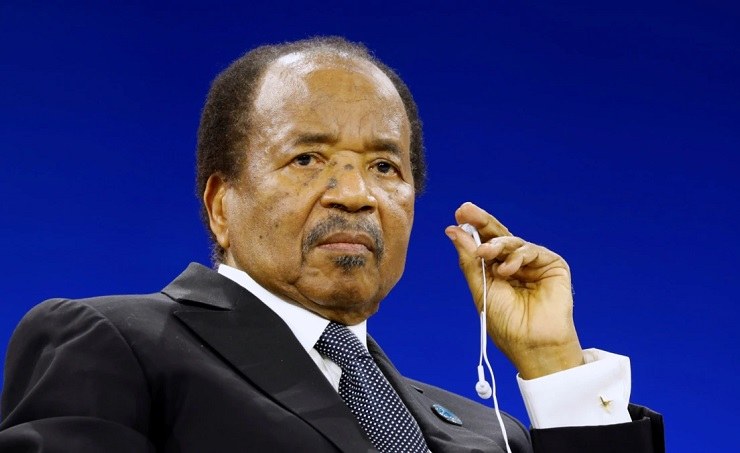
Cameroon’s political landscape shaken by rumours over aging president’s whereabouts
The prolonged absence of President Paul Biya, now 93 years old, has ignited intense speculation and debate across Cameroon. After departing the country nearly two months ago, the Head of State’s whereabouts remain shrouded in silence, prompting urgent calls from opposition figures for greater clarity on both his condition and the continuity of state institutions.
In a rare public address, René Emmanuel Sadi, Cameroon’s Minister of Communication and government spokesperson, firmly dismissed claims of a power vacuum and reaffirmed the president’s return to the country is imminent. Yet, with no further details provided, the statement has done little to quell the growing unease among citizens and political actors alike.
Opposition urges constitutional transparency amid institutional concerns
Leading figures within the opposition have intensified their demands for the Constitutional Council to formally assess the situation. Jean-Michel Nintcheu, a prominent opposition leader, and the Union Démocratique du Cameroun (UDC) have been vocal in their criticism, warning of a potential institutional void and questioning the legitimacy of a government operating through remote control.
They argue that the stability of the Republic cannot be anchored in ambiguity or unconfirmed reports, stressing that the Constitution must be upheld without delay. Their calls underscore a broader anxiety: the absence of a clear legal framework for managing prolonged presidential incapacitation.
Constitutional provisions outline path forward in case of vacancy
Under Article 6(4) of Cameroon’s Constitution, a presidential vacancy—whether due to death, resignation, or definitive incapacitation—triggers a constitutional process. The Council must officially recognize the vacancy, after which a new presidential election must be organised within a strict timeframe: no less than 20 days and no more than 120 days following the vacancy declaration.
During this transitional period, the interim presidency falls to the President of the Senate—currently Aboubakary Abdoulaye, 64. Should he be unable to serve, the first vice-president of the Senate, Naomie Mikel Bégala épouse Akono, 63, would assume the role. However, the interim leader is constitutionally barred from altering the Constitution, reshuffling the government, calling a referendum, or running in the subsequent presidential election.
These constraints highlight the delicate balance between continuity and constitutional discipline in Cameroon’s governance during times of uncertainty.
You may also like
United Russia’s 355 seats: the fallout, the debate, and what comes next for Russia’s Douma
After the flames: Moscow refinery strike sparks debate over where this war is heading
Benin’s ARS second term: the debate, the doubts and what happens next
After 600 Nigerians cross into Nwa, what happens next in Cameroon’s North West?
After Mali’s military defeats, a nation weighs what comes next